
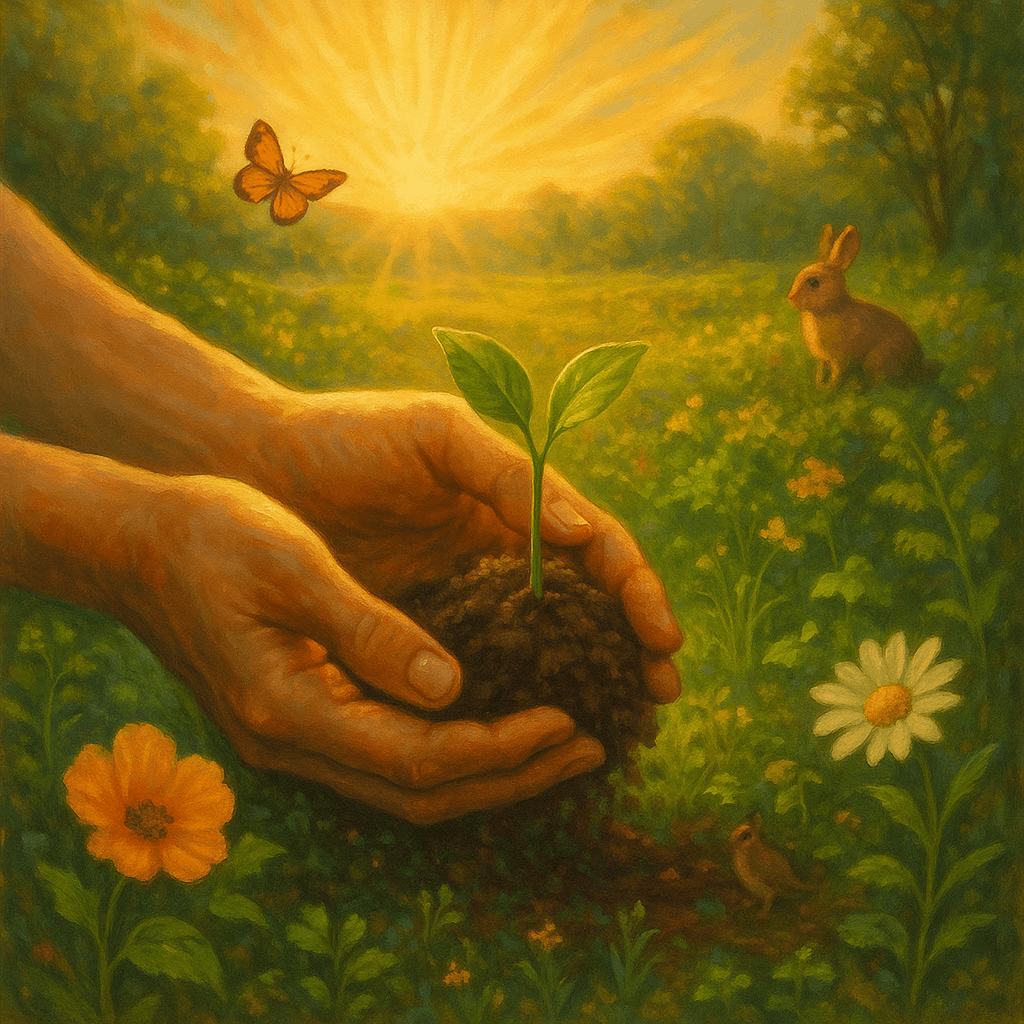
Our hands hold the power to carve the future, not our fears. — Chimamanda Ngozi Adichie
—What lingers after this line?
Empowerment Through Action
Adichie’s assertion foregrounds the potent agency we all possess. She contrasts the active role of our hands—symbolizing effort and creativity—with the paralyzing effect of fear. By framing ‘carving the future’ as a matter of action, Adichie emphasizes that our destinies are not dictated by anxiety, but by what we dare to build and change through intentional deeds.
Fear as an Inhibitor of Progress
Nonetheless, fear is a deeply human emotion, often preventing us from undertaking new initiatives. History provides countless illustrations: consider the reluctance of many to defy unjust systems, as Adichie herself explores in her novel 'Half of a Yellow Sun' (2006), where characters must overcome profound apprehensions to enact meaningful change. Such examples demonstrate how fear, if left unchecked, can dictate outcomes by default.
Hands as Symbols of Creation and Change
Transitioning from emotion to embodiment, Adichie draws upon the universal metaphor of hands as instruments of transformation. Across cultures, hands create art, build shelter, and heal wounds—evident in Michelangelo’s ‘Creation of Adam’ (1512) or even in the simple act of planting a seed. This symbolism asserts that real change is not the product of passive hope or dread, but of the tangible actions we undertake each day.
Challenging Fear Through Collective Agency
Furthermore, social movements underscore the collective power of hands joined together. The Civil Rights Movement, for instance, was propelled by individuals choosing to act, even at high personal risk. As Adichie often highlights in her talks, especially ‘We Should All Be Feminists’ (2012), meaningful progress arises when individuals overcome their private fears in service of a greater communal vision.
Building the Future We Desire
Ultimately, Adichie’s words challenge us to reframe our mindset: rather than letting fear dictate the limits of our imagination or ambition, we are called to wield our hands with intention. Whether through art, activism, or daily kindness, carving the future requires courage and a refusal to be governed by hesitation. In this way, tomorrow becomes the product not of what we fear, but of what we create together.
One-minute reflection
What's one small action this suggests?
Related Quotes
6 selectedA good-enough novel violently written now is better than a perfect novel meticulously written never. — Elizabeth Gilbert
Elizabeth Gilbert
Elizabeth Gilbert’s line immediately shifts the argument from artistic purity to artistic existence. A “good-enough” novel, even one “violently written,” has entered the world and can move, provoke, or comfort someone; b...
Read full interpretation →You cannot command things, but you can command yourself. — Michael D. Pollock
Michael D. Pollock
At first glance, Michael D. Pollock’s line draws a sharp boundary between the outer world and the inner one.
Read full interpretation →A boundary is not a wall; it is a door with a lock that you control. — Annie Wright
Annie Wright
At first glance, Annie Wright’s quote corrects a common misunderstanding: people often treat boundaries as acts of distance or punishment, when in fact they are tools of intentional relationship. A wall shuts everyone ou...
Read full interpretation →When you feel like you are at a dead end, remember that you are at a place where you can choose a different path. — Haemin Sunim
Haemin Sunim
At first glance, a dead end feels like failure, as though movement itself has been denied. Yet Haemin Sunim’s insight gently reverses that impression: what seems like a wall may actually be a point of decision.
Read full interpretation →The boundaries of your life are merely a creation of the self. — Robin Sharma
Robin Sharma
Robin Sharma’s line reframes “boundaries” as something less like a fence in the world and more like a frame in the mind. What we often call limits—who we are, what we can do, what we deserve—can be stories we repeat unti...
Read full interpretation →You are the author of your own story. You don't need permission to begin. — Ctrl+Alt+Write
Ctrl+Alt+Write
The quote opens with a bracing premise: your life is not merely something that happens to you, but something you shape. By calling you “the author,” it reframes identity from a fixed description into an ongoing draft—rev...
Read full interpretation →More From Author
More from Chimamanda Ngozi Adichie →To love is to recognize that another person is a separate universe, and yet to choose, daily, to walk through it beside them. — Chimamanda Ngozi Adichie
At its heart, Adichie’s line defines love not as possession but as perception. To love someone is first to grasp that they are irreducibly distinct: a ‘separate universe’ with their own memories, fears, loyalties, and in...
Read full interpretation →True milestones are not found in our public achievements, but in the quiet, transformative moments of connection we share with those we hold dear. — Chimamanda Ngozi Adichie
At first glance, Adichie’s quote gently overturns a common modern assumption: that the most important markers of a life are public victories, titles, or visible accomplishments. Instead, she redirects our attention towar...
Read full interpretation →Your job is not to be likable. Your job is to be yourself. — Chimamanda Ngozi Adichie
Adichie’s line begins by stripping away a common social bargain: if you act agreeable enough, you’ll be accepted. By saying your job is not to be “likable,” she points to how easily a person can become an employee of oth...
Read full interpretation →Make today the workshop where your best self is assembled piece by piece. — Chimamanda Ngozi Adichie
Chimamanda Ngozi Adichie’s line turns “today” from a deadline into a worksite: a place where something is being made. Instead of waiting for a future version of life to begin, she suggests the present is where constructi...
Read full interpretation →