
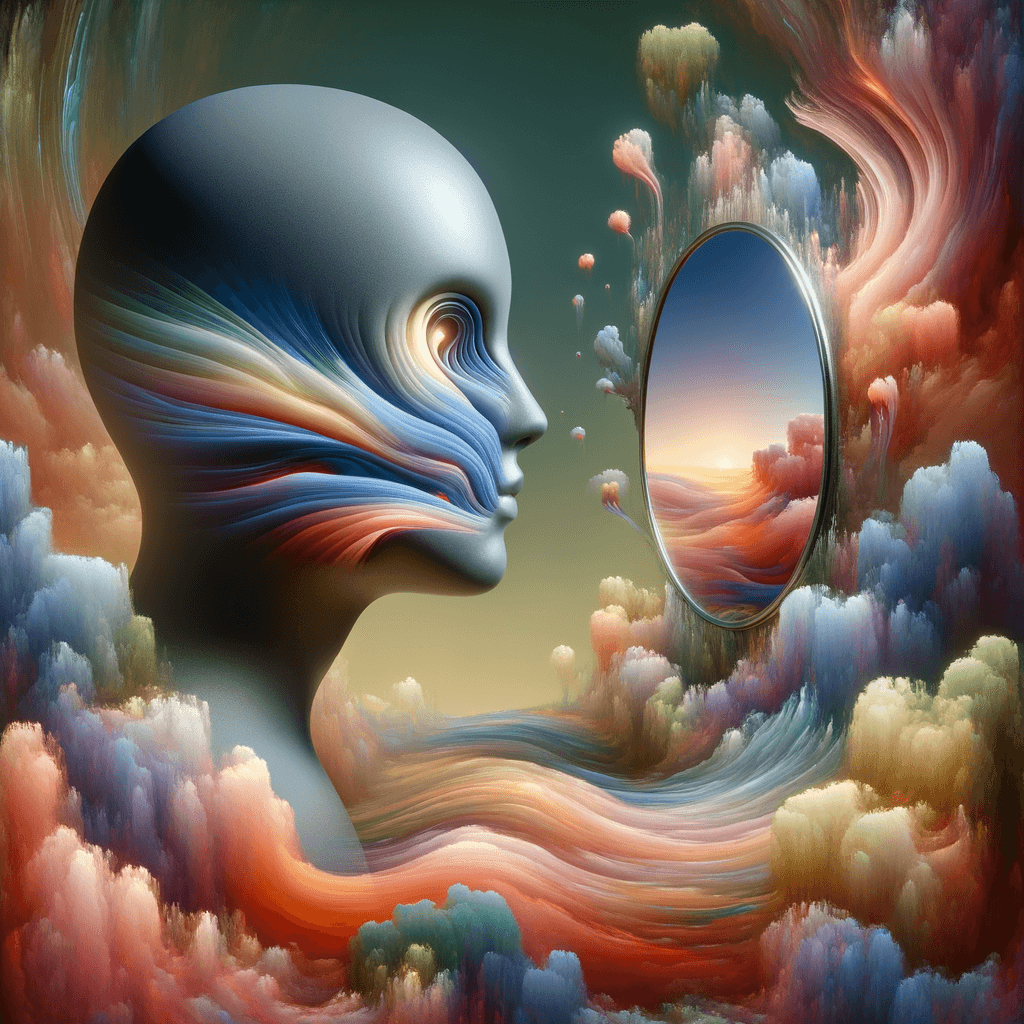
We don't see things as they are, we see them as we are. — Anaïs Nin
—What lingers after this line?
Subjectivity of Perception
This quote suggests that our perceptions of the world are influenced by our personal experiences, beliefs, and emotions. Rather than seeing things objectively, we interpret them through the lens of who we are.
Psychological Projection
Nin highlights the concept of psychological projection, where individuals project their own feelings, desires, or biases onto the world and others. This can affect how we view situations and people around us.
Influence of Personal Bias
Our individual biases, formed by our background, culture, and personal experiences, shape our reality. Two individuals may observe the same situation and interpret it very differently because of the perspectives they bring.
Connection to Self-Awareness
The quote points to the importance of self-awareness. By understanding ourselves more deeply, we can recognize how our internal states influence our perception and make more conscious efforts toward objective understanding.
Anaïs Nin’s Literary Context
Anaïs Nin was a 20th-century writer known for her personal diaries and exploration of the inner self. Her works often delved into the complexities of human emotions, relationships, and the subjective nature of reality.
One-minute reflection
Where does this idea show up in your life right now?
Related Quotes
6 selectedWe are the architects of our own perception; the world looks the way we choose to frame it. — Anais Nin
Anaïs Nin
Anaïs Nin’s statement begins with a striking reversal: instead of treating perception as a passive mirror, she presents it as an act of construction. In other words, we do not simply receive the world; we organize, inter...
Read full interpretation →The eye that you see is not an eye because you see it; it is an eye because it sees you. - Antonio Machado
Antonio Machado
This quote suggests that the essence of an object is not defined by its being seen, but by its functional role or purpose. An eye is not significant just because you can see it.
Read full interpretation →What is behind your eyes holds more power than what is in front of them. — Gary Zukav
Gary Zukav
At its core, Gary Zukav’s quote argues that the mind’s inner landscape—beliefs, memories, expectations, and values—has greater influence than external appearances. What we carry ‘behind our eyes’ determines how we interp...
Read full interpretation →There are things known and there are things unknown, and in between are the doors of perception. — Aldous Huxley
Aldous Huxley
Aldous Huxley’s line divides reality into three striking regions: what we know, what we do not know, and the mysterious passage between them. Rather than treating knowledge and ignorance as fixed opposites, he imagines p...
Read full interpretation →We are not here to copy the reality that is already sold to us, but to use our own lenses to reshape the world we see. — Georgia O'Keeffe
Georgia O'Keeffe
Georgia O’Keeffe’s statement begins with a refusal: we are not here merely to reproduce a ready-made version of reality. In that sense, she challenges the passive habit of accepting what culture, commerce, and convention...
Read full interpretation →It is not activity that disturbs people, but false conceptions of things that drive them mad. — Marcus Aurelius
Marcus Aurelius
At the heart of this saying lies a classic Stoic insight: external events do not automatically shatter our peace; rather, our interpretations give them emotional force. Although the quote is often attributed to Marcus Au...
Read full interpretation →More From Author
More from Anaïs Nin →Perfection is static, and I am in full progress. — Anaïs Nin
Anaïs Nin’s line immediately contrasts two ways of being: perfection, which she calls static, and progress, which she embraces as alive and ongoing. In that contrast, she challenges the common fantasy that a flawless sel...
Read full interpretation →Each friend represents a world in us, a world possibly not born until they arrive, and it is only by this meeting that a new world is born. — Anais Nin
Anaïs Nin’s reflection begins with a striking premise: each person contains unrealized possibilities, as though entire inner worlds lie dormant beneath ordinary life. In this view, friendship is not merely companionship...
Read full interpretation →We are the architects of our own perception; the world looks the way we choose to frame it. — Anais Nin
Anaïs Nin’s statement begins with a striking reversal: instead of treating perception as a passive mirror, she presents it as an act of construction. In other words, we do not simply receive the world; we organize, inter...
Read full interpretation →Where people fail is that they wish to elect a state and remain in it. — Anaïs Nin
Anaïs Nin points to a common human temptation: treating life as a set of destinations rather than an unfolding process. We imagine that if we can finally “elect a state”—confidence, happiness, success, certainty—we can s...
Read full interpretation →