
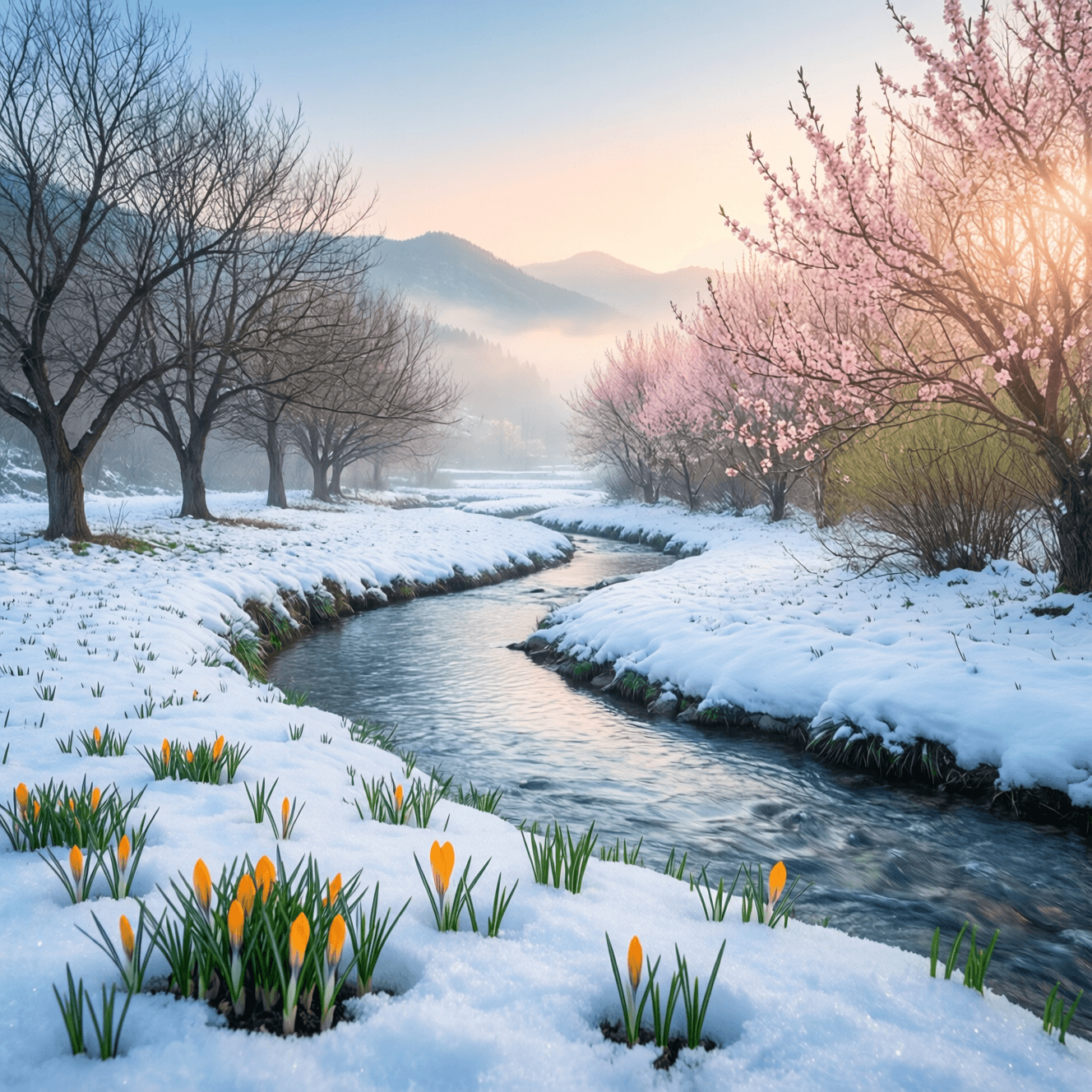
Winter always turns to spring. — Nichiren Daishonin
—What lingers after this line?
A Simple Image of Inevitable Change
Nichiren Daishonin’s line begins with a plain seasonal observation that carries immediate emotional weight: winter does not last forever. By choosing a cycle everyone recognizes, he frames change as dependable rather than wishful, turning the natural world into a quiet guarantee. In that sense, the statement is less about weather than about time—how hardship, like cold, has a limit. From there, the quote invites a shift in perspective. Instead of asking whether conditions will improve, it asks whether we can endure the interval before they do. The reassurance is not that winter is pleasant, but that it is transitional.
Endurance as a Spiritual Practice
Building on that inevitability, the quote implies a disciplined stance toward suffering: patience is not passive, but purposeful. Nichiren’s broader writings often encourage practitioners to meet adversity with steady faith and action, and this sentence distills that counsel into a single, memorable rhythm. Winter becomes the testing ground where conviction is refined. Consequently, the turn to spring is not portrayed as luck, but as a lawful unfolding—an outcome that follows persistence. The message is consoling precisely because it does not depend on perfect circumstances; it depends on continuing forward until the season changes.
Hope Without Denial
Yet the metaphor also avoids sentimentality. Winter is real: it bites, it isolates, it slows growth. By acknowledging winter first, Nichiren’s line grants legitimacy to pain and delay; only then does it speak of spring. That order matters because it makes hope credible rather than escapist. In practical terms, this is hope that coexists with difficulty. The quote suggests we can name what is hard without concluding it is final, and that emotional honesty does not contradict optimism—it strengthens it.
Resilience Through Cycles and Time
Moving from feeling to structure, the seasons represent patterns: contraction and expansion, dormancy and renewal. Many traditions use similar cycles to describe human life—setbacks that precede learning, endings that precede beginnings. The enduring point is that time can be an ally when we recognize rhythm instead of randomness. Seen this way, resilience becomes the capacity to live inside the cycle without being defined by its harshest phase. Spring is not a sudden miracle; it is the next chapter that arrives because the story keeps moving.
A Lens for Personal Setbacks
Applied to ordinary experience, “winter” might be illness, grief, unemployment, conflict, or a long season of self-doubt. The quote doesn’t promise an immediate reversal, but it offers a way to interpret the present: as a temporary climate rather than a permanent identity. That reframing can protect people from despair’s most damaging claim—that nothing will ever change. For example, someone rebuilding after a failure often discovers that small routines—showing up, seeking help, practicing a skill—become the unseen roots of the coming spring. Progress may be slow, but it accumulates beneath the surface.
How Spring Arrives: Agency and Conditions
Finally, the metaphor can be read as both reassurance and instruction. Seasons turn on their own, but flourishing still depends on what we do during winter: conserving strength, preparing soil, staying connected, and refusing to abandon the future. In Nichiren’s worldview, inner transformation and consistent practice are part of how one meets changing circumstances. So the line closes the circle with a grounded encouragement. If winter always turns to spring, then perseverance is never wasted; it is participation in a larger process of renewal that, sooner or later, makes itself visible.
One-minute reflection
What feeling does this quote bring up for you?
Related Quotes
6 selectedThe trees don't get anxious about shedding their leaves; they trust that spring will return. — Haemin Sunim
Haemin Sunim
Haemin Sunim’s image of trees shedding their leaves offers a gentle lesson in surrender. Rather than resisting change, trees participate in it fully, releasing what they can no longer keep.
Read full interpretation →In the heart of every winter lives a throbbing spring, and behind every night comes a smiling dawn. - Khalil Gibran
Kahlil Gibran
This quote emphasizes the idea of hope and renewal. It suggests that even in the darkest and coldest times (winter), there is always the promise of rejuvenation and warmth (spring).
Read full interpretation →In the heart of every winter lives a throbbing spring, and behind every night comes a smiling dawn. - Khalil Gibran
Kahlil Gibran
This quote suggests that even in our darkest and most challenging times (winter and night), there is always the promise of better days ahead (spring and dawn). It emphasizes the cyclical nature of life and the certainty...
Read full interpretation →In the heart of every winter lives a throbbing spring, and behind every night comes a smiling dawn. - Khalil Gibran
Kahlil Gibran
This quote conveys a message of hope and the inevitability of renewal. It suggests that even in the darkest and coldest times, there is the promise of warmth and light to come.
Read full interpretation →In the heart of every winter lives a throbbing spring, and behind every night, comes a smiling dawn. - Khalil Gibran
Kahlil Gibran
This quote emphasizes the natural cycles of the world, where harsh winters eventually give way to vibrant springs, and dark nights are always followed by bright mornings. It speaks to the inevitable rhythm and balance fo...
Read full interpretation →In the heart of every winter lives a pulsating spring, and behind every night, comes a smiling dawn. - Khalil Gibran
Kahlil Gibran
This quote emphasizes that even during the darkest and coldest times in life, there is always a promise of renewal and hope, symbolized by spring and dawn. It reassures us that hardships are temporary and better times ar...
Read full interpretation →More From Author
More from Nichiren Daishonin →