
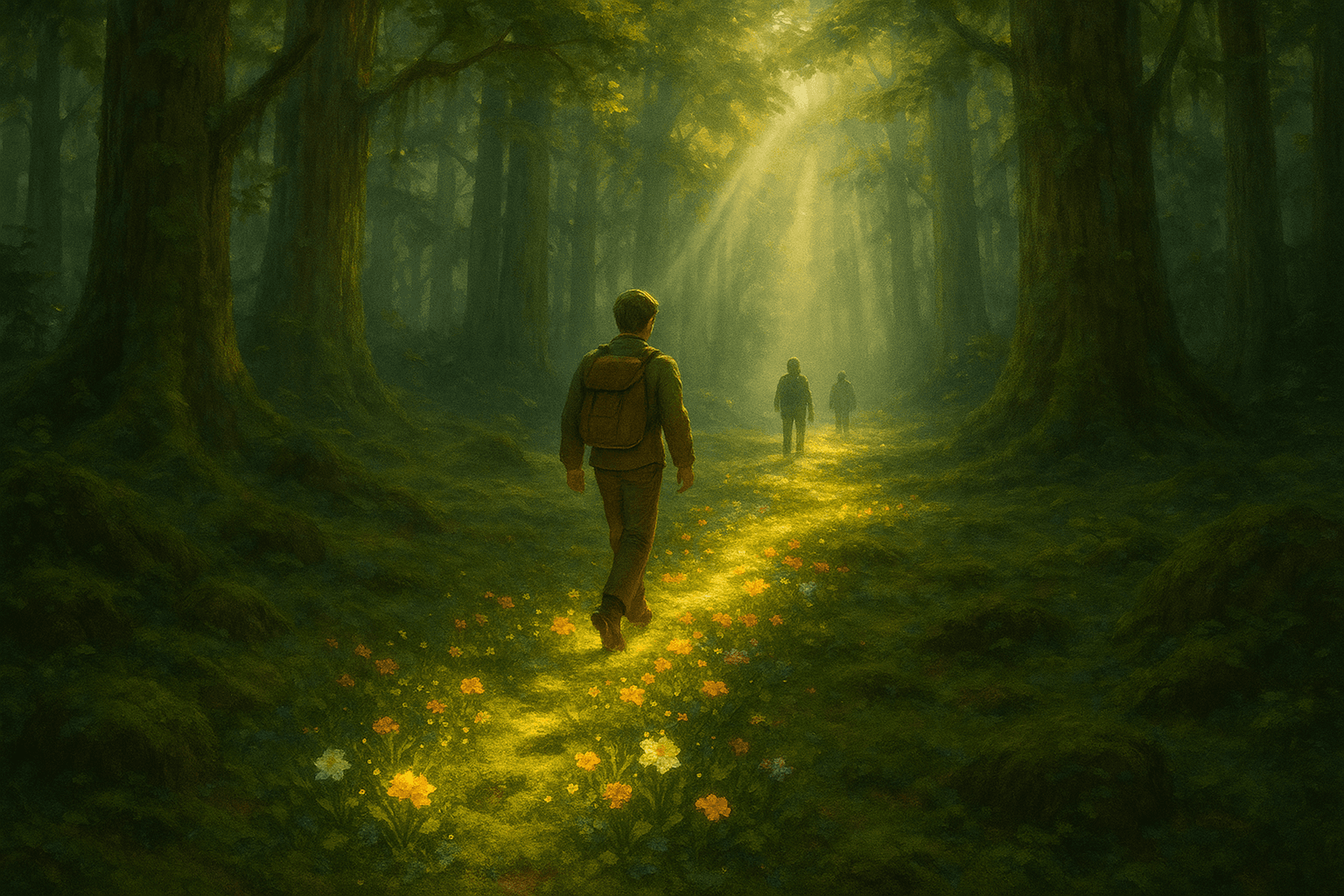
Your footsteps today carve paths for tomorrow’s travelers. — Nadine Gordimer
—What lingers after this line?
Legacy in Everyday Actions
Nadine Gordimer’s remark highlights the profound truth that our routine activities can shape the world long after we act. Unlike grand, historically recorded deeds, the quiet decisions we make daily—whether offering kindness, standing for justice, or daring to innovate—become “footsteps” that outlast us. These actions, often unnoticed, plant seeds that may bloom in futures we will never see.
History’s Echoes Through Ordinary Individuals
Building on this idea, history is filled with examples where ordinary people unwittingly guided future generations. In Rosa Parks's refusal to surrender her seat in 1955, we witness how a simple act of defiance paved a roadway for the civil rights movement. In such moments, the past informs the present, reaffirming that even the smallest footsteps can direct historical currents.
Inspiration for Future Generations
Looking forward, Gordimer’s words remind us that others will follow the trails we blaze, both literally and figuratively. Teachers shape not only their students’ minds but also their aspirations; innovators redefine the limits of what is possible for subsequent engineers and creators. The courage and integrity with which we walk today become tangible guides for those traveling tomorrow’s roads.
Responsibility and Mindfulness in Action
With this recognition comes responsibility. Every choice becomes a potential path for someone else, underscoring the importance of mindfulness. Whether through ethical leadership, environmental stewardship, or advocacy, we carry the duty to tread thoughtfully. Like the footprints on a beach that draw children to the shoreline, our actions invite others to step confidently into the future.
The Continuous Journey of Humanity
Ultimately, Gordimer’s metaphor frames humanity as a relay of progress and promise, where individual journeys interconnect across generations. Just as ancient travelers marked trails for settlers and explorers, so do we, knowingly or not, draft a map for tomorrow’s dreamers. In connecting present action to future aspiration, her insight calls us to journey with intention and hope.
One-minute reflection
What does this quote ask you to notice today?
Related Quotes
6 selectedThe beauty of a life well-lived is measured by the depth of the roots you grow into the lives of those standing right beside you. — Wendell Berry
Wendell Berry
At first glance, Wendell Berry shifts our idea of a successful life away from personal achievement and toward human closeness. The beauty of living well, he suggests, is not counted in status, wealth, or visibility, but...
Read full interpretation →The things that you do for yourself are gone when you are gone, but the things that you do for others remain as your legacy. — Kalu K. Ndukwe Kalu
Kalu K. Ndukwe Kalu
At its heart, Kalu K. Ndukwe Kalu’s quote redirects attention from personal gain to shared impact.
Read full interpretation →Mastery is more than technique. It's legacy, it's tradition, and it's worth preserving. — Art of Mastery
Art of Mastery
At first glance, mastery may seem like the highest refinement of technique, the polished result of repetition and control. Yet this quote insists that technical ability, while essential, is only the visible surface of so...
Read full interpretation →One must care about a world one will never see. — Bertrand Russell
Bertrand Russell
At its core, Bertrand Russell’s line asks us to stretch our concern beyond immediate experience. To care about a world one will never see is to recognize that moral responsibility does not end with personal benefit or ev...
Read full interpretation →In every conceivable manner, the family is link to our past, bridge to our future. — Alex Haley
Alex Haley
At its core, Alex Haley’s statement presents family as more than a private circle of relatives; it is a living structure that connects what came before with what is yet to come. By calling family a link to the past and a...
Read full interpretation →Our stories are medicine for the present and lessons for the future. — Chag Lowry
Chag Lowry
Chag Lowry’s line begins by treating story not as entertainment but as care: something administered in the middle of real conditions. In the present, people reach for narratives to name what hurts, what’s changing, and w...
Read full interpretation →More From Author
More from Nadine Gordimer →We are seashells moved by the same currents. Act with that kinship. — Nadine Gordimer
Gordimer’s image of seashells moved by the same currents suggests beauty and vulnerability intertwined: each shell bears a distinct spiral, yet all are borne by forces larger than themselves. The metaphor reframes indivi...
Read full interpretation →We are seashells moved by the same currents. Act with that kinship. — Nadine Gordimer
At first glance, Gordimer’s image invites us to notice how seashells, distinct yet weathered by the same waves, resemble human lives shaped by shared conditions. Currents stand for histories, economies, and climates that...
Read full interpretation →We are seashells moved by the same currents. Act with that kinship. — Nadine Gordimer
Gordimer’s image of seashells carried by the same currents reframes individuality as motion within a common sea. We are distinct in color and contour, yet we travel in the swell of shared forces—history, economy, climate...
Read full interpretation →