
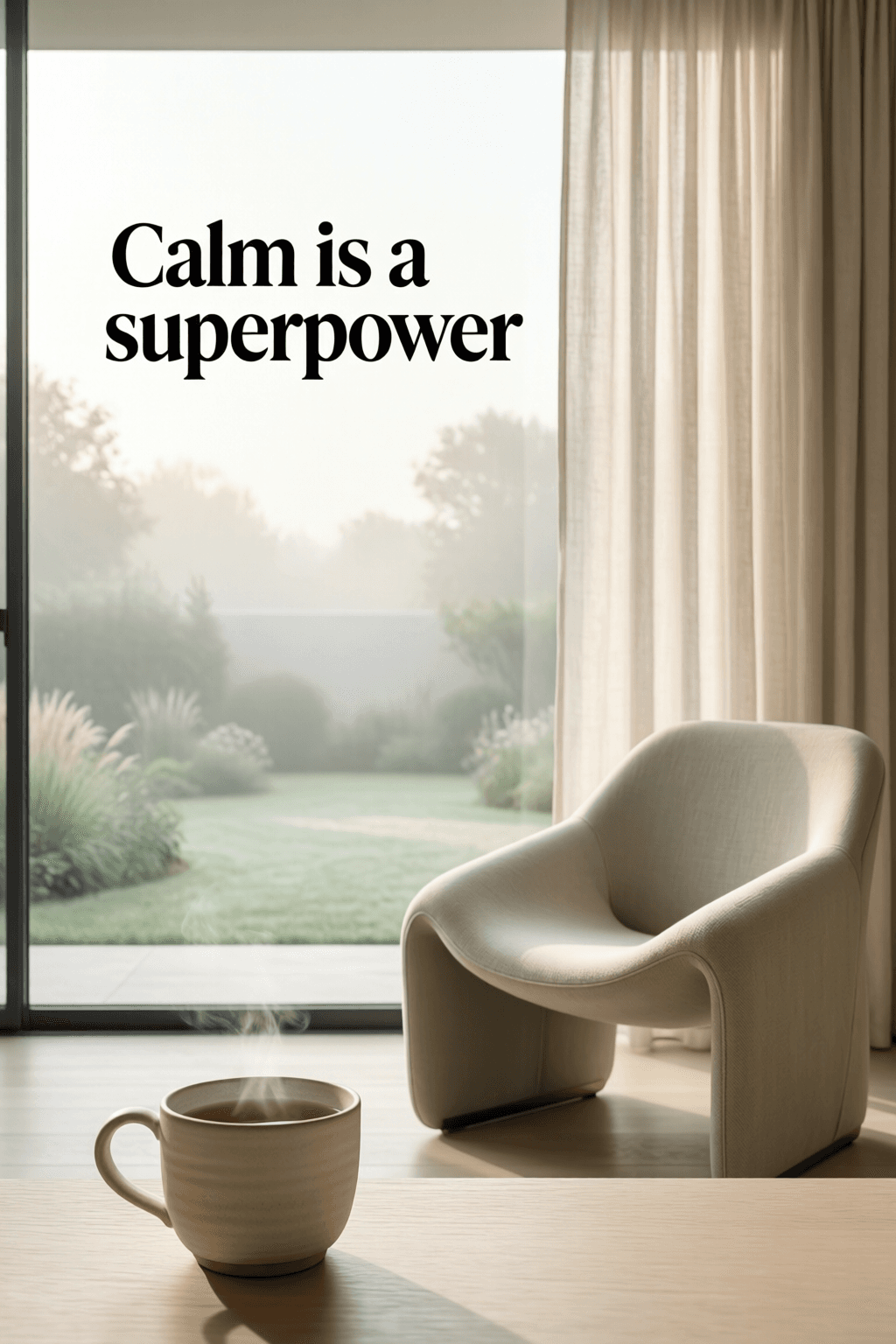
Calm is a superpower. — Bill Keane
—What lingers after this line?
The Quiet Strength of Composure
At first glance, Bill Keane’s remark seems simple, yet it carries a profound insight: calm is not weakness, passivity, or retreat. Rather, it is a form of inner command that allows a person to remain steady when circumstances invite panic. In that sense, calm resembles a superpower because it changes not the world itself, but the way one moves through it. This idea matters because most people admire dramatic action, while calm works almost invisibly. A composed person can think more clearly, speak more carefully, and choose more wisely. As a result, what looks quiet from the outside often reflects enormous strength within.
Clarity in Moments of Pressure
From that foundation, calm proves especially powerful in crisis. When emotions surge, attention narrows and judgment can falter; however, a calm mind creates space between event and reaction. That pause is often where better decisions are born. The Stoic philosopher Marcus Aurelius, in his Meditations (c. AD 180), repeatedly urged himself not to be “carried away” by impressions, suggesting that mastery begins with composure. Consequently, calm becomes practical rather than merely admirable. A leader during an emergency, a parent in a difficult moment, or a surgeon in an operating room all rely on steadiness to act effectively. In each case, calm does not remove difficulty—it makes skill possible within difficulty.
Emotional Influence on Other People
Just as panic spreads quickly, calm also travels from person to person. Human beings continuously read tone, posture, and expression, so one steady presence can lower the emotional temperature of an entire room. In this way, calm becomes relational power: it reassures others without needing grand speeches. For example, many teachers, nurses, and first responders are remembered less for dramatic words than for the calm they bring into tense situations. Their composure signals safety. Therefore, Keane’s line also implies that calm is generous: it does not serve only the self, but helps others recover balance as well.
Calm as Discipline, Not Personality
Importantly, calm is often mistaken for a natural trait that some people simply possess. Yet history and psychology suggest otherwise. Practices such as mindfulness, controlled breathing, and reflective journaling are designed to cultivate steadiness over time. Jon Kabat-Zinn’s work on mindfulness-based stress reduction (1979) helped popularize the idea that calm can be trained through attention and practice. This shifts the quote from praise to invitation. If calm is a superpower, it is not reserved for the lucky few; it is more like a skill strengthened through repetition. The person who appears effortlessly composed may actually be drawing on habits built in private, over many ordinary days.
Strength Without Noise
Finally, Keane’s statement challenges modern assumptions about power itself. In many cultures, power is associated with speed, volume, dominance, and visible force. Calm suggests a different model—one rooted in restraint, patience, and self-possession. Plato’s Republic (c. 375 BC) presents the well-ordered soul as one governed by reason rather than impulse, reinforcing the ancient belief that true strength begins within. Seen this way, calm is superhuman only because it is so rare under stress. It allows a person to remain fully present without becoming overwhelmed, to act without flailing, and to endure without hardening. That is why the quote lingers: it reminds us that some of the greatest power in life arrives quietly.
One-minute reflection
What's one small action this suggests?
Related Quotes
6 selectedIf you enter a noisy street and add noise to it, you are doing an ordinary thing! If you want to do something extraordinary, add calm to the chaos! — Mehmet Murat İldan
Mehmet Murat ildan
At first glance, Mehmet Murat İldan’s remark turns a simple observation into a moral challenge. Anyone can amplify disorder in a loud, frantic world; that requires little imagination or discipline.
Read full interpretation →Quiet people are not empty; they are contained. Their power does not seek attention—it waits. — Seneca
Seneca
At first glance, Seneca’s line overturns a common social assumption: that quietness signals absence, weakness, or lack of thought. Instead, he frames silence as containment, suggesting that some people hold their ideas,...
Read full interpretation →Sometimes you just have to stop, take a deep breath, and put things into perspective. — Katrina Mayer
Katrina Mayer
At its core, Katrina Mayer’s remark highlights the quiet power of interruption. In moments of stress, urgency often convinces us that we must react immediately, yet the simple act of stopping can break that spell.
Read full interpretation →A magician is strong because he hurts more than others. He has learned to break the world that has tried to break him. — Haruki Murakami
Haruki Murakami
Murakami’s line begins with a striking reversal: the magician is not powerful because he is untouched, but because he has suffered more deeply than others. In this view, strength does not emerge from comfort; rather, it...
Read full interpretation →True confidence, like deep rivers, flows calmly and silently without the need for continual recognition. — Unknown (Wait: Skipping) -> My limits are not a debate. — Unknown (Wait: Skipping) -> Never bend your head. Always hold it high. Look the world straight in the eye. — Helen Keller
Helen Keller
Helen Keller’s line begins with a physical image, yet it quickly opens into a moral one: to hold one’s head high is to move through the world with unshaken self-respect. In that sense, true confidence does not beg for ap...
Read full interpretation →What you don't react to reveals your strength. — Thibaut
Thibaut
At first glance, Thibaut’s line shifts our attention away from dramatic action and toward restraint. Strength, in this view, is not proven only by what we confront loudly, but by what we decline to let disturb us.
Read full interpretation →More From Author
More from Bill Keane →