
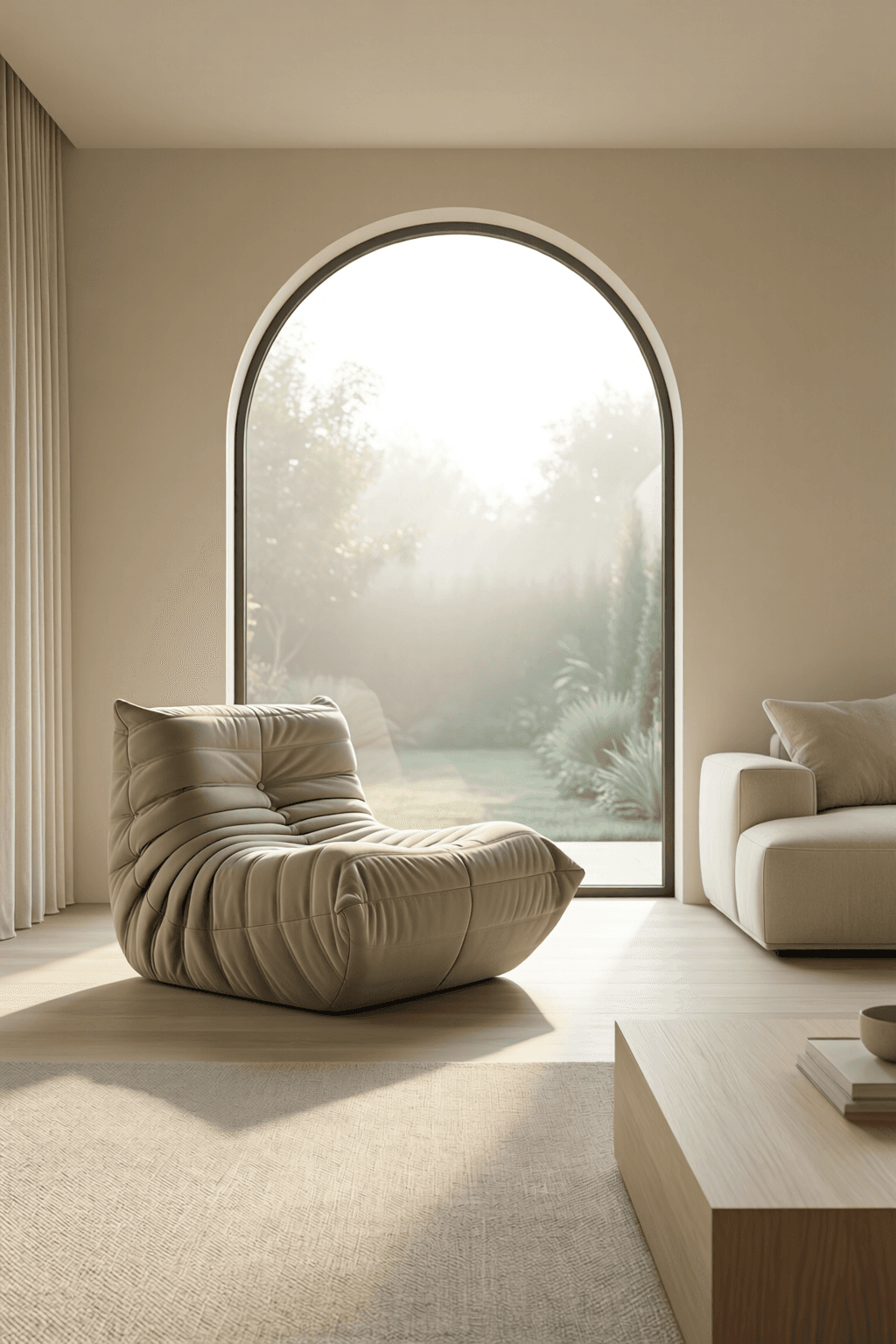
Space is not just where you live; it is the physical manifestation of your inner calm. — Anthony Lawlor
—What lingers after this line?
The Home as an Inner Mirror
Anthony Lawlor’s quote begins with a simple but profound reversal: space is not merely a container for life, but an expression of the life within us. The rooms we inhabit often reveal our mental rhythms—our need for order, retreat, beauty, or openness. In this sense, a home becomes less like a backdrop and more like a portrait of the self. From there, the idea invites us to notice how physical surroundings can either support or disturb inner calm. A cluttered corner may echo unfinished thoughts, while a sunlit chair by a window may quietly encourage rest. Lawlor suggests that when we shape space with awareness, we are also shaping the conditions for peace.
Architecture and Emotional Balance
Moving from the personal to the architectural, Lawlor’s insight aligns with a long tradition of seeing buildings as emotional instruments. In Christopher Alexander’s *A Pattern Language* (1977), good design is described through patterns that make people feel alive, sheltered, and connected. Architecture, then, is not only technical; it is psychological. This connection matters because walls, light, proportion, and pathways influence how the body settles. A narrow, chaotic hallway may create tension before we even name it, while a balanced room can slow the breath. Thus, inner calm is not separate from design—it is often invited, protected, or interrupted by it.
The Spiritual Meaning of Place
Continuing this thought, many spiritual traditions treat space as a partner in contemplation. Japanese Zen gardens, for example, use emptiness, stone, and raked gravel to create an atmosphere where attention becomes quiet. Similarly, monasteries and meditation halls are often deliberately simple, allowing the mind fewer distractions and more room to settle. Lawlor’s quote resonates with these traditions because it frames space as a visible form of stillness. Calm is not presented as an abstract mood hidden inside the individual; instead, it can be arranged, tended, and made tangible. A peaceful room becomes a kind of silent practice.
Clutter, Attention, and Rest
At the same time, the quote also speaks to the modern struggle with overstimulation. Research on environmental psychology has shown that visual clutter can compete for attention and increase stress; for instance, studies from Princeton University Neuroscience Institute (2011) found that competing visual stimuli can reduce focus. What surrounds us can quietly determine how much mental space remains available. This does not mean every peaceful home must be bare or minimalist. Rather, it suggests that objects should belong to a meaningful order. When possessions are chosen, placed, and cared for intentionally, the room begins to communicate steadiness rather than demand.
Designing Calm Through Daily Ritual
From this perspective, creating calm space is not a one-time act of decoration but an ongoing ritual. Opening curtains in the morning, clearing a table before sleep, lighting a lamp at dusk, or keeping one corner free for reading can gradually teach the body that it is safe to rest. Small gestures become architectural habits. In this way, Lawlor’s words give ordinary domestic acts deeper significance. Cleaning, arranging, and simplifying are not merely chores; they are ways of restoring alignment between the outer environment and the inner life. The space becomes calm because attention has made it so.
Living Inside What We Cultivate
Finally, the quote reminds us that we do not only occupy space—we are shaped by it in return. A room designed for haste encourages haste, while a room designed for presence encourages presence. Over time, our surroundings can either reinforce fragmentation or help us return to ourselves. Lawlor’s wisdom lies in making this relationship visible. If space is the physical manifestation of inner calm, then cultivating peace begins both inwardly and outwardly. We calm the mind, arrange the room, and then discover that each quietly strengthens the other.
One-minute reflection
What feeling does this quote bring up for you?
Related Quotes
6 selectedLet your thoughts pass like clouds, and remember — you are the sky, not the storm. — Keshava Francis
Keshava Francis
At its core, Keshava Francis’s line invites a gentle shift in identity: instead of treating every thought or emotion as the whole self, it asks us to see consciousness as something larger and steadier. Thoughts may darke...
Read full interpretation →To handle the stress of a changing world, one must cultivate a sanctuary of self-mastery within. You cannot control the storm, but you can refine the internal rhythm that keeps you centered. — Marcus Aurelius
Marcus Aurelius
Marcus Aurelius frames life as a turbulent landscape in which external events remain fundamentally unstable. At the same time, he points to a more dependable refuge: the disciplined interior life.
Read full interpretation →When the external world feels like a storm, the only reliable anchor is the mastery of your own attention and internal calm. — Tenzin Gyatso
Tenzin Gyatso
At its core, Tenzin Gyatso’s statement argues that stability is not something we can fully secure from outside conditions. Storms in the external world—conflict, uncertainty, noise, and change—are often beyond our contro...
Read full interpretation →To master the world, you must first learn to master the transition between your frantic thoughts and your calm center. — Marcus Aurelius
Marcus Aurelius
At its core, this saying frames mastery not as domination of external events but as command over one’s inner passage from agitation to stillness. Although attributed here to Marcus Aurelius, the thought closely matches S...
Read full interpretation →Your personal space is a foundation for self-care. — Minaa B.
Minaa B.
Minaa B.’s statement begins with a simple but powerful premise: personal space is not a luxury, but a base layer of health. In this sense, self-care becomes more than candles, routines, or occasional rest; it starts with...
Read full interpretation →The true measure of success is a calm nervous system. Stop chasing the exhaustion you've been told is achievement. — Unknown
Unknown
This quote reframes success away from external milestones and toward an internal signal: steadiness in the body. Instead of measuring a life by titles, income, or output alone, it asks whether your nervous system feels s...
Read full interpretation →More From Author
More from Anthony Lawlor →