
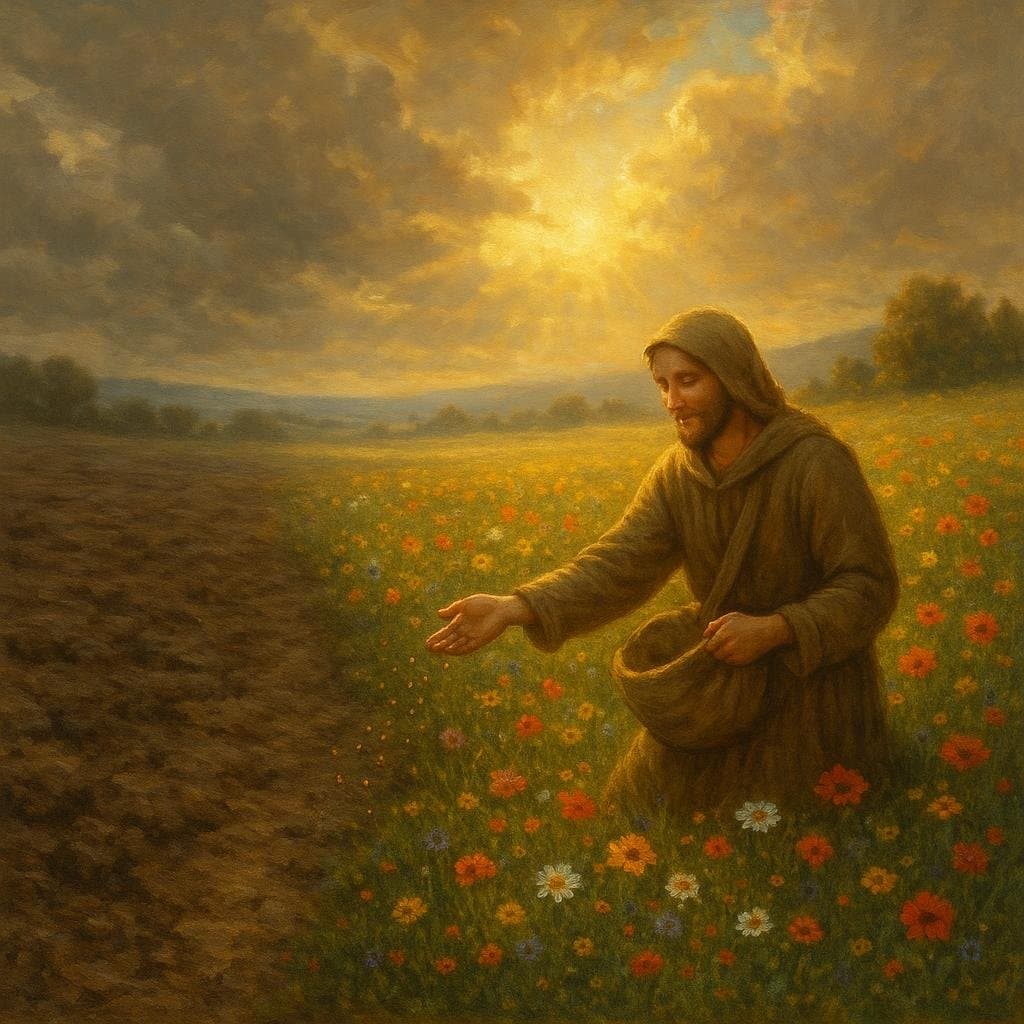
One must be poor to know the luxury of giving. — George Eliot
—What lingers after this line?
Understanding Eliot’s Paradox
George Eliot’s observation that ‘one must be poor to know the luxury of giving’ invites us to reconsider our definitions of wealth and generosity. Rather than equating luxury solely with material excess, Eliot highlights a subtler, more profound form of richness: the deep satisfaction derived from giving, despite personal scarcity. This turns the notion of privilege on its head, suggesting that giving gains value precisely when it comes at a cost.
Empathy Rooted in Experience
The thread continues as Eliot implies that it is through firsthand experience of lack that individuals truly understand the needs of others. For instance, many philanthropic figures—such as Andrew Carnegie, who was born into relative poverty—often cite early hardship as a catalyst for later generosity. Experiencing want sheds light on the real impact a gift can carry, creating a unique empathy that shapes meaningful giving.
The Transformative Power of Sacrifice
Building upon this, stories from literature and history—like the biblical tale of the widow’s mite (Luke 21:1–4)—show that small offerings from those with little are valued highly. The act is transformative not because of its size, but due to the sacrifice involved. This selflessness imbues the gesture with emotional resonance, turning even modest gifts into luxurious acts of kindness.
Challenging Materialist Perspectives
From another angle, Eliot’s statement challenges a materialist worldview that equates abundance with the ability to give generously. In contrast, she posits that true generosity is less about resources and more about intention. As in Leo Tolstoy’s ‘What Men Live By’ (1885), where a poor shoemaker’s willingness to share is depicted as the highest form of wealth, the focus shifts from outward displays to inward richness.
A Lasting Legacy of Giving
Finally, reflecting on the lasting effects, acts of giving born from hardship often inspire others and create powerful social bonds. Modern charitable movements frequently celebrate stories of those who, despite limited means, give fully. These narratives serve as reminders that the greatest luxury is not in what we possess, but in what we share—and that such generosity leaves an indelible mark on both giver and receiver.
One-minute reflection
Where does this idea show up in your life right now?
Related Quotes
6 selectedYou don't have to be a billionaire to believe you can make a difference. Give your time, give your love, or simply give a smile. — Steve Goodier
Steve Goodier
At its core, Steve Goodier’s quote challenges the idea that influence belongs only to the wealthy or powerful. By placing time, love, and even a smile alongside money, he broadens generosity into something almost anyone...
Read full interpretation →Takers must have no limits, because givers never do. — Iyanla Vanzant
Iyanla Vanzant
At first glance, Iyanla Vanzant’s line sounds almost humorous, yet its irony cuts deeply. If givers continue offering time, energy, money, or emotional labor without pause, then takers are effectively trained to expect a...
Read full interpretation →In the ordinary life, we hardly realize that we receive a great deal more than we give, and that it is only with gratitude that life becomes rich. — Dietrich Bonhoeffer
Dietrich Bonhoeffer
Bonhoeffer begins with a quiet but unsettling observation: most of us move through ordinary life without noticing how much we constantly receive. From language and education to food, care, and companionship, our days are...
Read full interpretation →The love we give away is the only love we keep. — Elbert Hubbard
Elbert Hubbard
At first glance, Elbert Hubbard’s line seems to contradict common sense: how can love that is given away be the only love we keep? Yet the paradox is precisely the point.
Read full interpretation →A generous heart is always open, always ready to receive our going and coming. — C. JoyBell C.
C. JoyBell C.
C. JoyBell C.’s line imagines generosity not merely as giving things away, but as creating inner space for others.
Read full interpretation →Peace is not something you wish for. It is something you make, something you do, something you are, and something you give away. — Robert Fulghum
Robert Fulghum
Robert Fulghum’s statement begins by overturning a comforting illusion: peace does not arrive through hope alone. By saying it is not merely something you wish for, he shifts the burden from passive desire to active resp...
Read full interpretation →More From Author
More from George Eliot →It is easy finding reasons why other folks should be patient. — George Eliot
George Eliot’s remark turns on a quiet but piercing irony: patience is a virtue we readily prescribe when someone else must practice it. In other words, distance makes endurance look simple.
Read full interpretation →It is a narrow mind which cannot look at a subject from various points of view. — George Eliot
George Eliot’s remark immediately frames narrowness not as a lack of intelligence, but as a failure of perspective. To look at only one side of a subject is to confuse partial vision with complete understanding.
Read full interpretation →Build your future in deeds; imagination is the blueprint, labor the bricks. — George Eliot
George Eliot’s line frames the future as something constructed through action rather than awaited as fate. By saying we “build” with “deeds,” she shifts attention from abstract wishing to concrete doing, implying that pr...
Read full interpretation →Effort without passion is drudgery; effort with passion is progress. — George Eliot
George Eliot’s line hinges on a clean, memorable opposition: the same act of exertion can feel like drudgery or become progress, depending on whether passion is present. In other words, effort alone is not the full story...
Read full interpretation →