
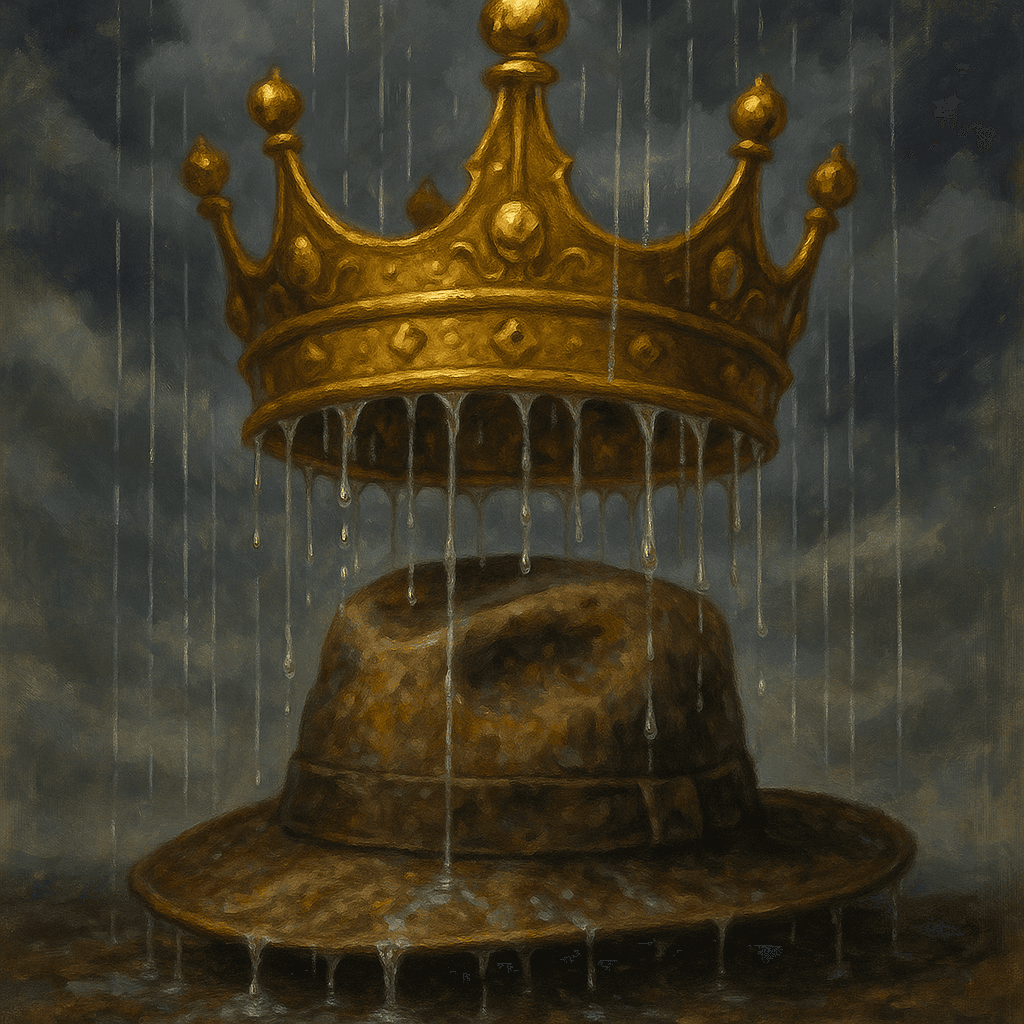
A crown is merely a hat that lets the rain in. — Frederick the Great
—What lingers after this line?
The Irony of the Crown
Frederick the Great’s quip reframes the regal crown not as a symbol of glory, but as an imperfect shelter—an ornate hat susceptible to discomfort. This wry observation undermines the glamour of monarchy, revealing an irony in how power and privilege often carry unexpected inconveniences. The statement encourages readers to question the outward allure of authority and to consider the unseen difficulties embedded within it.
Unseen Responsibilities of Leadership
Examining this idea further, the crown becomes a metaphor for the relentless obligations attached to leadership. Historically, monarchs like Louis XIV of France boasted splendid courts and apparent control, yet their lives were tightly regulated and burdened by the expectations of ruling. The ‘rain’ that seeps through the crown represents the constant pressures, anxieties, and public scrutiny leaders endure—hardly the carefree life outsiders may imagine.
Historical Anecdotes of Royal Struggle
This theme surfaces repeatedly in historical accounts. For instance, Queen Victoria’s extensive diaries between 1832 and 1901 frequently mention her struggles with loneliness and the weight of her royal duties. Despite the pomp of royal ceremonies, sovereigns have long acknowledged the isolating and sometimes overwhelming aspects of the throne. The crown’s inability to shield wearers from the ‘elements’ of adversity is a recurring refrain in the personal reflections of rulers.
Contrasts Between Image and Reality
Moreover, Frederick’s metaphor illuminates a persistent discrepancy between surface image and underlying reality. While monarchs appear untouchable in their finery, the lived experience often includes vulnerability and exposure. Literary works—such as Shakespeare’s 'Henry IV, Part 2,' where the king laments, 'Uneasy lies the head that wears a crown'—reinforce this dichotomy, emphasizing that royal power offers little true protection from the storms of life.
Lessons for Modern Leadership
Ultimately, this witty aphorism carries wisdom for contemporary leaders as well. The ‘crown’ in modern terms can signify any position of responsibility or fame, reminding us that authority brings with it unique strains and sacrifices. Recognizing the burdens beneath prestigious roles fosters empathy for those in power and tempers our envy of their apparent advantages—revealing that every crown, no matter how golden, lets in a little rain.
One-minute reflection
What's one small action this suggests?
Related Quotes
6 selectedThe most courageous act is to remain soft and open in a world that pressures you to armor up. — Bell Hooks
bell hooks
At first glance, courage is often imagined as hardness, resistance, or emotional invulnerability. Yet Bell Hooks overturns that expectation by suggesting that true bravery may lie in refusing to become closed off.
Read full interpretation →When you feel overwhelmed, remember that your truest art emerges from those moments of vulnerability. — Arastasia
Arastasia
Arastasia’s line reframes overwhelm not as a sign of failure, but as a doorway you’re standing in front of. When emotions surge past what feels manageable, they often reveal what matters most—your fears, longings, and tr...
Read full interpretation →Rarely are we more exposed than when we are being kind. — James Baldwin
James Baldwin
At first glance, Baldwin’s line appears simple, yet it quickly reveals a harder truth: kindness is never merely polite behavior. When we are kind, we lower our defenses and allow another person to see what we value, what...
Read full interpretation →To be human is to become visible while carrying what is hidden as a gift to others. — David Whyte
David Whyte
David Whyte’s line begins with a deceptively simple claim: to be human is not merely to exist, but to “become visible.” Visibility here is less about attention and more about presence—showing up in relationships, work, a...
Read full interpretation →You go naked until you die. — Nikki Giovanni
Nikki Giovanni
Nikki Giovanni’s line lands with the bluntness of a fact we rarely face head-on: from our first breath to our last, we ultimately own very little. Although clothing, titles, and accomplishments feel like armor, the quote...
Read full interpretation →Create boundaries. Honor your limits. Say no. Take a break. Let go. Stay grounded. Nurture your body. Love your vulnerability. — Aletheia Luna
Aletheia Luna
Aletheia Luna opens with “Create boundaries,” framing wellbeing not as a vague intention but as a concrete practice. Boundaries are the lines that clarify what you will and won’t accept—how you spend your time, what you...
Read full interpretation →More From Author
More from Frederick the Great →