
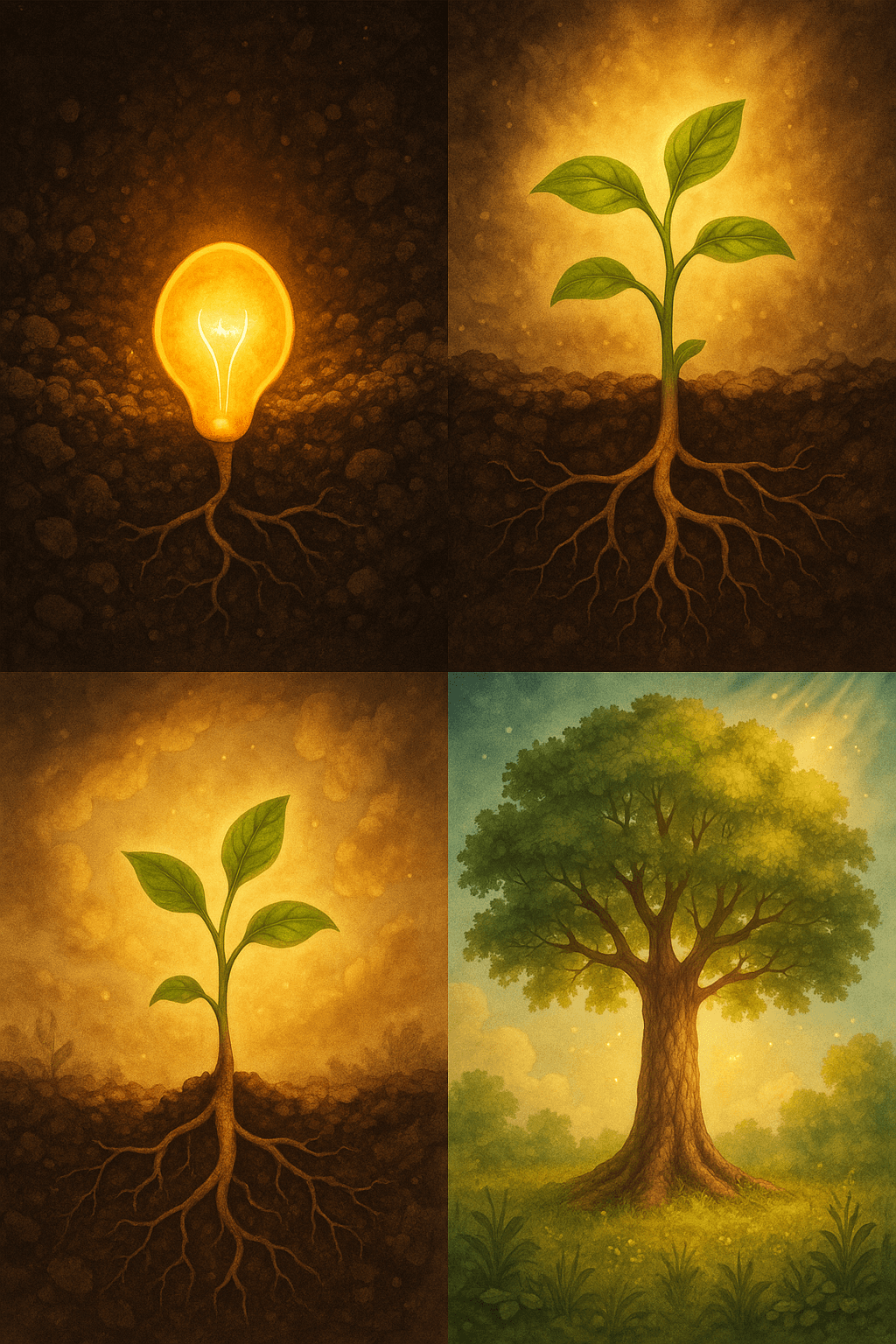
An idea that is developed and put into action is more important than an idea that exists only as an idea. — Buddha
—What lingers after this line?
Distinguishing Thought from Action
Buddha’s insight encapsulates a critical distinction between mere conception and execution. While ideas form the seeds of innovation and progress, their true value emerges only when they manifest in tangible actions. This principle challenges us to move beyond contemplation and into the realm of purposeful activity, emphasizing that the act of realization carries far more significance than passive ideation.
From Philosophical Reflection to Practical Change
As we consider historical examples, the transition from thought to action has often marked pivotal moments in human development. In Plato’s *Republic*, the contrast between the philosopher’s perfect city and the world outside the cave exemplifies this dilemma—great ideas risk withering in isolation unless brought forth into the social fabric. Thus, turning thought into deed is what propels societies forward.
The Teachings of Buddha on Right Action
Drawing directly from Buddha’s teachings, the Noble Eightfold Path emphasizes ‘Right Action’ as essential for spiritual progress. Instead of merely understanding moral precepts, practitioners are urged to embody them. This alignment of intention and behavior bridges the chasm between wisdom and virtue, ensuring that enlightenment influences daily life rather than remaining an abstract ideal.
Innovation and Progress in the Modern World
Furthermore, the modern era abounds with examples where execution outweighs inspiration. Innovators like Thomas Edison famously remarked, ‘Genius is 1% inspiration and 99% perspiration,’ echoing Buddha’s assertion. Breakthroughs in technology and science were possible not solely because of inventive ideas, but because those notions were relentlessly pursued and actualized in the real world.
The Enduring Value of Deeds
Ultimately, the enduring worth of an idea is measured by its impact. Acts, whether small or revolutionary, demonstrate commitment and courage—qualities that distinguish dreamers from doers. As we integrate Buddha’s wisdom into contemporary life, we are reminded that the world changes not through imagination alone, but through the courageous application of inspired thought.
One-minute reflection
What feeling does this quote bring up for you?
Related Quotes
6 selectedUse your skills where they are needed and refine them through practice. — Benjamin Franklin
Benjamin Franklin
At first glance, Franklin’s counsel fuses two actions: put abilities where they relieve a real constraint, and sharpen those abilities through repeated, structured effort. This twofold imperative resists vanity projects...
Read full interpretation →The mind is everything. What you think you become. - Buddha
Buddha
This quote emphasizes the immense power of our thoughts. It suggests that our thinking shapes our reality and that by controlling our thoughts, we can control our destiny.
Read full interpretation →An idea that is developed and put into action is more important than an idea that exists only as an idea. — Buddha
Buddha
Buddha’s insight highlights a fundamental truth about human progress: ideas alone—no matter how brilliant—remain inert unless they are acted upon. The transformation of thought into tangible reality is what truly shapes...
Read full interpretation →To keep the body in good health is a duty, otherwise we shall not be able to keep our mind strong and clear. — Buddha
Buddha
At its core, this saying presents physical care not as vanity or indulgence, but as a duty. The body is treated as the necessary ground on which mental clarity stands, so neglecting it becomes more than a personal lapse—...
Read full interpretation →However many holy words you read, however many you speak, what good will they do you if you do not act upon them? — Buddha
Buddha
Buddha’s question cuts through spiritual comfort by shifting attention from what we consume—holy texts and pious speech—to what we embody. Reading and reciting can feel like progress because they are visible and repeatab...
Read full interpretation →Better than a thousand hollow words, is one word that brings peace. — Buddha
Buddha
Buddha’s saying begins with a simple comparison: quantity versus consequence. A thousand words can impress, distract, or even manipulate, yet still remain “hollow” if they do not reduce suffering or clarify the mind.
Read full interpretation →More From Author
More from Buddha →To keep the body in good health is a duty, otherwise we shall not be able to keep our mind strong and clear. — Buddha
At its core, this saying presents physical care not as vanity or indulgence, but as a duty. The body is treated as the necessary ground on which mental clarity stands, so neglecting it becomes more than a personal lapse—...
Read full interpretation →However many holy words you read, however many you speak, what good will they do you if you do not act upon them? — Buddha
Buddha’s question cuts through spiritual comfort by shifting attention from what we consume—holy texts and pious speech—to what we embody. Reading and reciting can feel like progress because they are visible and repeatab...
Read full interpretation →Better than a thousand hollow words, is one word that brings peace. — Buddha
Buddha’s saying begins with a simple comparison: quantity versus consequence. A thousand words can impress, distract, or even manipulate, yet still remain “hollow” if they do not reduce suffering or clarify the mind.
Read full interpretation →The way is not in the sky. The way is in the heart. — Buddha
Buddha’s line redirects spiritual seeking away from distant, external places—“the sky”—and toward the intimate terrain of lived experience. Instead of imagining truth as something hidden in the heavens or guarded by spec...
Read full interpretation →