
Belonging is not a soft ideal. It is a biological necessity. — American Society on Aging
—What lingers after this line?
Beyond a Gentle Aspiration
At first glance, belonging can sound like a sentimental social goal, something desirable but optional. Yet this quotation firmly rejects that view by insisting that belonging is not a ‘soft ideal’ but a requirement woven into human life itself. In other words, connection is not merely about comfort or politeness; it is about survival, identity, and the ability to function well in the world. This shift in framing matters because it changes how we evaluate loneliness, exclusion, and isolation. Rather than treating them as minor emotional disappointments, we begin to see them as serious threats to well-being. The American Society on Aging captures this urgency by reminding us that to belong is to meet a basic human need, not simply to enjoy a social luxury.
The Biology of Connection
From there, the statement moves naturally into biology. Human beings evolved in groups, and our bodies still reflect that history: safety, cooperation, and shared care were essential to survival long before modern institutions existed. As a result, our nervous systems are highly responsive to signals of inclusion and exclusion, often treating social rejection as a form of danger. Neuroscience and health research reinforce this view. For example, the National Academies of Sciences, Engineering, and Medicine’s report *Social Isolation and Loneliness in Older Adults* (2020) links social disconnection with poorer health outcomes, including increased risks for depression, cognitive decline, and mortality. Thus, belonging is biological not just metaphorically, but in ways that shape stress, immunity, and long-term health.
Why Exclusion Hurts So Deeply
Because belonging is so fundamental, exclusion tends to wound more deeply than outsiders sometimes realize. A person left out of a family, workplace, neighborhood, or cultural community is not simply missing companionship; they may experience a destabilizing loss of security and self-worth. That is precisely why rejection can feel physically draining, emotionally disorienting, and difficult to dismiss. Psychological research helps explain this intensity. Abraham Maslow’s influential hierarchy in “A Theory of Human Motivation” (1943) places love and belonging among core human needs, bridging physical survival and esteem. In that light, exclusion interrupts more than mood—it interrupts development. Consequently, the quote urges us to interpret social pain as real pain, with consequences that ripple through mind and body alike.
Aging and the Need to Matter
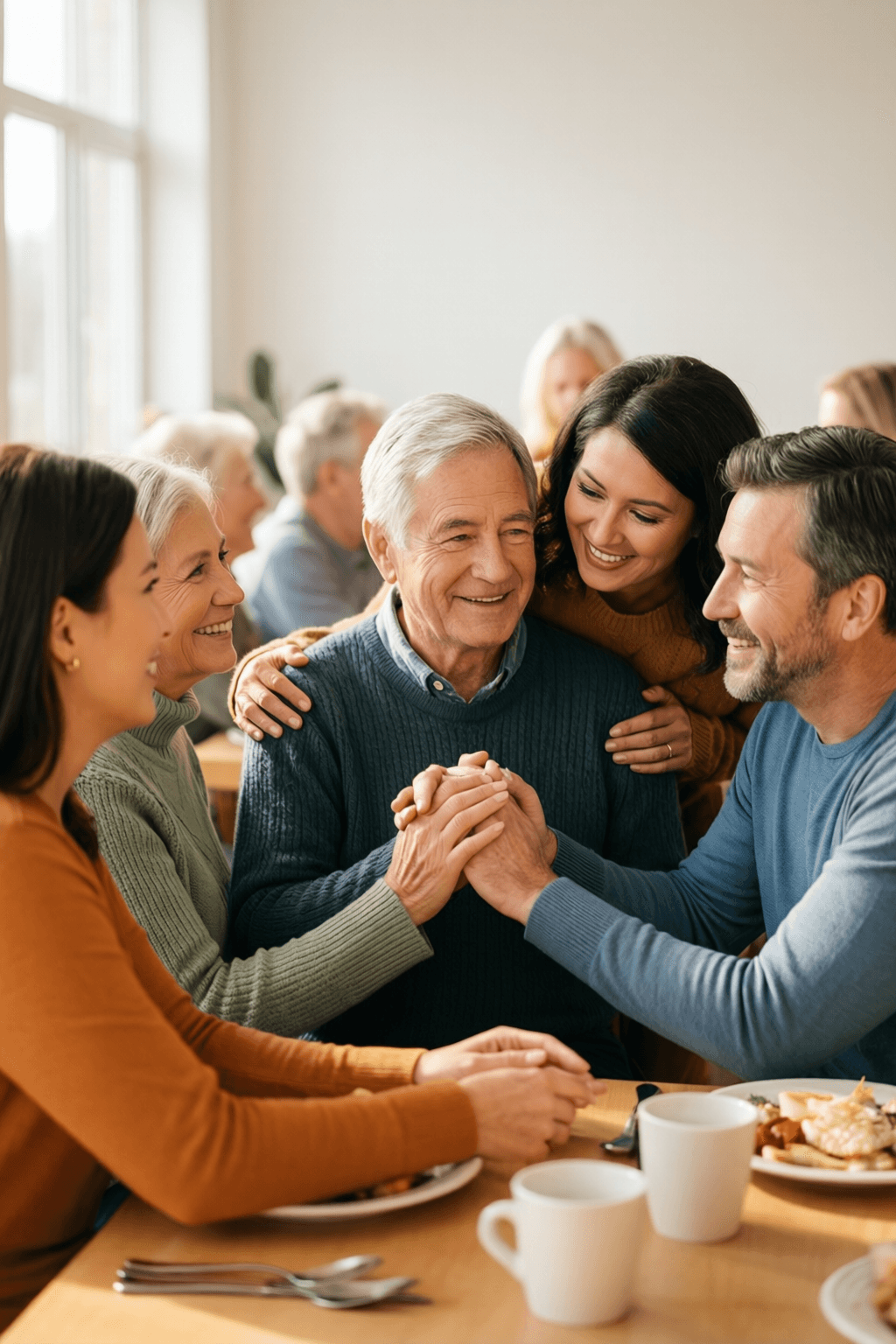
This insight becomes especially powerful when considered in the context of aging. Older adults often face retirement, bereavement, mobility changes, or relocation, all of which can weaken long-standing social bonds. Therefore, belonging in later life is not simply about staying busy; it is about continuing to feel recognized, useful, and woven into a shared human story. The American Society on Aging’s emphasis suggests that communities must do more than provide services. They must create environments where older people are seen and needed—whether through intergenerational programs, neighborhood networks, or inclusive public spaces. In this sense, belonging supports dignity as much as health, because to matter to others is often what sustains a person’s sense of meaning over time.
From Personal Feeling to Social Responsibility
Once belonging is understood as a necessity, it can no longer remain a purely private matter. Families, employers, healthcare systems, and civic institutions all share responsibility for cultivating spaces where people are welcomed rather than merely tolerated. What follows is an ethical shift: inclusion becomes not an act of charity, but an obligation tied to human flourishing. This broader perspective also clarifies why systemic barriers are so damaging. Ageism, racism, disability exclusion, and economic marginalization do more than limit opportunity; they undermine the conditions of belonging itself. Seen this way, the quotation is quietly radical. It calls on society to build structures that nourish connection, recognizing that a healthy community is one in which people do not have to earn their right to belong.
A Stronger Definition of Human Well-Being
Ultimately, the quote offers a fuller definition of what it means to live well. Health is not only the absence of illness, and resilience is not only individual grit; both are strengthened by reciprocal connection. Belonging gives people emotional grounding, social confidence, and the assurance that they are not facing life alone. In the end, that is why the statement feels so forceful. It strips away the tendency to trivialize connection and replaces it with a more honest truth: humans need one another in profound, measurable ways. By calling belonging a biological necessity, the American Society on Aging reminds us that community is not decorative to life—it is part of life’s foundation.
Recommended Reading
As an Amazon Associate, we earn from qualifying purchases.
One-minute reflection
What feeling does this quote bring up for you?
Related Quotes
6 selectedA sense of belonging is a fundamental psychological need, not a luxury. It is the soil in which our well-being takes root and grows. — Milla Titova
Milla Titova
At its core, Milla Titova’s quote argues that belonging is not an optional social bonus but a basic human requirement. By calling it a “fundamental psychological need,” she places connection alongside the conditions that...
Read full interpretation →A sense of belonging is the best medicine for the human heart; it is the feeling that we are part of something larger than ourselves. — Maya Angelou
Maya Angelou
Maya Angelou’s insight begins with a simple but profound truth: emotional healing rarely happens in isolation. By calling belonging “the best medicine,” she suggests that the heart is restored not only through comfort, b...
Read full interpretation →Belonging is not something we join—it's something we bring to life by how we live. — Parker J. Palmer
Parker J. Palmer
At first glance, Parker J. Palmer’s line shifts belonging away from membership and toward practice.
Read full interpretation →Belonging is not a service to be outsourced to an app; it is made by people, in rooms, on purpose. — Samuel J. Abrams
Samuel J. Abrams
Samuel J. Abrams’s line pushes back against a modern fantasy: that loneliness can be solved as conveniently as food delivery or ride-hailing.
Read full interpretation →No man is an island, entire of itself; every man is a piece of the continent, a part of the main. — John Donne
John Donne
John Donne begins by dismantling the fantasy of complete self-sufficiency. To say that no man is an island is to argue that human beings cannot exist in any meaningful sense apart from others; our identities, duties, and...
Read full interpretation →To love is to recognize that we are part of something larger than our own individual anxieties, a quiet web of belonging that holds us all. — bell hooks
bell hooks
bell hooks presents love not as a private feeling alone, but as a widening awareness that loosens the grip of self-absorption. In this view, to love is to realize that our fears and anxieties, while real, do not define t...
Read full interpretation →More From Author
More from American Society on Aging →