
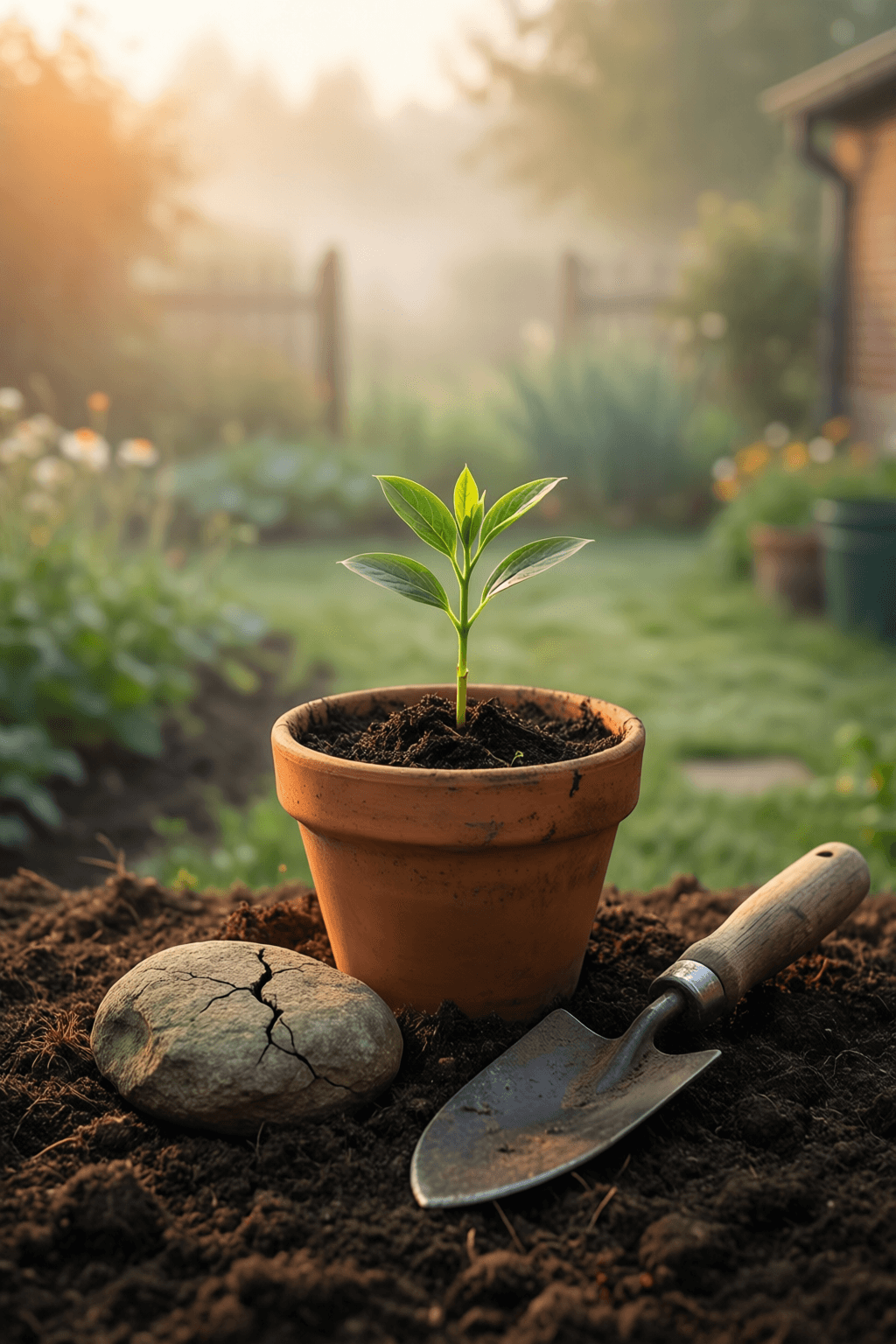
Do not envy those who are free of suffering... because they have nothing that needs cultivation. — C.G. Jung
—What lingers after this line?
The Unsettling Wisdom of the Quote
At first glance, Jung’s statement sounds severe, even paradoxical: why should anyone avoid envying a life without suffering? Yet his point is not that pain is good in itself, but that difficulty often exposes the parts of us still unfinished. In that sense, suffering becomes less a punishment than a summons to growth. From this opening insight, Jung redirects attention from comfort to development. A person untouched by struggle may appear fortunate, but in Jung’s view they may also remain untested, with hidden capacities lying dormant. What needs cultivation—patience, depth, courage, humility—usually emerges only when life resists us.
Suffering as a Force of Formation
Seen this way, suffering acts like pressure on raw material: it shapes character by forcing confrontation with fear, loss, or limitation. Jung’s broader psychology, especially in works like *Modern Man in Search of a Soul* (1933), repeatedly suggests that inner life matures when the ego can no longer pretend it is complete. Pain interrupts illusion, and therefore begins education. As a result, hardship can become formative rather than merely destructive. The person who endures grief, failure, or confusion may gradually acquire a steadier self-knowledge than someone who has never been challenged. Jung is not glorifying misery; rather, he is insisting that adversity often reveals where the soul’s work must begin.
The Idea of Cultivation
The word “cultivation” is crucial because it implies ongoing care, not instant transformation. Jung evokes the image of a field that must be turned, exposed, and tended before anything meaningful can grow. In human terms, suffering may break open hardened assumptions and make room for qualities that comfort alone rarely develops. Moreover, cultivation suggests responsibility. One can suffer and become bitter, or suffer and become deeper; the difference lies in whether pain is reflected upon and integrated. Jung’s thought often centers on this task of integration, where trials are not denied but used to bring neglected parts of the self into consciousness.
Shadow, Depth, and Self-Knowledge
From here, the quote connects naturally to Jung’s notion of the shadow—the hidden, unacknowledged side of personality. Suffering often exposes this shadow by revealing jealousy, rage, helplessness, dependency, or fear. Although such revelations are uncomfortable, they are also psychologically valuable, because they show us what must be faced rather than concealed. In that respect, suffering becomes a doorway to depth. Jung’s *Aion* (1951) explores how wholeness requires confronting the denied parts of oneself, not just celebrating the admirable ones. A life free from such confrontation may seem peaceful on the surface, yet remain inwardly unformed. Pain, unwelcome as it is, can therefore deepen consciousness.
A Challenge to Ordinary Envy
Consequently, Jung’s warning against envy is really a warning against misunderstanding what a good life is. We often envy ease because we imagine it guarantees happiness, maturity, or fulfillment. Jung complicates that assumption by suggesting that a frictionless life may also be a less developed one, lacking the inward refinement that trials can produce. This does not mean we should seek suffering or romanticize other people’s wounds. Instead, Jung invites a shift in values: rather than coveting the untouched life, we might respect the life that has been weathered and transformed. What looks like misfortune from the outside may, inwardly, be the very ground of wisdom.
The Ethical Use of Pain
Finally, the quote carries an ethical demand: if suffering gives us something to cultivate, then we are called to do something with it. Jung’s insight becomes meaningful only when pain is turned into reflection, compassion, and inner work. Otherwise, suffering remains mere injury rather than a source of growth. Thus the line ends not in despair but in responsibility. To suffer is human; to cultivate from suffering is the harder art. Jung reminds us that while freedom from pain may look enviable, the deeper achievement is to let adversity refine the self into something wiser, more conscious, and more fully alive.
One-minute reflection
What does this quote ask you to notice today?
Related Quotes
6 selectedWe are powerful because we have survived, and that is what it is all about—survival and growth. — Audre Lorde
Audre Lorde
At its core, Audre Lorde’s statement redefines power not as domination, status, or control, but as the hard-won strength that comes from continuing despite adversity. To survive is already to have resisted erasure, and L...
Read full interpretation →If you aren't in over your head, how do you know how tall you are? — T. S. Eliot
T. S. Eliot
At first glance, Eliot’s question turns self-knowledge into a matter of pressure rather than comfort. We do not truly learn our limits while standing safely on familiar ground; instead, we discover our height only when c...
Read full interpretation →Today's tears water tomorrow's gardens. — Matshona Dhliwayo
Matshona Dhliwayo
At first glance, Matshona Dhliwayo’s line transforms grief into something unexpectedly fertile. Tears, usually seen as signs of pain or loss, become water for a future garden, suggesting that suffering is not merely endu...
Read full interpretation →Whatever challenge you might find yourself in has a solution. It is very much possible that it is not an obvious one, but it is an opportunity—to grow, to create, to transform. — Dalai Lama
Dalai Lama
At its core, this reflection insists that no challenge is entirely closed off from resolution. The Dalai Lama does not promise that every answer will be easy or immediate; instead, he shifts attention toward possibility...
Read full interpretation →It's okay to be a little bit of a mess. Even the moon has phases, and it's still the most beautiful thing in the night sky. — Sanober Khan
Sanober Khan
At its heart, Sanober Khan’s line offers relief from the exhausting pressure to appear composed at all times. By saying it is acceptable to be ‘a little bit of a mess,’ the quote reframes disorder not as failure but as p...
Read full interpretation →When you learn how to suffer, you suffer far less. Resilience is not about avoiding the fire; it is about becoming fireproof. — Thich Nhat Hanh
Thich Nhat Hanh
At first glance, Thich Nhat Hanh’s quote appears paradoxical: how could learning to suffer make suffering lighter? Yet his point is that pain intensifies when we resist it, fear it, or treat it as a personal failure.
Read full interpretation →More From Author
More from C.G. Jung →Know the inner patterns of your mind, then set them to serve the life you intend. — C. G. Jung
C. G.
Read full interpretation →Knowledge without compassion is brutality. — C.G. Jung
C.G. Jung’s succinct observation draws attention to a fundamental ethical concern: knowledge, when stripped of compassion, can become a weapon rather than a tool for good.
Read full interpretation →