
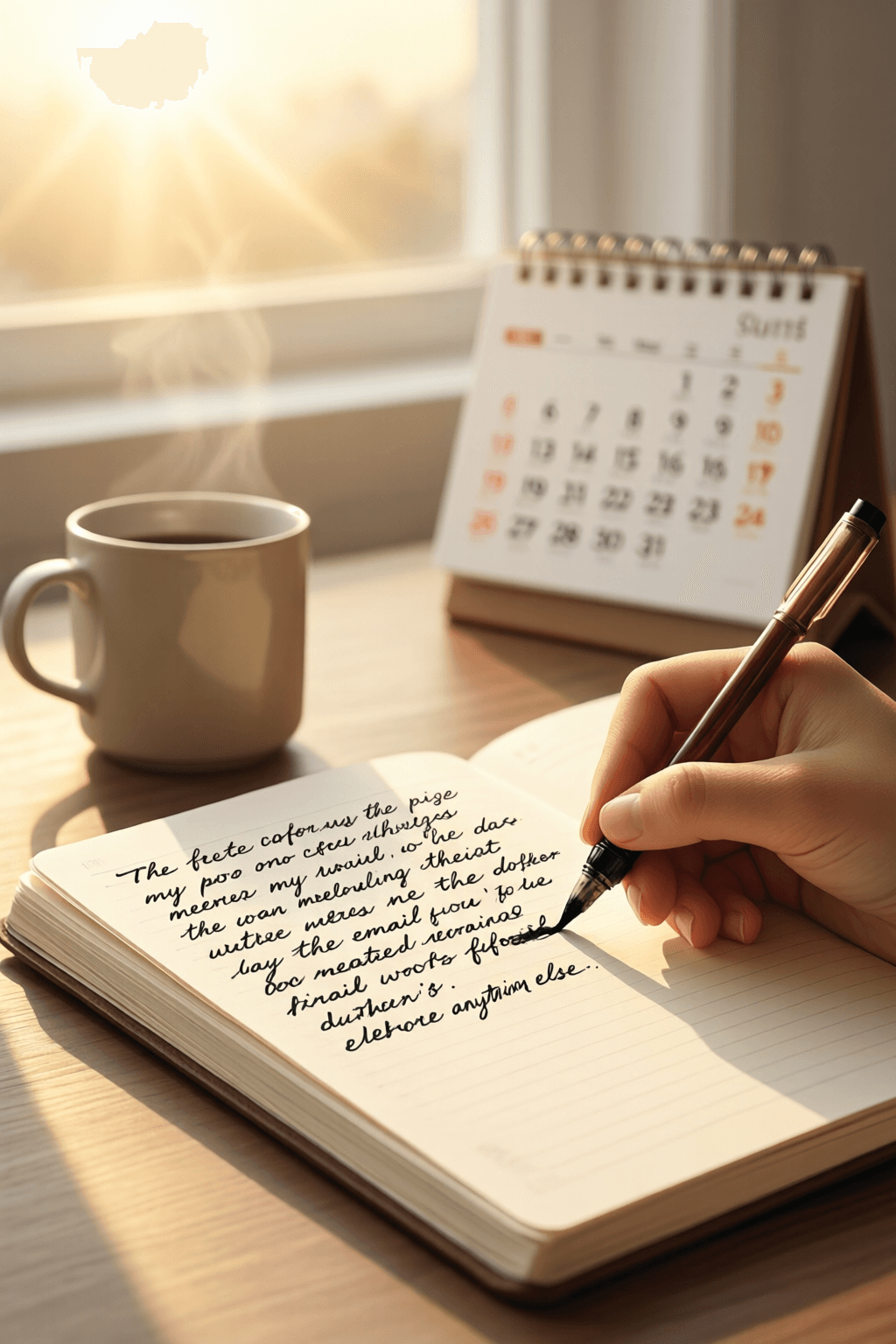
Even today, I aim to get at least one piece of writing done for myself every day. Putting my work first before meetings, before anything else. — Jacqueline Fisch
—What lingers after this line?
A Discipline Rooted in Self-Priority
Jacqueline Fisch’s reflection begins with a simple but demanding principle: make space for one piece of writing each day for oneself. At its core, this is not merely a productivity tactic but an act of self-priority. By placing her own work before meetings and before the day’s other claims, she frames writing as essential rather than optional. In this way, the quote speaks to a wider creative truth. Important work rarely gets completed in leftover moments; instead, it usually requires deliberate protection. What Fisch describes is a habit of honoring the inner life before the outer world begins making requests.
Why the First Hours Matter
Just as importantly, the phrase “before meetings, before anything else” highlights the value of timing. Early hours often hold a rare clarity, when attention has not yet been fractured by emails, agendas, and obligations. Many writers have recognized this advantage; Toni Morrison once described writing before dawn while raising children and working full-time, using the quiet margins of morning to preserve her creative voice. Therefore, Fisch’s practice suggests that when creative work comes first, it benefits from the mind’s freshest energy. Rather than hoping inspiration survives the day’s interruptions, she gives it the strongest possible beginning.
A Small Daily Piece, Not Grand Perfection
Equally striking is Fisch’s modest standard: “at least one piece of writing.” She does not invoke a masterpiece, a chapter, or a perfect draft. Instead, she points toward consistency through attainable effort. This echoes the long tradition of artists who value regular practice over dramatic bursts of output; Anthony Trollope, for example, famously maintained a steady writing routine in small measured intervals while holding a demanding job in the British Post Office. As a result, the quote quietly rejects perfectionism. Progress becomes something built from repeated acts, and even a small completed piece can preserve momentum, confidence, and creative identity.
Protecting Creative Identity From Busyness
From there, the quote also becomes a subtle critique of modern busyness. Meetings, administrative tasks, and constant responsiveness can easily create the illusion of accomplishment while leaving little room for original thought. Fisch’s decision to place her work first resists that drift. She draws a line between being occupied and actually making something. Consequently, her words resonate with anyone who has watched meaningful ambitions get pushed aside by routine obligations. The discipline she describes is not selfish in a careless sense; rather, it is protective, preserving the part of life where one’s distinct voice can emerge.
A Habit That Builds a Life’s Work
Over time, the significance of this practice deepens. One daily piece of writing may appear small in isolation, yet repeated across months and years it becomes a body of work. This incremental model recalls Annie Dillard’s observation in The Writing Life (1989) that how we spend our days is, of course, how we spend our lives. Fisch’s habit turns that idea into a concrete ritual. Finally, the quote offers more than advice for writers alone. It suggests that a meaningful life is often shaped by what we consistently do before the world intervenes. By beginning with her own work, Fisch demonstrates how devotion, repeated daily, becomes both practice and principle.
One-minute reflection
Why might this line matter today, not tomorrow?
More From Author
More from Jacqueline Fisch →