
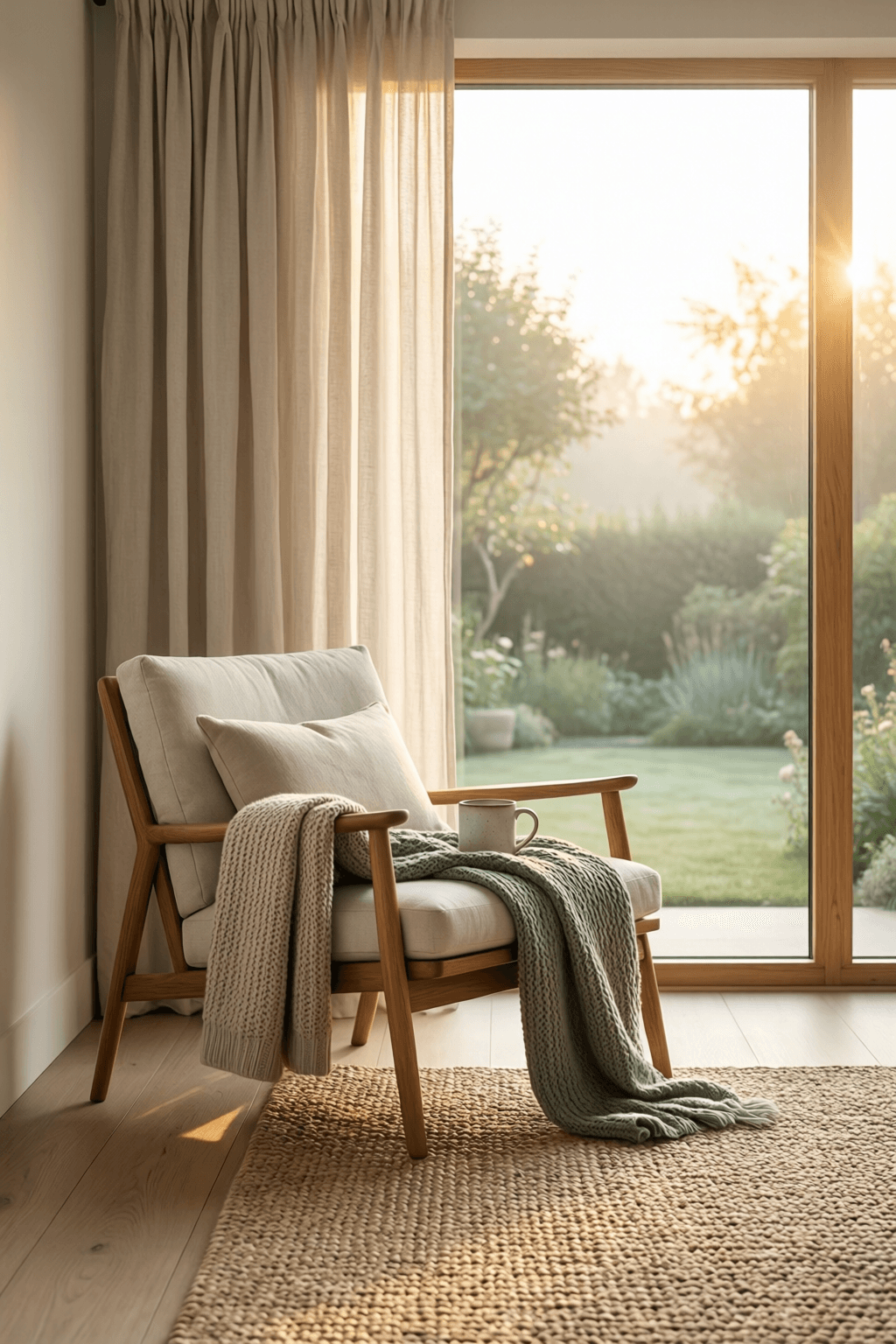
Home is the nicest word there is. — Laura Ingalls Wilder
—What lingers after this line?
The Warmth Hidden in a Simple Word
Laura Ingalls Wilder’s line elevates an ordinary word into something deeply emotional. By calling home “the nicest word there is,” she suggests that its power lies not in sound alone, but in everything it gathers around itself: safety, belonging, memory, and rest. In just a few words, she turns language into shelter. From that starting point, the quote invites us to see home not merely as a structure, but as a feeling. A person may live in many houses over a lifetime, yet only certain places become home because they hold the intimate texture of daily life—the familiar chair, the shared meal, the voice calling from another room.
More Than a Physical Place
Moving beyond its literal meaning, home often represents emotional rootedness rather than geography. Wilder’s own writings in the Little House books, especially Little House on the Prairie (1935), portray home as something built through care and persistence even amid uncertainty. In that sense, home is created as much by love and labor as by walls and roofs. Consequently, the quote resonates with people who have moved often or lived between cultures. For them, home may be portable—a family ritual, a language spoken at the table, or the reassuring presence of someone who makes the world feel less strange. The nicest word, then, is the one that promises recognition.
Memory and the Language of Comfort
Because home is tied so closely to memory, the word can carry unusual tenderness. Hearing it may summon childhood scenes, seasonal smells, or moments of protection during hardship. Marcel Proust’s In Search of Lost Time (1913–1927) famously shows how sensory experience can unlock whole worlds of memory; likewise, the word home can release an emotional past in an instant. As a result, Wilder’s statement feels universally true even when individual homes differ greatly. What people often cherish is not perfection, but familiarity—the worn doorway, the nightly routine, the small habits that tell us we are somewhere we belong. Comfort, after all, is often made of repetition.
A Refuge in an Uncertain World
At the same time, the quote gains force because the world beyond home can be unstable. Work, travel, conflict, and change all expose people to demands that require vigilance. Against that backdrop, home becomes the imagined place where defenses can soften. Gaston Bachelard’s The Poetics of Space (1958) reflects on the house as a site of daydream, intimacy, and inner life, reinforcing Wilder’s gentle insight. Therefore, calling home the nicest word is also a way of praising refuge itself. It names the human need for a private realm where one can recover, grieve, celebrate, and simply be unguarded. The beauty of the word lies in its promise of return.
The Ideal and the Reality
Yet the quote also carries an aspirational note, because not every home is peaceful. For some, the word may evoke longing more than comfort. Even so, Wilder’s phrasing remains meaningful because it points toward what home ought to be: a place of kindness, acceptance, and ease. In that way, the sentence describes both a memory and a hope. Ultimately, its enduring appeal comes from this blend of tenderness and desire. People are moved by the word home because it names one of life’s most basic human wishes—to be known, welcomed, and safe. That is why, across generations, it can still sound like the nicest word there is.
One-minute reflection
Where does this idea show up in your life right now?
Related Quotes
6 selectedA home is not a place, it's a feeling. It's the warmth you build with the people who actually hear you. — Bell Hooks
bell hooks
At first glance, Bell Hooks shifts home away from geography and architecture and into the realm of emotional experience. Her words suggest that home is not secured by walls, ownership, or even permanence, but by a sense...
Read full interpretation →In the embrace of family, we find our true home, where love wraps around us like a warm, familiar blanket. — Mitch Albom
Mitch Albom
At first glance, Mitch Albom’s reflection shifts the meaning of home away from walls, roofs, and addresses toward something more intimate: the emotional shelter created by family. In this view, home is not merely where w...
Read full interpretation →Home is the place where one finally allows the armor to drop and the spirit to breathe. — Maya Angelou
Maya Angelou
At its core, Maya Angelou’s reflection defines home not merely as a structure but as a sanctuary of emotional safety. The image of letting “the armor drop” suggests that daily life often requires protection—composure, re...
Read full interpretation →A home should be an anchor, a port in a storm, a refuge, a happy place in which to dwell. — Marvin J. Ashton
Marvin J. Ashton
Marvin J. Ashton’s statement presents home not merely as a physical structure but as a place of emotional and spiritual grounding.
Read full interpretation →The best way to turn a house into a home is to fill it with love and laughter. — William J. Bennett
William J. Bennett
At first glance, Bennett’s quote draws a clear line between a house and a home. A house is a physical structure, defined by rooms, doors, and possessions; a home, by contrast, is shaped by emotional life.
Read full interpretation →Home is where laughter and gratitude grow. — Melody Beattie
Melody Beattie
At first glance, Melody Beattie’s line reframes home as something more living than a building. Instead of focusing on property, décor, or permanence, it suggests that home is recognized by what flourishes inside it: laug...
Read full interpretation →More From Author
More from Laura Ingalls Wilder →I am beginning to learn that it is the sweet, simple things of life which are the real ones after all. — Laura Ingalls Wilder
Laura Ingalls Wilder’s words capture a mature discovery rather than a sudden slogan: what is most real in life is often what is most ordinary. By calling simple things “sweet,” she adds emotional warmth to what might oth...
Read full interpretation →Peace is not freedom from the storm, but peace within it. — Laura Ingalls Wilder
Laura Ingalls Wilder’s line immediately shifts the meaning of peace away from perfect circumstances and toward an inner steadiness. Rather than promising a life without conflict, grief, or uncertainty, it suggests that c...
Read full interpretation →