
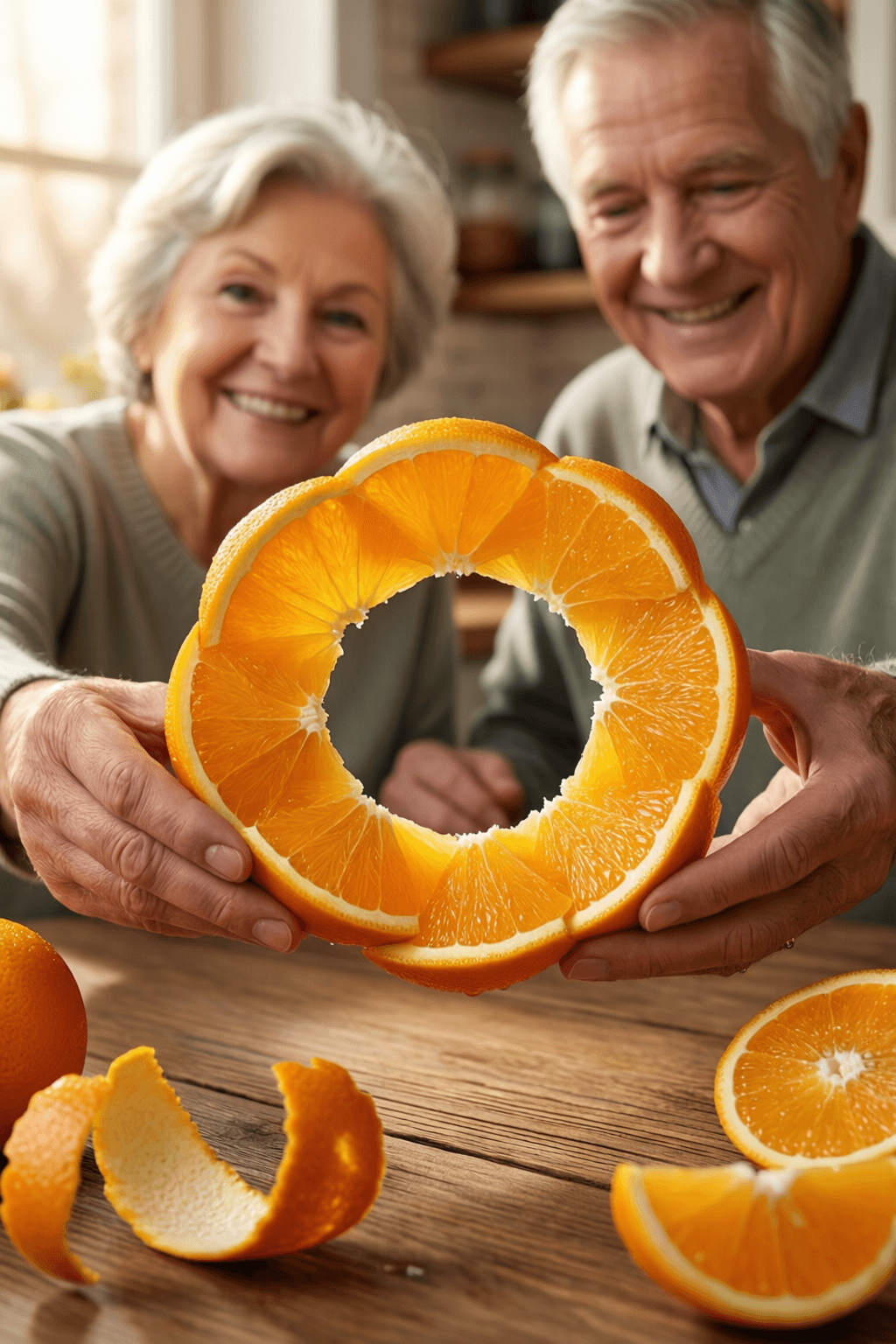
If the family were a fruit, it would be an orange, a circle of sections, held together but separable—each segment distinct. — Letty Cottin Pogrebin
—What lingers after this line?
A Household in Fruit Form
At first glance, Letty Cottin Pogrebin’s image feels simple, yet it captures family structure with unusual precision. By comparing a family to an orange, she evokes something whole, rounded, and naturally unified. The fruit is not a single solid mass, however, and that distinction matters: its wholeness depends on many parts existing side by side. In that sense, the metaphor immediately moves beyond sentimentality. Rather than imagining family as perfect sameness, Pogrebin presents it as a collection of related pieces. The orange is one object, yet every segment retains its own shape, suggesting that belonging does not erase individuality.
Unity Without Uniformity
From there, the phrase “held together but separable” becomes the heart of the insight. Families are bound by memory, obligation, affection, and history, but these bonds do not eliminate difference. Each person remains a distinct self, with private desires, contrasting temperaments, and separate paths through life. This idea echoes sociological thinking about healthy interdependence: strong families often allow closeness without demanding total conformity. In family systems theory, Murray Bowen’s work in the 20th century emphasizes differentiation of self—the ability to stay connected while remaining emotionally distinct. Pogrebin’s orange offers a vivid domestic version of that principle.
The Meaning of Separate Segments
Moreover, the orange’s sections suggest roles within a family that are recognizable yet not identical. A parent, sibling, grandparent, or child may share the same outer peel of family identity, but each occupies a different position and carries a different texture of experience. Even within the same home, no two members live the family in exactly the same way. Literature often reflects this truth. Louisa May Alcott’s Little Women (1868) portrays the March sisters as deeply attached, yet clearly separate in ambition and character—Jo restless, Beth gentle, Amy polished, Meg domestic. Like orange segments, they belong to one whole while remaining unmistakably themselves.
The Peel as Protection and Bond
At the same time, an orange stays intact because something encloses it. Though Pogrebin does not name the peel directly, it lingers in the metaphor as the protective layer that keeps the sections together. In family life, that outer bond may be shared values, rituals, language, or simply the long accumulation of common experience. Consequently, family cohesion often comes less from constant agreement than from this protective wrapping of connection. Holiday meals, inherited stories, and repeated gestures of care function much like the rind: they may not erase tension, but they preserve the possibility of return. Even when segments pull apart, the memory of the whole remains.
Love That Allows Distance
Yet the metaphor is especially humane because it makes room for separation. Orange segments can be taken apart without ceasing to be part of the same fruit, just as family members may move away, disagree, or lead radically different lives without severing every bond. Pogrebin therefore rejects the idea that love must mean permanent closeness in form. This insight feels especially modern. In an age shaped by migration, divorce, chosen families, and generational change, kinship often survives through flexibility rather than rigidity. The image suggests that distance is not always damage; sometimes it is simply the natural unfolding of distinct lives still marked by a common origin.
A Gentle Vision of Belonging
Finally, Pogrebin’s orange offers a balanced and generous vision of what family can be. It is neither an indivisible unit that crushes individuality nor a loose collection of strangers. Instead, it is an arrangement of nearness and difference, intimacy and autonomy, all contained within a recognizable whole. That is why the metaphor endures. It honors the warmth of connection while admitting the reality of personal boundaries. In just a few words, Pogrebin describes family not as forced fusion, but as a form of belonging spacious enough to hold many separate selves together.
One-minute reflection
Why might this line matter today, not tomorrow?
Related Quotes
6 selectedFamily is not defined by our genes, it is built and maintained through love. — Unknown (Wait, skipping to) Family is the best thing you could ever wish for. — Michael J. Fox
Michael J. Fox
Taken together, these two quotations broaden the idea of what family means. The first insists that family is not merely a biological fact but a relationship built through care, loyalty, and steady affection.
Read full interpretation →In truth a family is what you make it. — Marge Kennedy
Marge Kennedy
At its core, Marge Kennedy’s line challenges the idea that family is fixed solely by blood or legal ties. By saying that a family is what you make it, she shifts attention from inheritance to intention, suggesting that b...
Read full interpretation →You're born an original—don't die a copy. — John Mason
John Mason
At its core, John Mason’s line is a sharp reminder that every person begins life with a distinct combination of temperament, talent, and perspective. To be “born an original” suggests that individuality is not something...
Read full interpretation →We are not here to fit into a mold, but to break the ones that keep our most honest work hidden. — Virginia Woolf
Virginia Woolf
At its core, Virginia Woolf’s statement rejects the quiet pressure to adapt ourselves to preexisting expectations. To “fit into a mold” suggests becoming legible, acceptable, and predictable at the cost of what is most i...
Read full interpretation →The individual has always had to struggle to keep from being overwhelmed by the tribe. But no price is too high to pay for the privilege of owning yourself. — Rudyard Kipling
Rudyard Kipling
Kipling’s statement begins with a stark observation: individuality is rarely effortless. From the start, he frames human life as a struggle between the person and the collective, where the ‘tribe’ represents not only com...
Read full interpretation →Your weirdness is the source of your character and creative powers. Weird is who we are, the best parts, not perfect, not trying—just yourself. — James Victore
James Victore
At its core, James Victore’s quote reframes “weird” from an insult into a declaration of identity. Rather than treating unusual traits as flaws to be corrected, he presents them as the very source of character and creati...
Read full interpretation →More From Author
More from Letty Cottin Pogrebin →