
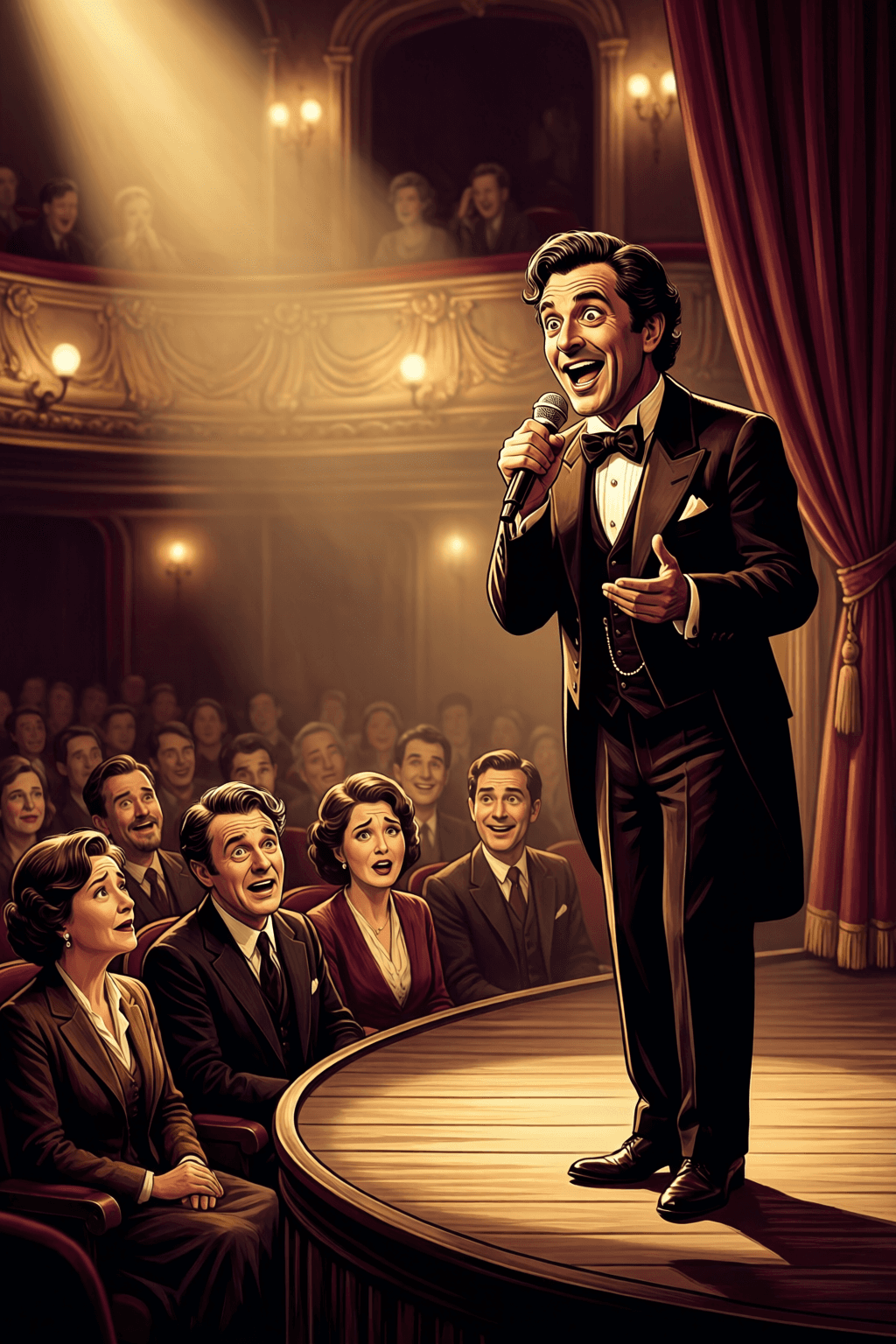
If you can't impress anyone with your intelligence, confuse them with your bullshit. — W.C. Fields
—What lingers after this line?
The Joke Beneath the Insult
At first glance, W.C. Fields delivers a sharp, irreverent one-liner about social survival: if genuine brilliance fails, sheer verbal smoke may still win the room. The humor works because it exposes a familiar human tactic—people often substitute confidence, jargon, or theatrical certainty for actual understanding. In that sense, the quote is less advice than diagnosis. At the same time, its comic sting depends on recognition. Most listeners have encountered someone who speaks at length, says little, and yet leaves others reluctant to challenge them. Fields turns that experience into satire, revealing how easily performance can masquerade as intellect.
Charm as a Social Strategy
From there, the quote opens onto a broader truth about public life: being persuasive is not always the same as being correct. In conversation, meetings, or politics, people often reward fluency over depth, especially when the subject is complex enough to discourage scrutiny. Fields understood showmanship, and his line reflects the performer’s instinct that style can carry an audience surprisingly far. Consequently, the remark hints at a world in which wit, timing, and bravado become tools of influence. Even when the content is flimsy, the delivery may create an illusion of mastery, buying admiration—or at least silence.
A Tradition of Satirizing Pretension
Seen in literary context, Fields belongs to a long tradition of mocking false wisdom. Shakespeare’s Polonius in Hamlet (c. 1600) piles up polished phrases that sound profound yet often conceal banality, while Molière’s The Bourgeois Gentleman (1670) laughs at people dazzled by intellectual affectation. Fields condenses that same critique into a modern, brutal punchline. Thus, the quote does more than mock individuals; it mocks audiences too. Pretension survives because others are willing to be impressed by appearances. Satire, in this sense, becomes a tool for puncturing both vanity and gullibility.
Why Confusion Can Look Like Depth
Moreover, psychology helps explain why nonsense sometimes passes for brilliance. Studies on the ‘illusion of explanatory depth’ suggest that people often overestimate their own understanding, while research discussed by Daniel Kahneman in Thinking, Fast and Slow (2011) shows how confidence and coherence can persuade us even when evidence is weak. If a speaker sounds certain enough, listeners may assume the message is meaningful. As a result, confusion itself can be mistaken for sophistication. Dense language, abstract claims, and evasive answers may create the impression that an idea is too advanced for easy grasp, when in fact it may simply be empty.
The Modern Relevance of the Line
Finally, Fields’s quip feels especially current in an age of hot takes, corporate jargon, and online posturing. Social media, marketing, and even professional culture often reward quick authority over careful thought, making his joke sound less like vintage comedy and more like a commentary on modern communication. The line endures because it names a tactic people still recognize instantly. Yet its lasting value lies in its warning. Rather than encouraging deception, the quote invites skepticism: whenever language dazzles more than it clarifies, we should pause. In that pause, Fields’s humor becomes a practical lesson in distinguishing intelligence from performance.
One-minute reflection
What's one small action this suggests?
Related Quotes
5 selectedI like work; it fascinates me. I can sit and look at it for hours. — Jerome K. Jerome
Jerome K. Jerome
Jerome K. Jerome’s quip turns a familiar virtue—loving work—into a sly confession: he loves it most as a spectator.
Read full interpretation →I am so clever that sometimes I don't understand a single word of what I am saying. — Oscar Wilde
Oscar Wilde
Oscar Wilde’s line works first as a comic confession: he portrays himself as so dazzlingly intelligent that his own speech becomes unintelligible even to him. Yet the humor also hints at self-awareness, because Wilde is...
Read full interpretation →Hope is the only universal liar who never loses his reputation for veracity. — Robert G. Ingersoll
Robert G. Ingersoll
Robert G. Ingersoll’s observation deftly captures hope as both a soothing companion and a disguised deceiver.
Read full interpretation →Truth is beautiful, without doubt; but so are lies. — Ralph Waldo Emerson
Ralph Waldo Emerson
Ralph Waldo Emerson’s observation boldly pairs the beauty of truth with that of lies, challenging a prevailing moral instinct to venerate one and vilify the other. In doing so, he invites us to recognize not only the inh...
Read full interpretation →Start your day with a smile and get it over with. — W.C. Fields
W.C. Fields
This quote reflects W.C. Fields' signature wit and humor.
Read full interpretation →More From Author
More from W.C. Fields →