
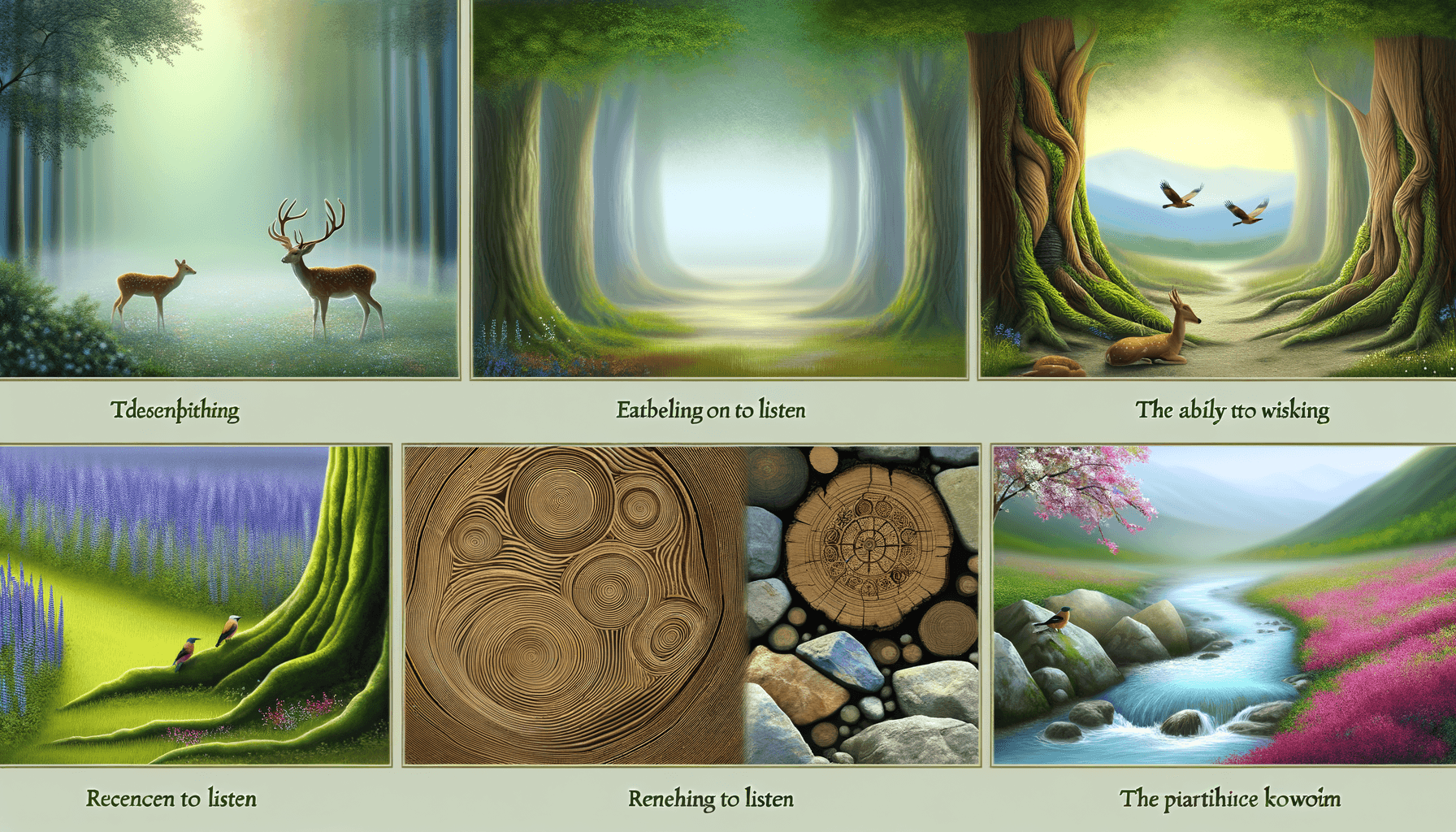
In seeking wisdom, the first step is silence, the second listening, the third remembering, the fourth practicing, the fifth teaching others. — Solomon Ibn Gabriol
—What lingers after this line?
The Importance of Silence
Wisdom starts with quieting one's mind and refraining from speaking out, creating the space for true learning to begin.
Active Listening
Once silent, the next step is to attentively listen to others, absorbing knowledge and gaining different perspectives.
Remembering and Reflection
After listening, it is crucial to remember and reflect on what has been learned, making the knowledge one's own.
Application Through Practice
Wisdom is not merely theoretical; practicing what is learned integrates knowledge into daily life and experience.
Teaching as the Final Step
The highest form of wisdom involves sharing knowledge with others, helping them embark on their own journeys toward wisdom.
One-minute reflection
Where does this idea show up in your life right now?
Related Quotes
6 selectedWisdom is knowing when to have rest, when to have activity, and how much of each to have. — Etty Hillesum
Etty Hillesum
Etty Hillesum’s insight begins with a simple but demanding idea: wisdom is not merely knowing what is good, but knowing when it is good. Rest and activity are both necessary, yet either can become harmful when taken at t...
Read full interpretation →Wisdom comes only to the silent mind. — Krishnamurti
Krishnamurti
Krishnamurti’s statement begins with a simple but demanding insight: wisdom is not merely accumulated information, nor is it the reward for constant thinking. Instead, it arises when the mind becomes quiet enough to perc...
Read full interpretation →No one masters his craft the first day. — Johannes Brahms
Johannes Brahms
At its core, Brahms’s remark reminds us that every serious craft starts in awkwardness rather than brilliance. The first day is rarely a moment of mastery; instead, it is a confrontation with limits, uncertainty, and the...
Read full interpretation →Never call yourself a philosopher; show it. — Epictetus
Epictetus
Epictetus compresses an entire ethical program into a sharp command: do not claim the title, demonstrate the life. In other words, wisdom is not a badge one pins on oneself but a pattern others can recognize in conduct.
Read full interpretation →You are not starting over. You're starting wiser. — Meredith Eastwood
Meredith Eastwood
At first glance, Meredith Eastwood’s line gently challenges the fear that often accompanies change. To say, “You are not starting over,” is to reject the idea that every setback erases what came before.
Read full interpretation →The wise do things slowly, because they love it. — David Fell
David Fell
At first glance, David Fell’s line seems to praise caution, yet it reaches further than mere hesitation. To do something slowly, in this view, is not to be indecisive but to be fully present.
Read full interpretation →More From Author
More from Solomon Ibn Gabriol →