
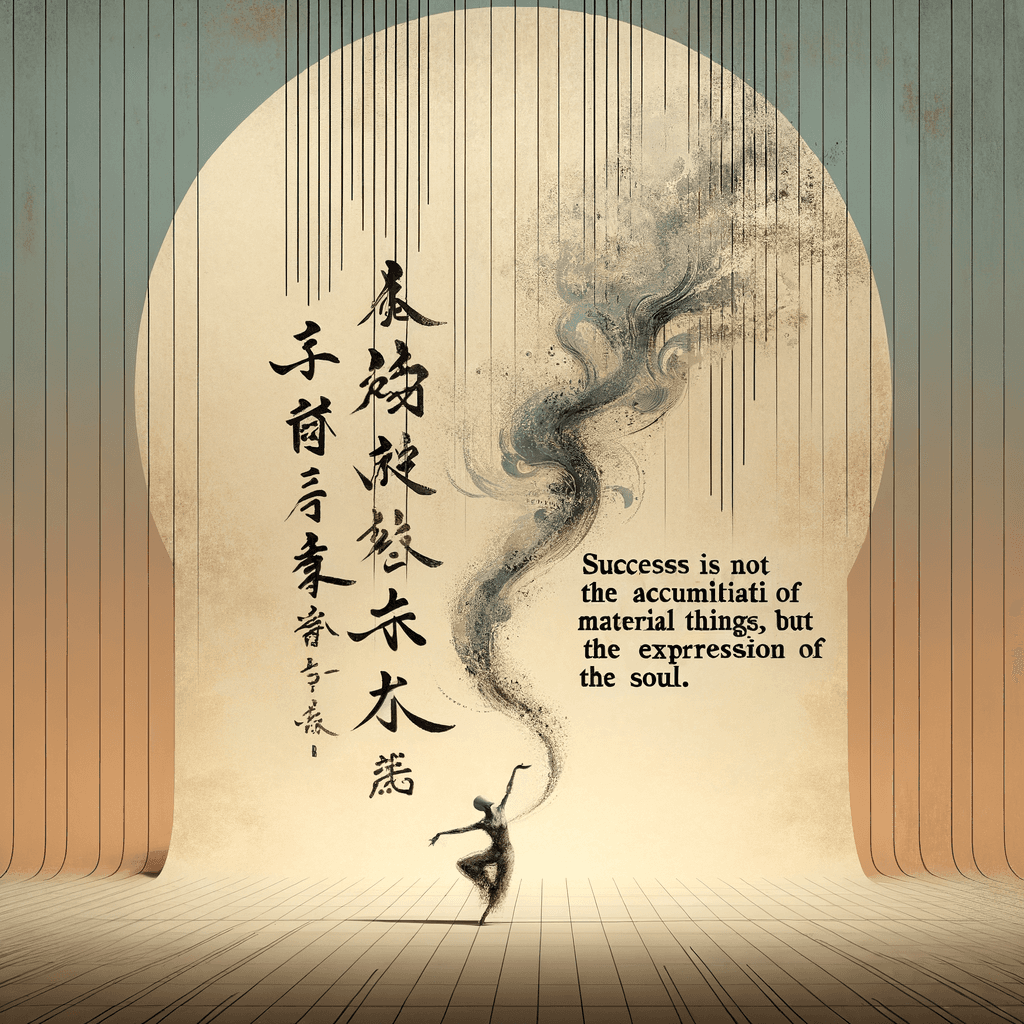
Success is not the accumulation of material things, but the expression of the soul. — Yoko Ono, Japan.
—What lingers after this line?
Definition of Success
This quote redefines success, suggesting that it should be measured not by material wealth but by how well individuals express their true selves and their passions.
Spiritual and Personal Fulfillment
It highlights the idea that true success comes from personal growth, creativity, and alignment with one's inner values, rather than external achievements or possessions.
Materialism vs. Spirituality
The statement contrasts materialism with spirituality, arguing that an overemphasis on material goods can distract from deeper, more meaningful accomplishments.
Emotional Authenticity
Ono emphasizes the importance of emotional honesty and authenticity in one's life pursuits, suggesting that a fulfilled life flows from being true to oneself.
Cultural Context
Yoko Ono, a Japanese multimedia artist and musician, is known for her advocacy of peace and artistic expression. Her perspective on success reflects her holistic view of life and creativity cultivated through her experiences in both Japan and the West.
One-minute reflection
Where does this idea show up in your life right now?
Related Quotes
6 selectedTurn your sharp feelings into fuel for honest work; that alchemy is survival and art. — Sylvia Plath
Sylvia Plath
Sylvia Plath’s line urges us to do more than simply endure sharp feelings; it asks us to redirect them. Instead of letting anger, grief, or fear consume us inwardly, she proposes we convert this volatile energy into work...
Read full interpretation →Let your actions be the poem that explains your belief — Sappho
Sappho
Sappho’s line, “Let your actions be the poem that explains your belief,” urges a shift from declaring what we believe to embodying it. Rather than relying on slogans, creeds, or polished arguments, she suggests that our...
Read full interpretation →Let your voice be the compass that guides your hands. — Chinua Achebe
Chinua Achebe
Beginning with Achebe’s imperative, the metaphor aligns inner conviction (“voice”) with the practical world (“hands”) via a steadying instrument (“compass”). He often argued that stories are not ornaments but bearings—mo...
Read full interpretation →When the soul is in harmony, it is impossible to fail. — Confucius
Confucius
This quote suggests that true success comes from inner harmony. When one's soul is balanced and at peace, failure becomes unlikely because one's actions align with their values and purpose.
Read full interpretation →The moment we begin to fear the opinions of others and hesitate to tell the truth that is in us, the divine floods cease to flow into our lives. — Elizabeth Gilbert
Elizabeth Gilbert
To begin, Gilbert warns that fearing others’ opinions often leads us to silence our inner voice. This tendency toward people-pleasing can drain our sense of authenticity, as decisions and expressions become filtered thro...
Read full interpretation →Create boldly; the world owes you the astonishment of your true work. — William Blake
William Blake
At its core, the line demands courage anchored in authenticity: create boldly because your deepest work is not a luxury but a necessity. The clause “the world owes you” reframes reception as an ethical claim—society bene...
Read full interpretation →More From Author
More from Yoko Ono, Japan. →