
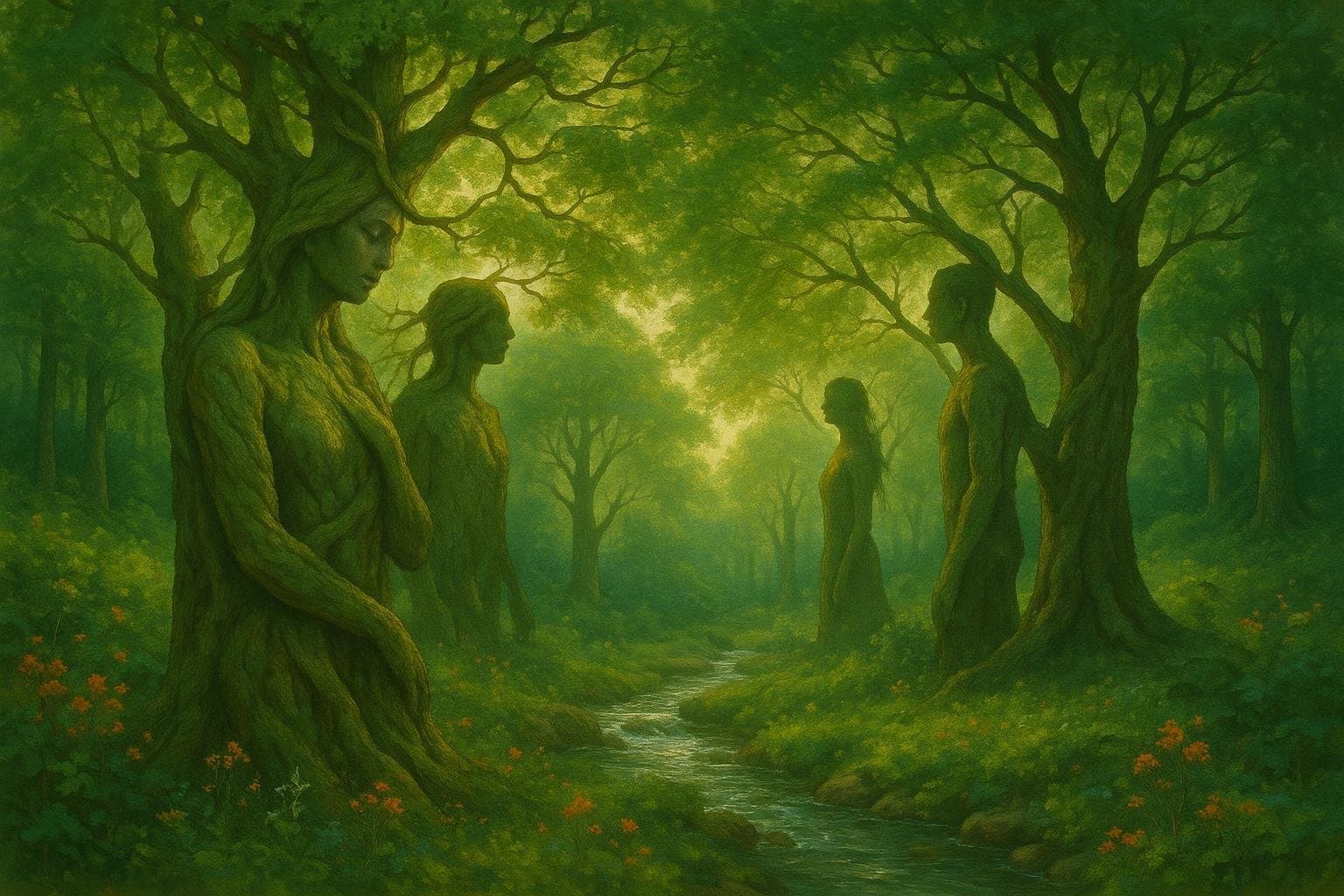
The earth does not belong to us. We belong to the earth. — Chief Seattle
—What lingers after this line?
Challenging Human Ownership
Chief Seattle’s poignant statement overturns the commonly held assumption that the earth is simply a resource for human exploitation. By declaring, “The earth does not belong to us,” he reframes the relationship, urging us to question our entitlement over land and nature. This humility invites a deeper reflection on our actions, especially in light of industrialization and territorial expansion, which often disregard the inherent rights of the natural world.
An Indigenous Worldview
Building on this foundation, Chief Seattle’s perspective reflects a profound Indigenous worldview in which humans are seen as an integral part of a broad, interconnected family of life. In many Native American cultures, the earth is revered as a living entity—a mother who nurtures all beings. This contrasts sharply with colonial ideas of land as something to be divided and owned, emphasizing instead a relationship of reciprocity and respect, as noted by Vine Deloria Jr. in ‘God Is Red’ (1973).
Ecological Interdependence
Following from these cultural attitudes, modern ecological science underscores how deeply entwined human survival is with the well-being of the planet. The principle that 'we belong to the earth' is echoed in the interconnectedness of ecosystems outlined in Rachel Carson’s ‘Silent Spring’ (1962). Our air, water, and food depend on healthy natural cycles, making us inextricable participants in the earth’s systems rather than detached proprietors.
Consequences of Disconnection
If we ignore this call to humility and belonging, the consequences become all too evident. Environmental crises—such as deforestation, climate change, and species extinction—result largely from treating the earth as property to be consumed. The current state of the Amazon rainforest, rapidly diminishing under human hands, serves as a stark example of what happens when stewardship gives way to dominion.
Towards Reverence and Responsibility
Ultimately, accepting that we belong to the earth invites us to develop a sense of reverence and responsibility. As this ethos gains global momentum, movements like ‘Earth Jurisprudence’—connecting legal rights to nature itself—echo Chief Seattle’s declaration. By embracing our place within a larger living whole, we are inspired to protect and restore the planet, not as owners, but as grateful and mindful members of its community.
One-minute reflection
Where does this idea show up in your life right now?
Related Quotes
6 selectedThe earth does not belong to us. We belong to the earth. — Chief Seattle
Chief Seattle
Chief Seattle’s succinct statement challenges a long-held human conviction that the earth is ours to dominate or possess. Instead, he advocates for a fundamental shift in perspective: recognizing that we are but one part...
Read full interpretation →Take only pictures, leave only footprints. — Chief Seattle
Chief Seattle
This quote emphasizes the need to respect and preserve nature. It suggests that humans should engage with the natural world in a way that minimizes impact and leaves it unspoiled for future generations.
Read full interpretation →We do not inherit the earth from our ancestors, we borrow it from our children. — Native American Proverb
Native American Proverb
This proverb highlights the idea that we are stewards of the earth for future generations. Our actions today should be guided by their impact on the environment and resources available to our descendants.
Read full interpretation →The Earth is what we all have in common. — Wendell Berry
Wendell Berry
Wendell Berry’s line sounds almost obvious at first, yet its force comes from how quickly it dissolves our usual divisions. Before nationality, ideology, or profession, we inhabit the same planet with the same basic depe...
Read full interpretation →The generation that destroys the environment is not the generation that pays the price. That will be our children and grandchildren. — Wangari Maathai
Wangari Maathai
Wangari Maathai’s warning exposes a moral imbalance at the heart of modern development: those who benefit most from environmental destruction are rarely those who bear its full costs. Instead, today’s comforts—fossil-fue...
Read full interpretation →Take only pictures, leave only footprints. — Unknown
Unknown
This phrase advocates for respecting natural environments by enjoying their beauty without causing harm or leaving behind waste.
Read full interpretation →More From Author
More from Chief Seattle →Take only pictures, leave only footprints. — Chief Seattle
This quote emphasizes the need to respect and preserve nature. It suggests that humans should engage with the natural world in a way that minimizes impact and leaves it unspoiled for future generations.
Read full interpretation →The earth does not belong to us. We belong to the earth. — Chief Seattle
Chief Seattle’s succinct statement challenges a long-held human conviction that the earth is ours to dominate or possess. Instead, he advocates for a fundamental shift in perspective: recognizing that we are but one part...
Read full interpretation →