
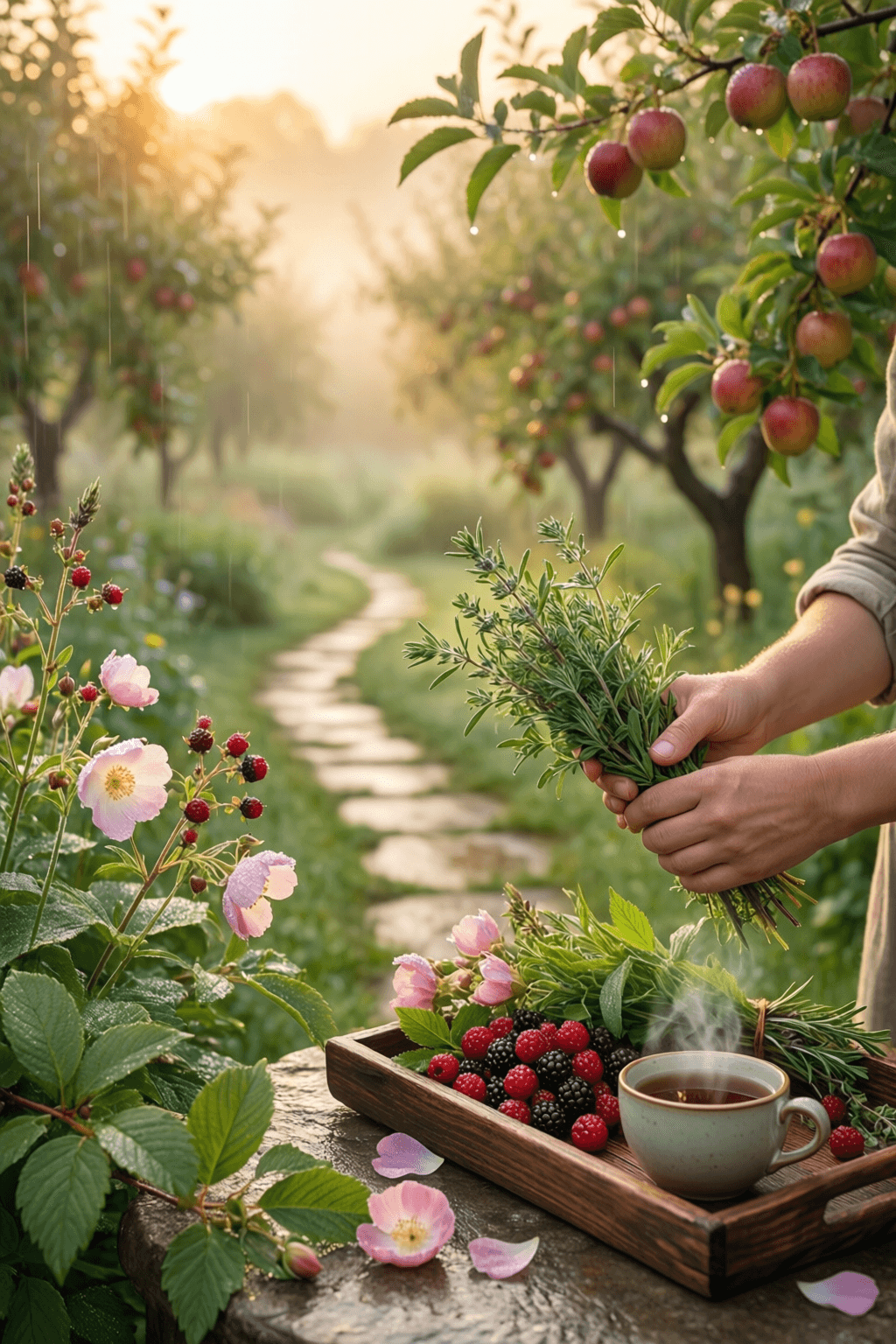
The greatest gift of the garden is the restoration of the five senses. — Hanna Rion
—What lingers after this line?
A Return to Embodied Attention
Hanna Rion’s line suggests that a garden gives more than flowers, fruit, or shade; it returns us to ourselves. In daily life, the senses are often dulled by speed, screens, and routine, but a garden asks for slower attention. Its gift begins when we notice what we had stopped noticing. This restoration is not abstract. It happens through the body: the eye follows color, the ear catches birdsong, the hand feels soil, the nose meets fragrance, and the tongue discovers freshness. In this way, the garden becomes a quiet teacher of presence.
Sight Reawakened by Living Color
First, the garden restores sight by offering a world of subtle change. A rose opening over several mornings, sunlight moving across leaves, or the deepening green after rain reminds us that seeing is not merely looking. It is an act of patient recognition. This is why gardens have long been linked with contemplation. Claude Monet’s garden at Giverny, which inspired his water lily paintings in the early 1900s, shows how sustained looking can become a form of art. Similarly, Rion’s garden invites the eye to recover wonder through living color and shifting light.
Sound as a Gentle Invitation
From sight, the experience naturally turns to sound. A garden is rarely silent, yet its noises do not usually demand attention; they invite it. Leaves stir, bees hum, water trickles, and birds call across branches, creating a soundscape that softens the mind. In contrast to the mechanical noise of modern life, these sounds feel restorative because they are rhythmic and alive. Environmental psychology has often noted the calming effects of natural soundscapes, and the garden offers them close at hand. Through listening, we begin to feel less separate from the world around us.
Touch and the Reality of the Earth
Then comes touch, perhaps the most grounding of the senses. To handle soil, prune a stem, brush against lavender, or feel the rough skin of a squash is to meet the physical world directly. The garden reminds us that life is textured, resistant, delicate, and real. This tactile restoration carries emotional force. Many gardeners describe weeding or planting as calming because the hands are occupied with simple, purposeful work. As the body bends and reaches, thought becomes less scattered. In this way, touch reconnects the mind to the earth beneath it.
Fragrance and the Memory of Place
As touch grounds us, smell deepens the garden’s emotional power. The scent of wet soil after rain, often called petrichor, can stir memories before words appear. Jasmine at dusk, mint crushed between fingers, or tomato leaves warmed by the sun can instantly return a person to childhood, travel, or a beloved home. This connection between scent and memory has a long scientific basis; the olfactory system is closely linked to brain regions involved in emotion and recollection. Thus, Rion’s restoration of the senses is also a restoration of personal history, carried quietly on fragrance.
Taste and the Completion of Wonder
Finally, taste completes the garden’s gift. A strawberry eaten warm from the plant or a basil leaf added fresh to a meal offers a kind of intimacy that packaged food rarely provides. Taste reveals the garden not just as scenery, but as nourishment. This final sense gathers the others together: the fruit was seen ripening, touched by the hand, scented before it was eaten, and accompanied by the sounds of the living place that produced it. Through taste, the garden becomes fully participatory, reminding us that restoration is not passive observation but grateful involvement.
One-minute reflection
What's one small action this suggests?
More From Author
More from Hanna Rion →