
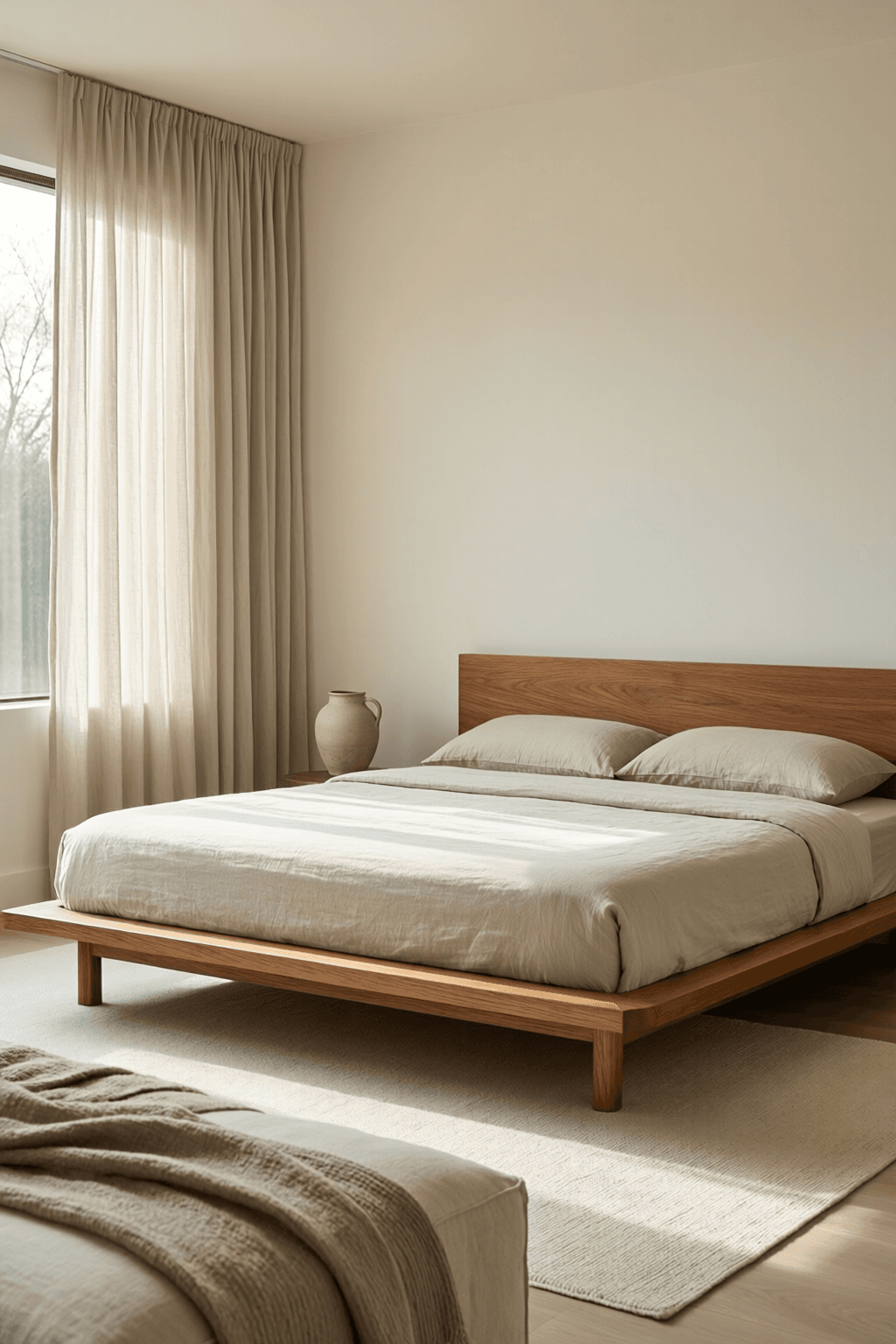
The place where you go to rest should be a sanctuary for your soul, not just a roof over your head. — Thich Nhat Hanh
—What lingers after this line?
Beyond Basic Shelter
At first glance, Thich Nhat Hanh’s words distinguish a home from a mere structure. A roof may protect the body from weather, yet a true place of rest also protects the mind and spirit. In this sense, he invites us to see home not as a possession alone, but as an environment that restores our inner life. From that starting point, the quote gently shifts the meaning of comfort. Rest is not simply lying down at the end of the day; it is the experience of feeling safe enough to soften, breathe, and return to oneself. What matters, therefore, is not only what a home contains, but what it allows the heart to become.
The Spiritual Meaning of Sanctuary
Building on that idea, the word “sanctuary” carries moral and spiritual depth. Traditionally, a sanctuary is a protected place where fear recedes and reverence begins. Thich Nhat Hanh, whose writings such as Peace Is Every Step (1991) consistently joined mindfulness with daily living, suggests that our resting place should offer this same quiet refuge. As a result, the quote expands domestic life into spiritual practice. A home becomes sacred not because it is luxurious, but because it supports presence, gentleness, and healing. Even a small room, if filled with calm intention, can serve the soul more fully than a grand house filled with noise and unrest.
Rest as Emotional Renewal
From there, the statement also speaks to emotional exhaustion. Many people return home carrying stress, disappointment, or grief, hoping simply to recover enough strength to continue. Thich Nhat Hanh implies that the ideal home does more than pause fatigue; it renews the person who enters it. In everyday life, this may look simple: a quiet corner, a familiar cup of tea, or the absence of hostility. Such details seem ordinary, yet they shape whether rest becomes true renewal. In that way, sanctuary is created less by decoration than by atmosphere, because the soul responds most deeply to peace, acceptance, and ease.
Mindfulness in Domestic Space
Furthermore, the quote reflects Thich Nhat Hanh’s broader teaching that mindfulness belongs in ordinary moments. Washing dishes, opening a window, or arranging a bed can become acts of care when done with attention. His The Miracle of Mindfulness (1975) argues that peace is cultivated through presence, and the home is one of the clearest places where such presence can take root. Consequently, a sanctuary is not only found; it is made. The feeling of refuge grows through repeated gestures of awareness—keeping a space uncluttered, speaking kindly, moving slowly enough to notice beauty. Through these habits, the home begins to nourish not just physical rest, but inward steadiness.
Relationships That Shape a Home
Yet the soul is sheltered not only by walls, but also by the quality of human connection within them. A beautiful dwelling can still feel barren if it is ruled by tension, criticism, or silence. Conversely, modest homes often become deeply restorative when they hold compassion, listening, and mutual respect. This is why the quote quietly challenges material ideas of success. It suggests that what makes a home sacred is not status, but the emotional climate created there. In that sense, the truest architecture of sanctuary is relational: patience in conversation, forgiveness after conflict, and the steady assurance that one is welcome.
A Gentle Standard for Living
Finally, Thich Nhat Hanh offers more than a comforting image; he provides a standard by which to evaluate how we live. If the place where we rest does not soothe the spirit, then something essential may be missing, regardless of outward comfort. The quote urges us to ask whether our homes actually help us become more peaceful, whole, and human. Taken together, his message is both tender and practical. We may not always control the size or beauty of our dwelling, but we can shape its meaning through intention and care. In doing so, we transform shelter into refuge, and a residence into a home worthy of the soul.
One-minute reflection
What feeling does this quote bring up for you?
Related Quotes
6 selectedIf we are facing in the right direction, all we have to do is keep walking. — Thích Nhất Hạnh
Thich Nhat Hanh
Thích Nhất Hạnh’s words begin with a simple but profound premise: progress depends first on direction, not speed. If a person is turned toward compassion, clarity, healing, or truth, then each modest step becomes meaning...
Read full interpretation →You must love in such a way that the person you love feels free. — Thich Nhat Hanh
Thich Nhat Hanh
At its core, Thich Nhat Hanh’s statement redefines love as an act of care that does not confine. To love someone so that they feel free means offering affection without turning it into control, guilt, or dependence.
Read full interpretation →We are not islands; we are threads in a tapestry. To pull away from the weave is to lose the very texture that makes life hold together. — Thich Nhat Hanh
Thich Nhat Hanh
At its core, Thich Nhat Hanh’s image of threads in a tapestry rejects the fantasy of total self-sufficiency. A single thread may exist on its own, yet it gains meaning, strength, and beauty only through its relation to o...
Read full interpretation →When you learn how to suffer, you suffer far less. Resilience is not about avoiding the fire; it is about becoming fireproof. — Thich Nhat Hanh
Thich Nhat Hanh
At first glance, Thich Nhat Hanh’s quote appears paradoxical: how could learning to suffer make suffering lighter? Yet his point is that pain intensifies when we resist it, fear it, or treat it as a personal failure.
Read full interpretation →Slow down, and you will find that the rhythm of your own heart becomes the master of your work. — Thich Nhat Hanh
Thich Nhat Hanh
At first glance, Thich Nhat Hanh’s words seem to offer simple advice about working more slowly, yet they point to something deeper: a different relationship with time itself. To slow down is not merely to reduce speed, b...
Read full interpretation →To be fully alive is to allow yourself the grace of slowing down. — Thich Nhat Hanh
Thich Nhat Hanh
Thich Nhat Hanh’s words begin with a gentle challenge to modern life: we often mistake speed for vitality, as though being busy proves that we are truly living. Yet his insight reverses that assumption.
Read full interpretation →More From Author
More from Thich Nhat Hanh →If we are facing in the right direction, all we have to do is keep walking. — Thích Nhất Hạnh
Thích Nhất Hạnh’s words begin with a simple but profound premise: progress depends first on direction, not speed. If a person is turned toward compassion, clarity, healing, or truth, then each modest step becomes meaning...
Read full interpretation →You must love in such a way that the person you love feels free. — Thich Nhat Hanh
At its core, Thich Nhat Hanh’s statement redefines love as an act of care that does not confine. To love someone so that they feel free means offering affection without turning it into control, guilt, or dependence.
Read full interpretation →We are not islands; we are threads in a tapestry. To pull away from the weave is to lose the very texture that makes life hold together. — Thich Nhat Hanh
At its core, Thich Nhat Hanh’s image of threads in a tapestry rejects the fantasy of total self-sufficiency. A single thread may exist on its own, yet it gains meaning, strength, and beauty only through its relation to o...
Read full interpretation →When you learn how to suffer, you suffer far less. Resilience is not about avoiding the fire; it is about becoming fireproof. — Thich Nhat Hanh
At first glance, Thich Nhat Hanh’s quote appears paradoxical: how could learning to suffer make suffering lighter? Yet his point is that pain intensifies when we resist it, fear it, or treat it as a personal failure.
Read full interpretation →