
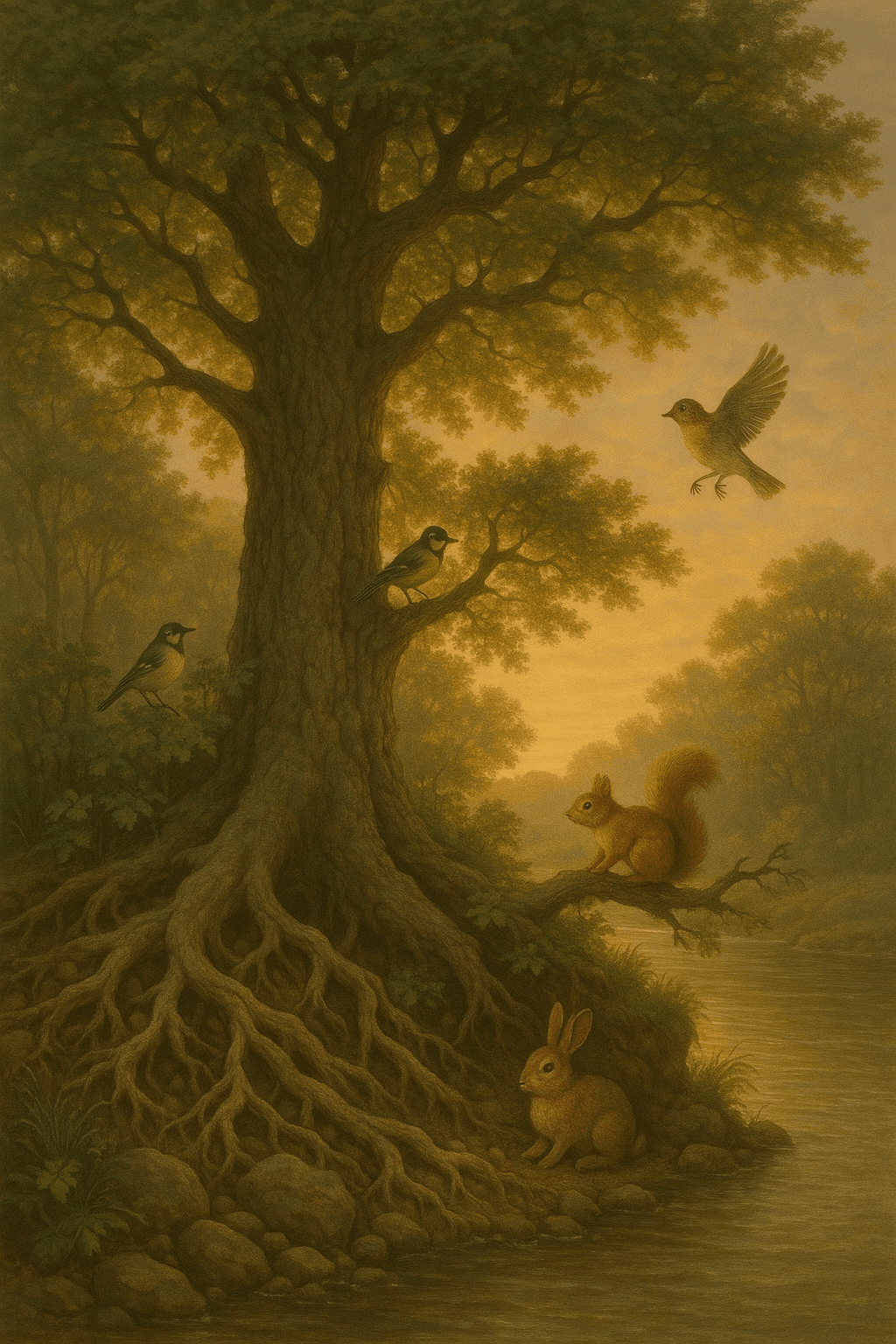
To be rooted is perhaps the most important and least recognized need of the human soul. — Simone Weil
—What lingers after this line?
Defining Rootedness in the Human Experience
Simone Weil’s poignant observation draws attention to a fundamental aspect of human existence: the need to feel grounded and connected—to people, places, and purposes. Rootedness, in Weil’s sense, is more than physical stability; it embodies a sense of belonging and identity. Without this anchoring force, individuals may drift emotionally or spiritually, their lives touched by a persistent sense of alienation.
The Invisible Craving for Belonging
Despite its central importance, the craving for rootedness often escapes both personal reflection and societal recognition. In contemporary life, the pursuit of achievement and mobility can overshadow deeper needs for community and continuity. Through characters in her works, Weil illustrates how people experiencing displacement or uprootedness—whether by war, migration, or rapid social change—suffer profound inner wounds that are less visible than physical deprivation.
Historical Traces: Rootedness Across Civilizations
Looking back, rootedness has shaped civilizations and cultural practices throughout history. For instance, in ancient Greece, the polis offered not just political structure but a spiritual home for its citizens, as depicted in Aristotle’s Politics (c. 350 BC). When traditional ties were torn apart, as during the Industrial Revolution or through colonial displacement, entire communities faced crises of meaning—an echo of Weil’s concern that modernity too often neglects our need to belong.
Modern Disconnection and the Search for Meaning
Building on this, the contemporary world’s increased mobility, technological distractions, and urban anonymity have brought new challenges to rootedness. Robert Putnam’s 'Bowling Alone' (2000) highlights the corrosion of social capital in American life, as individuals become less engaged in communal life and more isolated despite technological connectivity. This disconnection can leave the soul yearning for authentic relationships and local attachment.
Cultivating Rootedness in a Changing World
Ultimately, recognizing and nourishing the need for rootedness is essential for well-being in both personal and collective terms. Communities that foster shared rituals, intergenerational ties, and local engagement can provide the grounding that modern life so often lacks. Weil’s insight thus serves as both a warning and a guide: unless societies strive to reestablish roots for their members, the subtle hunger of the human soul may go unfulfilled, undermining the very foundations of happiness and cohesion.
One-minute reflection
What feeling does this quote bring up for you?
Related Quotes
6 selectedThe garden doesn't lose its ecstasy in winter. The roots are down there, riotous. — Rumi
Rumi
Rumi’s line begins by overturning an easy assumption: that winter equals absence. When he says the garden doesn’t lose its ecstasy, he suggests that vitality is not confined to what can be seen in bloom.
Read full interpretation →When the roots are deep, there is no reason to fear the wind. — African Proverb
African Proverb
This proverb conveys the idea that a strong foundation, symbolized by deep roots, provides stability and resilience in the face of challenges or adversities, represented by the wind.
Read full interpretation →Grow as we may, our roots are deep, and the sky is the limit. — Kankana Basu
Kankana Basu
This quote conveys the idea that while we strive for continuous personal or professional growth, our potential is limitless, like the sky. It encourages us to reach higher aspirations while staying grounded.
Read full interpretation →The strongest trees are rooted in the hardest ground. — Matshona Dhliwayo
Matshona Dhliwayo
This quote suggests that challenges and hardships make individuals stronger. Just like trees that grow in tough soil develop deeper roots, people who face adversity build resilience.
Read full interpretation →Your roots are deep; nourish them with resilience. — Wangari Maathai
Wangari Maathai
Wangari Maathai’s assertion highlights the significance of having ‘deep roots’ as a metaphor for inner strength and established values. Just as a tree’s roots anchor it firmly, our foundational beliefs and experiences pr...
Read full interpretation →Storms make oaks take deeper roots. — George Herbert
George Herbert
George Herbert’s metaphor underscores the way difficulties can actually fortify rather than destroy. Just as storms force oaks to drive their roots deeper for stability, life’s challenges demand that we adapt, persevere,...
Read full interpretation →More From Author
More from Simone Weil →The beauty of the world is that it is a craft, not a product. — Simone Weil
Simone Weil’s remark shifts our attention from the world as a finished object to the world as a living act of making. A product suggests completion, closure, and fixed utility, whereas a craft implies care, patience, rev...
Read full interpretation →Humility is attentive patience. — Simone Weil
At first glance, Simone Weil’s remark seems to redefine humility altogether. Rather than treating it as self-deprecation or mere politeness, she presents it as a disciplined way of being: patient, watchful, and receptive...
Read full interpretation →To pay attention is the most basic and profound form of love we can offer ourselves and our work. — Simone Weil
Simone Weil condenses a demanding ethic into a single sentence: attention is not merely a mental skill, but an act of love. To pay attention to ourselves means noticing our fatigue, motives, fears, and hopes without rush...
Read full interpretation →There is a quiet power in doing one thing well, day after day, until the repetition transforms into grace. — Simone Weil
At first glance, Simone Weil’s line honors a modest kind of excellence: not brilliance displayed all at once, but a patient devotion to doing one thing well. The phrase “quiet power” suggests that true mastery often arri...
Read full interpretation →