
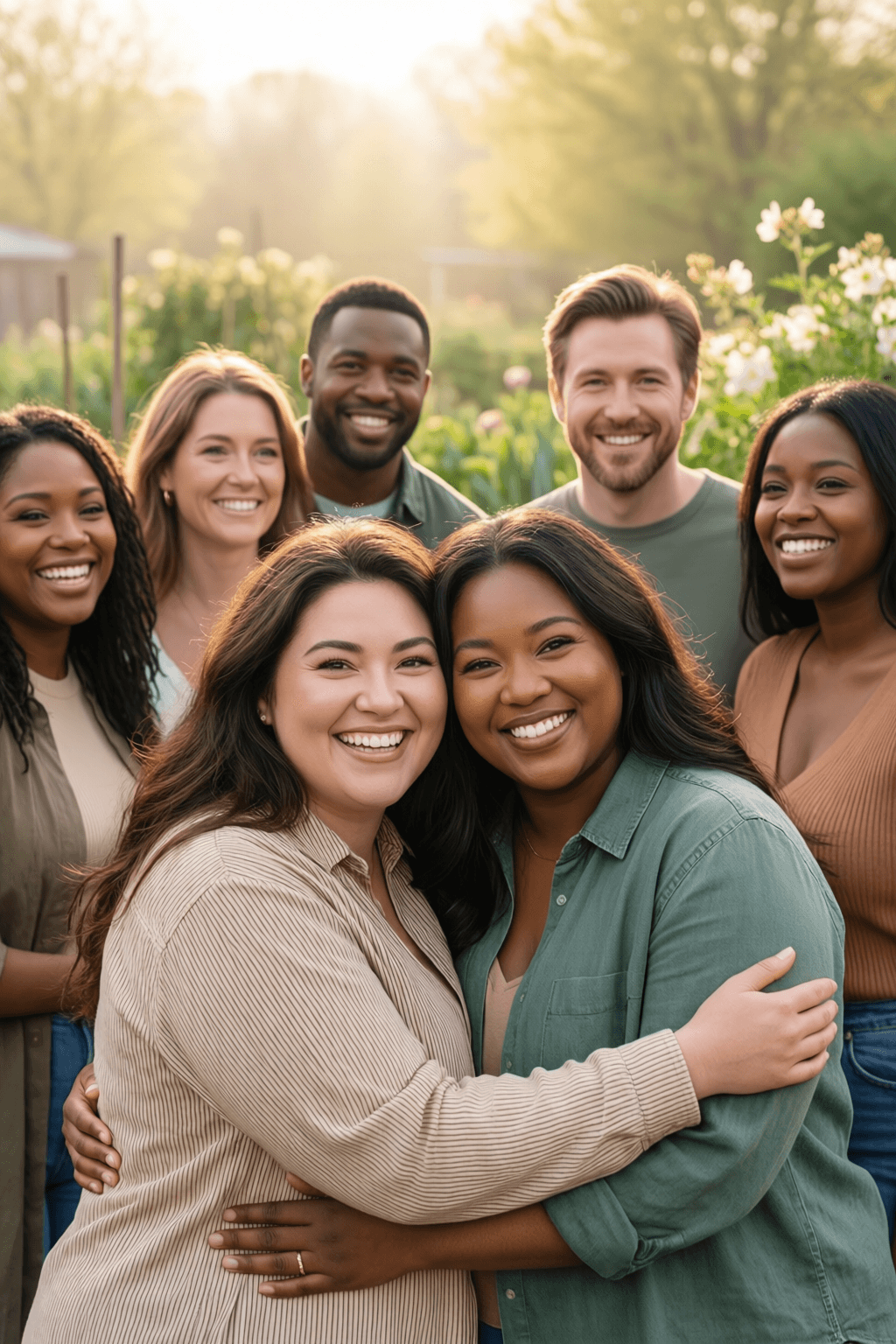
To me, beauty is inclusion—every size, every color—that's the world I live in. — Zendaya
—What lingers after this line?
A Definition Rooted in Real Life
Zendaya’s statement begins with a simple but expansive redefinition: beauty is not a narrow ideal but a shared human condition. By saying “that’s the world I live in,” she grounds the idea in lived reality rather than abstract theory. In other words, inclusion is not merely a moral preference here; it is an accurate reflection of how people actually exist. From this starting point, beauty becomes something discovered in variety rather than enforced through sameness. Every size and every color are not exceptions to a standard—they are the standard, because they make up the world itself. That shift in perspective immediately opens the door to a broader cultural critique.
Challenging Traditional Beauty Standards
Historically, mainstream beauty industries often elevated a limited set of features while excluding countless others. Fashion magazines, film studios, and advertisers long promoted ideals tied to thinness, light skin, and highly specific facial proportions. Against that backdrop, Zendaya’s words function as a corrective, insisting that beauty should mirror humanity instead of reducing it. Consequently, her quote challenges audiences to notice how artificial many standards have been. The point is not simply to add a few overlooked faces into the frame, but to question who built the frame in the first place. That naturally leads to the social power of representation.
Why Representation Changes Perception
Once inclusion becomes part of public imagery, it begins to reshape what people find normal, admirable, and aspirational. Studies such as social identity research by Henri Tajfel and John Turner (1979) suggest that people derive meaning and self-worth from seeing their groups recognized rather than marginalized. In that sense, representation is not cosmetic; it influences belonging. For a child who sees someone with their skin tone, body type, or cultural background celebrated, the message is profound: you do not need to be altered to be seen. Thus Zendaya’s idea reaches beyond aesthetics into dignity. Beauty, then, becomes a language of recognition as much as appearance.
Inclusion as Cultural and Ethical Vision
Moreover, the quote carries an ethical claim beneath its graceful wording. If beauty includes “every size, every color,” then exclusion is not just inaccurate—it is unjust. Philosophers of recognition such as Axel Honneth in The Struggle for Recognition (1995) argue that social respect is essential to human flourishing, and Zendaya’s remark echoes that principle in accessible terms. Seen this way, inclusion is both descriptive and aspirational. It describes the diversity already present in the world, while also urging institutions to honor that reality more fully. As a result, beauty becomes a practice of fairness: seeing people as they are and refusing to rank their worth through inherited prejudice.
The Personal Power of a Broader Ideal
On an individual level, Zendaya’s words can be deeply liberating. Many people grow up measuring themselves against standards so narrow that self-acceptance feels impossible. When beauty is defined inclusively, however, the question shifts from “How do I fit the ideal?” to “How do I inhabit myself fully?” That is a radically healthier starting point. This is why such statements resonate beyond celebrity culture. They offer permission to understand difference not as deficiency but as presence. And once that permission is internalized, confidence becomes less about approval and more about authenticity. From there, the larger social message comes into focus.
A Beauty Ideal Fit for the Real World
Ultimately, Zendaya’s quote endures because it is both compassionate and practical. A world made of many bodies, tones, and identities cannot be truthfully represented by a single aesthetic mold. Renaissance art, for example, celebrated diverse ideals across regions and eras, reminding us that beauty has always been culturally fluid rather than fixed. Therefore, her message is not a passing slogan but a durable principle: beauty expands when our vision expands. By tying inclusion to the everyday world she inhabits, Zendaya invites others to see more honestly and more generously. In that broader vision, beauty is no longer exclusive currency; it becomes a shared human inheritance.
One-minute reflection
What feeling does this quote bring up for you?
Related Quotes
3 selectedBelonging is not something we proclaim, it's an invitation to fight forward in practice. It lives where people are seen, valued, and able to shape the structures that impact our daily lives. — john a. powell
john a. powell
At its core, john a. powell’s statement rejects the idea that belonging can be achieved through slogans alone.
Read full interpretation →Belonging shouldn't be a simple descriptor of whether someone does or does not fit in. It should be a challenge, a task, a calling for us to extend. — Mark Schaefer
Mark Schaefer
At first glance, belonging is often treated as a passive condition: either a person fits in or does not. Mark Schaefer challenges that assumption by reframing belonging as an active responsibility rather than a social ve...
Read full interpretation →Confidence comes from knowing who you are, not from the validation of others. — Zendaya
Zendaya
Zendaya’s line shifts confidence away from performance and toward self-knowledge. Instead of treating confidence as something we “earn” by impressing others, she presents it as an internal steadiness that grows when we u...
Read full interpretation →More From Author
More from Zendaya →