
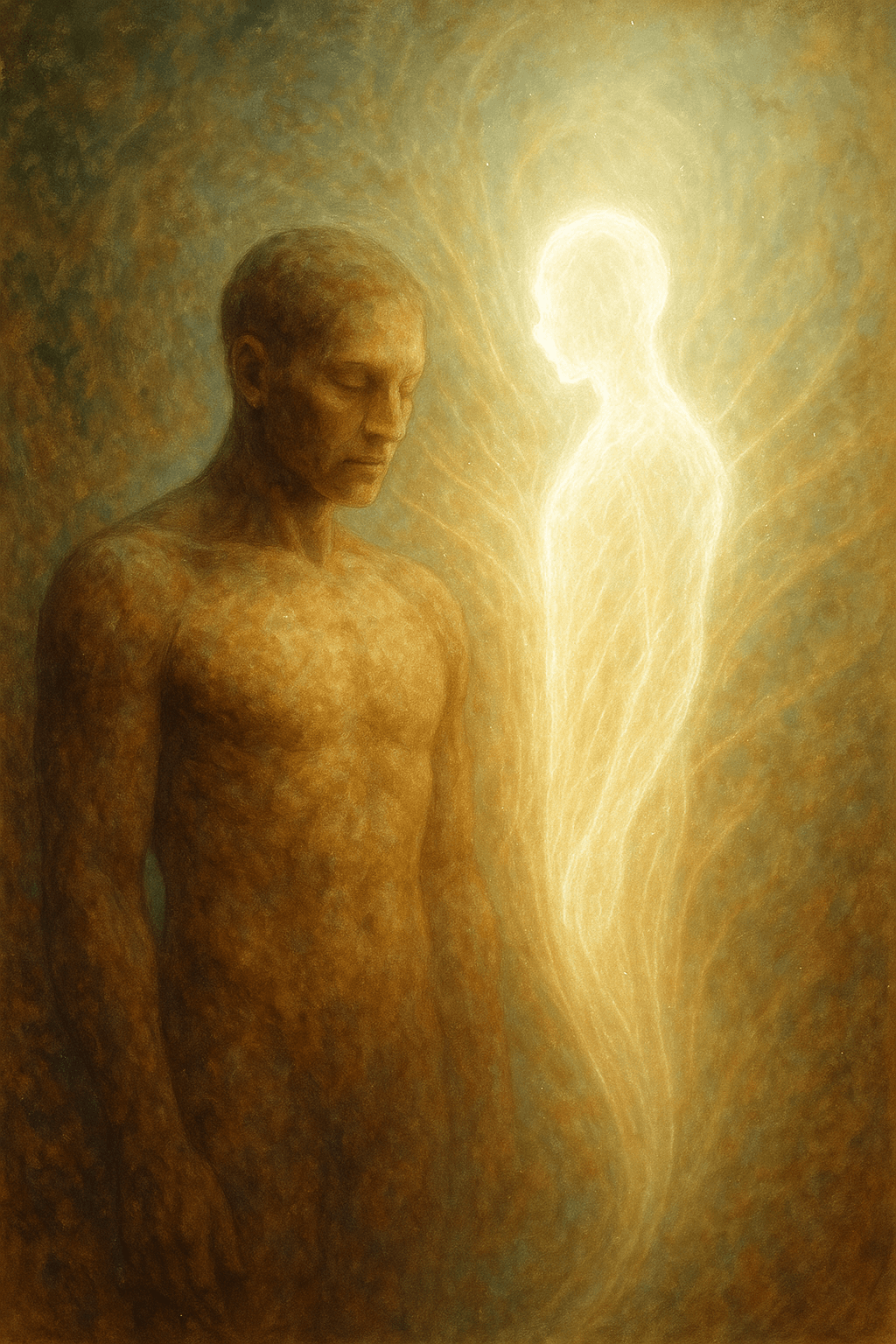
You don’t have a soul. You are a soul. You have a body. — C.S. Lewis
—What lingers after this line?
Defining the Essence of Self
C.S. Lewis’s statement challenges our conventional understanding of identity by inverting the usual hierarchy: rather than possessing a soul as an impersonal asset, he posits that we are fundamentally souls who temporarily inhabit physical bodies. This perspective draws a clear distinction between our inner, enduring essence and our external, transient form, urging us to reconsider what truly constitutes our selfhood.
Philosophical Roots of Dualism
Moving from Lewis’s phrasing, the idea of a immaterial soul at the core of human nature is rooted in philosophical tradition, notably in Plato’s writings. In *Phaedo*, Plato asserts that the soul’s existence precedes and outlasts the body, setting the stage for later interpretations. Lewis’s worldview echoes this dualism, emphasizing a hierarchy where the soul guides and the body follows.
Theological Implications and Christian Influence
Advancing into theology, Lewis’s concept aligns closely with Christian doctrines regarding the immortality of the soul. In works like *Mere Christianity* (1952), he asserts that spiritual realities outweigh physical experiences. By suggesting that being a soul is our primary existence, Lewis encourages readers to value spiritual growth and character development over material pursuits.
Cultural Reflections and Human Experience
This distinction is not merely theoretical; it resonates through literature and culture. In Viktor Frankl’s *Man’s Search for Meaning* (1946), the power of the human spirit—arguably the soul—triumphs over bodily suffering, reinforcing Lewis’s hierarchy of inner over outer being. Such narratives suggest that meaning and resilience spring from the soul’s depths, transcending the limitations of the physical world.
Living With a Soul-Centered Perspective
Ultimately, Lewis’s insight invites a shift in daily life: by prioritizing our spiritual identity over our corporeal form, we are encouraged to cultivate virtues, empathy, and purpose. This soul-centered view inspires us to see our bodies as instruments for the soul’s journey, rather than as the sum total of our existence, fostering both humility and hope in navigating life’s challenges.
One-minute reflection
What's one small action this suggests?
Related Quotes
6 selectedBelonging is neither abstract nor soft. It is visceral. It is embodied. — john a. powell
john a. powell
At its core, john a. powell’s statement rejects the idea that belonging is merely a moral slogan or intellectual ideal.
Read full interpretation →You only have to let the soft animal of your body love what it loves. — Mary Oliver
Mary Oliver
Mary Oliver’s line begins by removing a burden: “You only have to…” suggests that life’s most essential task is simpler than we pretend. Rather than striving to justify every desire or earn approval for every feeling, sh...
Read full interpretation →You only have to let the soft animal of your body love what it loves. — Mary Oliver
Mary Oliver
Mary Oliver’s line opens like a gentle instruction: stop arguing with your own nature. By saying “you only have to,” she narrows the task of living to something surprisingly simple—allowing love, in whatever authentic fo...
Read full interpretation →The chief function of the body is to carry the brain around. — Thomas A. Edison
Thomas A. Edison
This quote highlights the idea that the brain is the most vital organ and the core of human potential. It emphasizes the brain's role as the command center for thought, creativity, and problem-solving.
Read full interpretation →Your body is the piece of the universe you have been given to change the world. — H.G. Wells
H.G. Wells
This quote emphasizes that each individual has a role in shaping the world. Our bodies provide us with the means to take action and make a difference.
Read full interpretation →When the soul is planted in the body, it blossoms in action. — Kahlil Gibran
Kahlil Gibran
Kahlil Gibran’s evocative metaphor likens the soul to a seed planted within the body, suggesting the existence of inherent potential within every individual. At the moment the soul enters the corporeal form, it brings a...
Read full interpretation →More From Author
More from C.S. Lewis →Aim at heaven and you will get earth thrown in. Aim at earth and you get neither. — C. S. Lewis
C. S.
Read full interpretation →Love is not affectionate feeling, but a steady wish for the loved one's ultimate good as far as it can be obtained. — C.S. Lewis
At first glance, C.S. Lewis challenges one of the most common assumptions about love: that it is mainly a warm feeling.
Read full interpretation →Even in literature and art, no man who bothers about originality will ever be original: whereas if you simply try to tell the truth, you will, nine times out of ten, become original without ever having noticed it. — C.S. Lewis
At first glance, C.S. Lewis presents a paradox: the harder an artist chases originality, the less likely it is to appear.
Read full interpretation →To love at all is to be vulnerable. Love anything and your heart will be wrung and possibly broken. If you want to make sure of keeping it intact, you must give it to no one. — C.S. Lewis
C.S. Lewis begins with a stark truth: to love anything at all is to accept vulnerability.
Read full interpretation →