
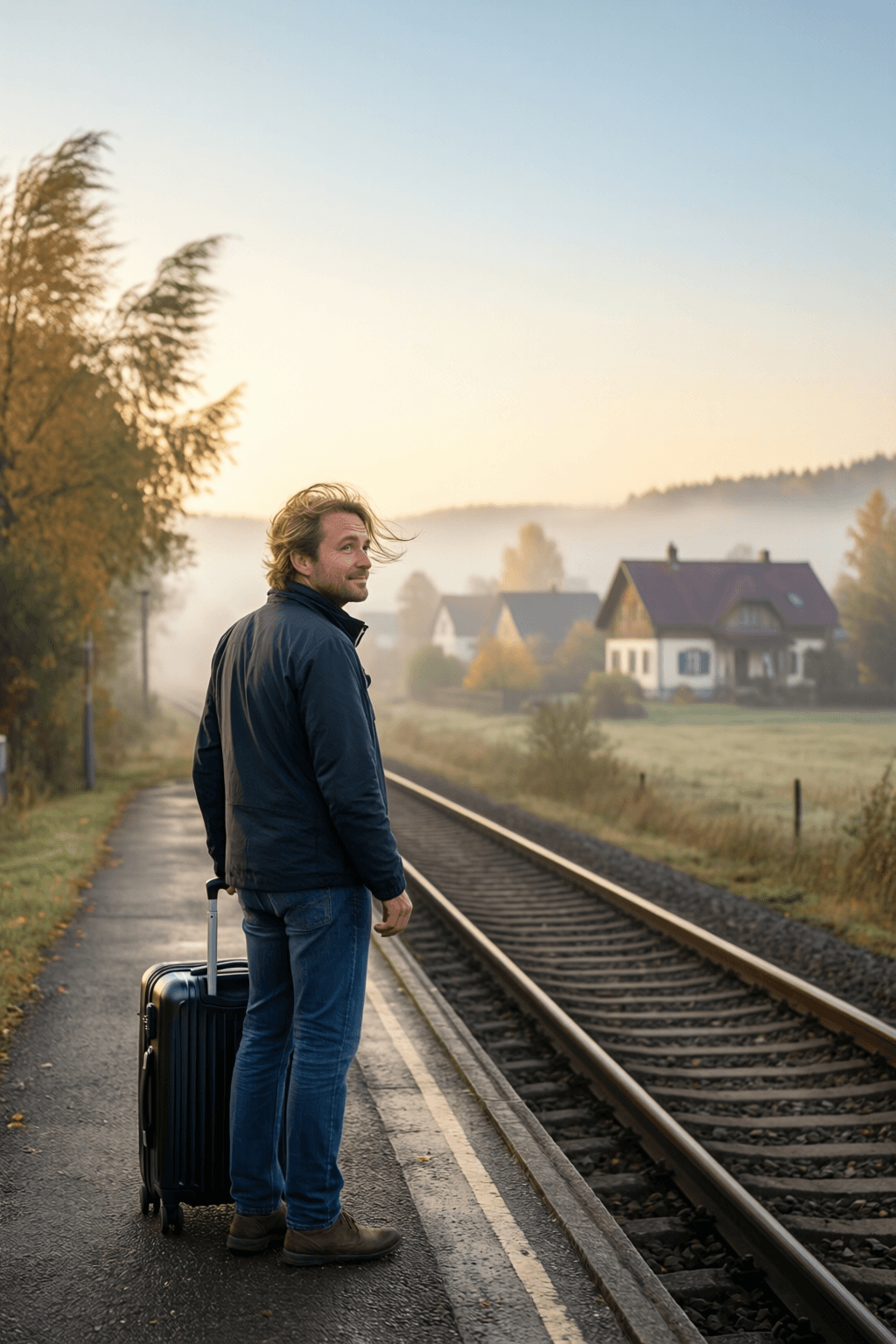
I have learned that if you must leave a place that you have lived in and loved, leave it any way except a slow way. — Beryl Markham
—What lingers after this line?
The Pain of Lingering Departure
Beryl Markham’s line begins with hard-earned emotional clarity: leaving a beloved place hurts, but leaving it slowly can deepen the wound. Rather than allowing memory to settle into gratitude, a prolonged farewell turns each ordinary moment into a rehearsal for loss. In that sense, the quote is not only about travel or relocation, but about how human beings endure separation. As a result, Markham suggests that delay can make attachment feel heavier instead of more meaningful. Her phrasing carries the authority of experience, fitting for the author of West with the Night (1942), a memoir shaped by movement, risk, and parting. The insight is simple yet unsentimental: when departure is inevitable, hesitation may become its own form of suffering.
How Places Become Part of the Self
To understand the force of the quote, it helps to see that a loved place is rarely just scenery. Over time, streets, rooms, weather, and routines become woven into identity; they hold memories so intimately that leaving can feel like shedding a former self. Therefore, departing a place is often closer to grief than to logistics. This idea echoes Gaston Bachelard’s The Poetics of Space (1958), which explores how lived spaces shape imagination and memory. Markham’s observation follows naturally from that truth: if a place has helped make us who we are, then stretching out the goodbye may unsettle us repeatedly. The longer one hovers between belonging and absence, the more fractured the self can feel.
The Cruelty of the Slow Goodbye
What makes a slow departure so painful is its repeated smallness. Instead of one clean severing, it creates a series of tiny losses: the last walk, the last familiar meal, the last conversation with a neighbor, the last morning light through a known window. Each moment becomes burdened by finality, and even affection starts to ache under that pressure. In this way, Markham opposes the sentimental idea that more time always brings better closure. Sometimes more time only multiplies awareness of what is ending. Much like the drawn-out leave-takings in wartime letters or exile memoirs, the extended farewell can trap a person in anticipation, unable either to remain fully present or to move forward.
Speed as a Form of Mercy
Seen from another angle, the quote argues that decisiveness can be compassionate. A swift departure does not erase sorrow, yet it may protect the heart from needless erosion. By leaving promptly, one preserves the place in memory before it becomes overshadowed by dread, administrative stress, or emotional exhaustion. This perspective aligns with a broader literary wisdom about endings: clean breaks often honor what was loved more than prolonged unraveling does. Joan Didion’s essays, especially in Slouching Towards Bethlehem (1968) and later reflections on loss, frequently show how clarity in naming an ending can be an act of survival. Markham extends that principle to geography, suggesting that mercy sometimes lies in not lingering too long at the threshold.
Courage in Accepting Irreversibility
Beneath the quote lies a deeper lesson about courage. To leave quickly is not necessarily to leave carelessly; rather, it is to accept that some chapters cannot be softened by delay. Once the decision has become unavoidable, dignity may consist in meeting it directly instead of bargaining with time. Thus, Markham’s words resist the fantasy that we can outwait change. They acknowledge a truth many travelers, migrants, and mourners know well: irreversibility hurts, but prolonged resistance often hurts more. The quote finally becomes a meditation on maturity—on recognizing when love for a place is best honored not by clinging, but by carrying it whole into memory.
Memory After the Door Closes
Finally, Markham implies that the real continuation of a loved place happens after one has gone. Once departure is complete, memory can begin its quieter work, reshaping the place into something inward and enduring. What was once immediate becomes reflective, and pain gradually gives way to texture, story, and gratitude. In that sense, a swift farewell may preserve love better than a prolonged one. The place remains vivid rather than frayed by endless leave-taking. Markham’s sentence, then, is both practical advice and emotional philosophy: when a cherished world must be left behind, it is often kinder to trust memory to keep it than to let a slow goodbye wear it away.
Recommended Reading
As an Amazon Associate, we earn from qualifying purchases.
One-minute reflection
Why might this line matter today, not tomorrow?
Related Quotes
6 selectedIt takes a lot of courage to show your dreams to someone else. — Erma Bombeck
Erma Bombeck
Erma Bombeck’s insight begins with a simple truth: dreams feel precious because they expose what we most deeply want. To share them is not merely to state a goal, but to reveal hope, insecurity, and the possibility of fa...
Read full interpretation →You do not have to be fearless to be brave. You only need to be present enough to take the next deliberate action. — Pema Chödrön
Pema Chödrön
At first glance, Pema Chödrön’s quote gently overturns a common misconception: that bravery belongs only to people untouched by fear. Instead, she presents courage as something far more accessible.
Read full interpretation →The most radical act of courage is to be truly seen, to step out from behind our carefully curated walls and offer our authentic selves to the world. — Glennon Doyle
Glennon Doyle
Glennon Doyle’s quote reframes courage not as conquest or spectacle, but as the quiet, risky decision to be known. At its core, it suggests that the bravest act is not hiding our flaws behind polished identities, but all...
Read full interpretation →If you want the truth, you must be brave enough to hear it. — Margaret Heffernan
Margaret Heffernan
At first glance, Margaret Heffernan’s remark sounds like a simple call for honesty, yet it reaches further than that. She suggests that truth is not merely something we uncover through intelligence or investigation; rath...
Read full interpretation →Movement does not always mean speed; sometimes, the most courageous step you can take is to slow down and breathe. — Sarah Ban Breathnach
Sarah Ban Breathnach
At first glance, movement is often confused with speed, productivity, or constant visible progress. Sarah Ban Breathnach’s quote gently corrects that assumption by suggesting that motion can also take the form of pause,...
Read full interpretation →Trust in your next step more than you fear the fall. — Jim Carroll
Jim Carroll
At its core, Jim Carroll’s line urges us to give more weight to possibility than to anxiety. The ‘next step’ stands for action in moments of uncertainty, while ‘the fall’ represents failure, embarrassment, or loss.
Read full interpretation →More From Author
More from Beryl Markham →