
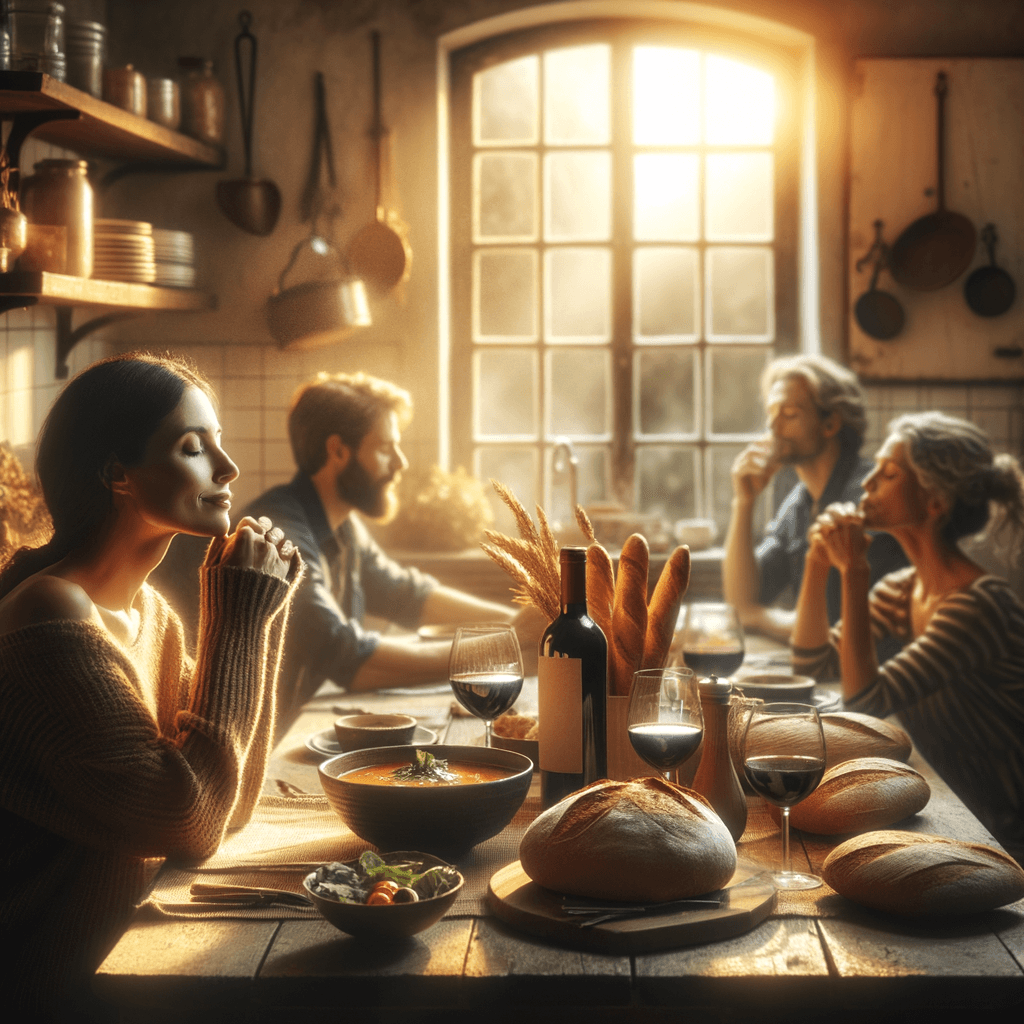
One cannot think well, love well, sleep well, if one has not dined well. — Virginia Woolf
—What lingers after this line?
The Importance of Physical Nourishment
This quote emphasizes the fundamental role that physical nourishment plays in overall well-being. It implies that proper food intake affects not only the body but also functions like thought, emotions, and rest.
Mind-Body Connection
Woolf highlights how the mind and body are interconnected. A well-nourished body supports mental and emotional well-being, suggesting that one's ability to think, love, and sleep is influenced by their physical state.
Self-Care
This statement also serves as a reminder that self-care, particularly in the form of proper nutrition, is essential for leading a balanced life. If one neglects their body’s basic needs, other aspects of their life may suffer.
Symbolism of Food
Food perhaps symbolizes more than just physical sustenance here. It could also represent emotional or intellectual nourishment, indicating that fulfillment in these areas is crucial for a well-rounded and healthy existence.
Historical Context
Virginia Woolf, a prominent English writer of the early 20th century, was known for exploring human psychology in her works. This quote reflects her understanding of the complex interplay between physical health and mental clarity during a time when these ideas were gaining recognition.
One-minute reflection
What feeling does this quote bring up for you?
Related Quotes
6 selectedHappiness is a good flow of life. — Zeno of Citium
Zeno of Citium
Zeno of Citium defines happiness not as a burst of pleasure but as a sustained movement through life. The phrase “a good flow of life” suggests continuity, direction, and inner coherence, as if well-being were less a sin...
Read full interpretation →Well-being is not something you chase; it is something you cultivate. Slowly. Consistently. Intentionally. — Erica Diamond
Erica Diamond
Erica Diamond’s quote begins by overturning a common assumption: well-being is not a prize waiting somewhere in the future, but a condition shaped by what we repeatedly do in the present. In that sense, the language of “...
Read full interpretation →Self-care is giving the world the best of you, instead of what's left of you. — Katie Reed
Katie Reed
At first glance, Katie Reed’s quote challenges a deeply ingrained habit: many people assume that goodness means giving endlessly until they are depleted. Instead, she reframes self-care not as selfish retreat but as resp...
Read full interpretation →Small daily rituals can reinforce long-term care. Shift the culture from 'fix it later' to 'maintain wellbeing.' — April Koh
April Koh
At its core, April Koh’s statement argues that lasting wellbeing is rarely created by dramatic interventions alone. Instead, it grows through modest, repeated actions—stretching in the morning, taking a walk after lunch,...
Read full interpretation →To handle the rapid pace of change, treat your own well-being as a strategic capability rather than a luxury. — April Koh
April Koh
At first glance, April Koh’s quote challenges a common assumption: that well-being is something optional, reserved for quieter moments or personal indulgence. Instead, she reframes it as a strategic capability, meaning a...
Read full interpretation →Success is no longer about how much you can endure—it's about how well you can live. — Ravi Savaliya
Ravi Savaliya
Ravi Savaliya’s line pivots success away from a grim tally of hardships survived and toward the quality of one’s everyday existence. Endurance has long been praised as a virtue, but the quote argues that merely outlastin...
Read full interpretation →More From Author
More from Virginia Woolf →We are not here to fit into a mold, but to break the ones that keep our most honest work hidden. — Virginia Woolf
At its core, Virginia Woolf’s statement rejects the quiet pressure to adapt ourselves to preexisting expectations. To “fit into a mold” suggests becoming legible, acceptable, and predictable at the cost of what is most i...
Read full interpretation →There is a kind of victory in good sense about not wanting to be everything at once. — Virginia Woolf
Virginia Woolf’s line turns an apparent restraint into a form of triumph. Rather than treating ambition without boundaries as admirable, she suggests that good sense lies in refusing the exhausting wish to be everything...
Read full interpretation →The artist is a sort of emotional archivist, recording the truth of a moment before it slips away into the digital noise. — Virginia Woolf
At its core, the quote imagines the artist as someone who rescues experience from disappearance. A feeling, a gesture, or a passing atmosphere can fade almost as soon as it arrives; therefore, the artist’s work becomes a...
Read full interpretation →Clarity is the counterbalance of complexity. - Virginia Woolf
Virginia Woolf’s remark frames thought and expression as a delicate balance rather than a simple choice. Complexity is often unavoidable because reality is layered, contradictory, and difficult to reduce; yet without cla...
Read full interpretation →