
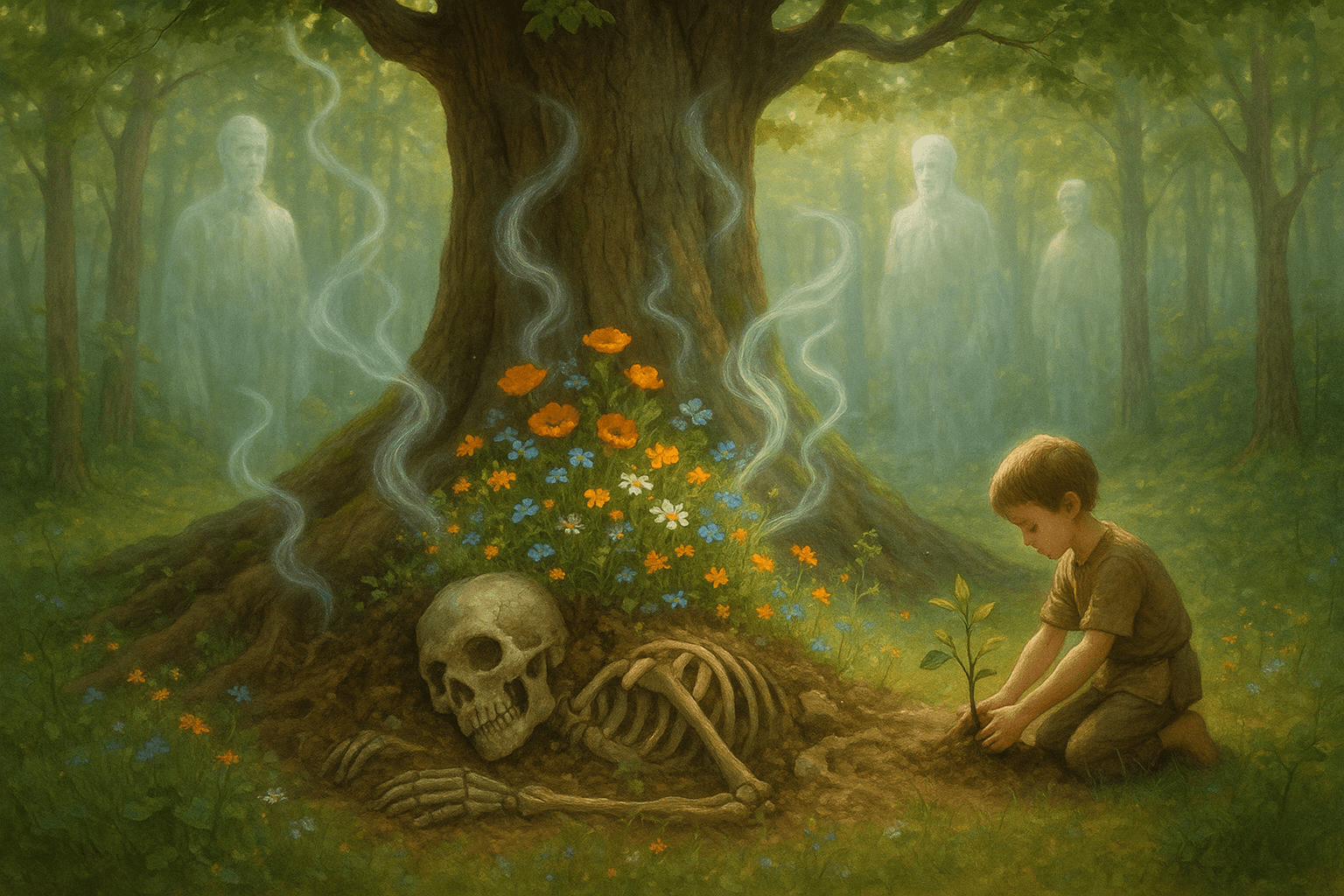
There is no death, daughter. People die only when we forget them. — Isabel Allende
—What lingers after this line?
Defining Death Beyond the Physical
Isabel Allende’s words challenge conventional definitions of death, urging us to look beyond the cessation of biological life. Rather than seeing death as an absolute event, Allende reframes it as a condition defined by memory and remembrance. This perspective invites us to consider that true loss occurs not when the heartbeat stops, but when the stories and experiences of a person are erased from the consciousness of others.
The Power of Remembrance
Building on this notion, cultures across the world have cultivated practices centered on keeping the deceased alive through memory. For instance, the Mexican tradition of Día de los Muertos (Day of the Dead) embraces annual rituals in which families share anecdotes, display photos, and prepare favorite foods of their lost loved ones. Such acts underscore the idea that as long as someone is remembered, their influence endures.
Literature’s Role in Immortality
Transitioning from cultural practices to literature, authors often use storytelling to immortalize individuals and communities. Allende herself weaves ancestral memories into her novels, such as in 'The House of the Spirits' (1982), where family histories persist through generations. By transforming memories into narrative, writers create a form of lasting presence, ensuring characters and real people alike are not forgotten.
Grief, Healing, and the Act of Remembering
This thread leads us to the role of memory in the grieving process. Psychologists highlight that sharing stories about the deceased can aid healing, as it helps mourners integrate their loss and maintain a continuing bond. Rather than severing ties, memory becomes a bridge, demonstrating that the person’s influence and essence remain part of the ongoing fabric of loved ones’ lives.
Legacy in an Interconnected Age
In today’s digital era, the idea that 'people die only when we forget them' resonates powerfully. Social media memorials, digital archives, and online tributes allow stories and images to circulate widely, resisting oblivion. Thus, Allende’s insight is more relevant than ever: by actively remembering—and sharing—those who have passed, we weave their legacies into the tapestry of communal identity, granting them a form of immortality.
One-minute reflection
Where does this idea show up in your life right now?
Related Quotes
6 selectedWrite what should not be forgotten. — Isabel Allende
Isabel Allende
At the outset, Allende’s injunction is less a suggestion than a civic summons: to write so that fragile truths survive the erosions of time, power, and neglect. Writing, unlike memory alone, leaves a trace others can rev...
Read full interpretation →The beauty of a life well-lived is measured by the depth of the roots you grow into the lives of those standing right beside you. — Wendell Berry
Wendell Berry
At first glance, Wendell Berry shifts our idea of a successful life away from personal achievement and toward human closeness. The beauty of living well, he suggests, is not counted in status, wealth, or visibility, but...
Read full interpretation →The things that you do for yourself are gone when you are gone, but the things that you do for others remain as your legacy. — Kalu K. Ndukwe Kalu
Kalu K. Ndukwe Kalu
At its heart, Kalu K. Ndukwe Kalu’s quote redirects attention from personal gain to shared impact.
Read full interpretation →Mastery is more than technique. It's legacy, it's tradition, and it's worth preserving. — Art of Mastery
Art of Mastery
At first glance, mastery may seem like the highest refinement of technique, the polished result of repetition and control. Yet this quote insists that technical ability, while essential, is only the visible surface of so...
Read full interpretation →Our stories are medicine for the present and lessons for the future. — Chag Lowry
Chag Lowry
Chag Lowry’s line begins by treating story not as entertainment but as care: something administered in the middle of real conditions. In the present, people reach for narratives to name what hurts, what’s changing, and w...
Read full interpretation →Act with care, move with purpose, and leave behind a trail people want to follow. — Viktor Frankl
Viktor Frankl
The opening directive—“Act with care”—frames life as something shaped by attention rather than impulse. Care here is not mere gentleness; it is the discipline of considering consequences, especially when other people’s d...
Read full interpretation →More From Author
More from Isabel Allende →Show up, show up, show up, and after a while the muse shows up, too. — Isabel Allende
Isabel Allende flips a common fantasy about creativity: that inspiration arrives first and then the work can begin. Instead, she suggests the reverse—your presence at the page, desk, or craft is what summons the muse.
Read full interpretation →We all have an unexpected reserve of strength inside that emerges when life puts us to the test. — Isabel Allende
Isabel Allende’s line begins with a quiet provocation: most people underestimate what they can carry. The “unexpected reserve” implies a kind of strength that isn’t visible in ordinary routines, because daily life rarely...
Read full interpretation →Turn memory into fuel and sail toward the life you imagine — Isabel Allende
Isabel Allende’s line reframes memory not as a museum of what’s gone, but as stored energy—something that can propel you forward if you learn how to use it. Instead of asking you to forget the past, she invites you to co...
Read full interpretation →Collect your setbacks and stack them into a stairway upward. — Isabel Allende
Isabel Allende’s line begins by denying setbacks the final word. Instead of treating disappointments as evidence of incapacity, she casts them as raw material—solid, stackable, and ultimately useful.
Read full interpretation →