
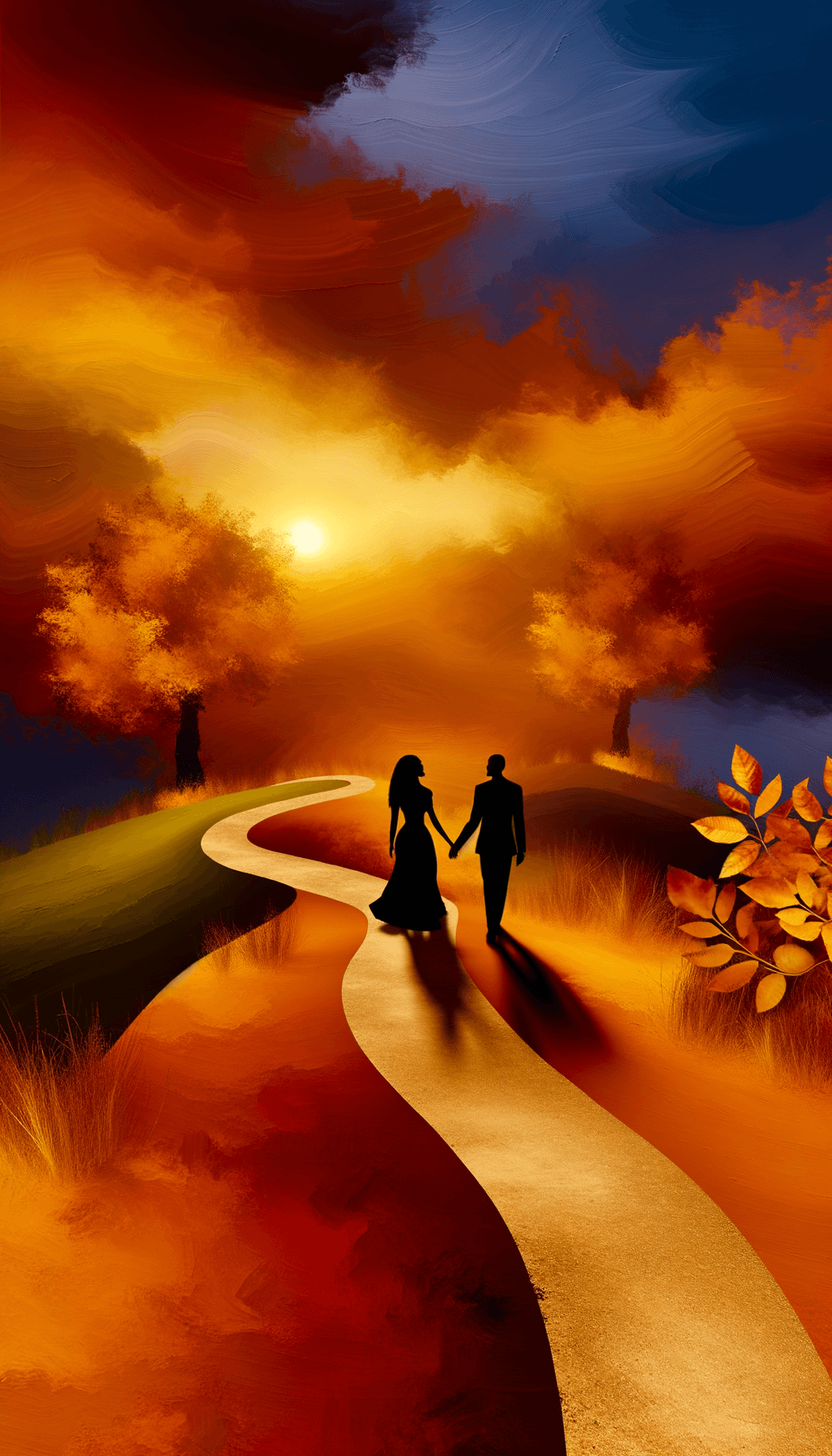
To act is to be committed, and to be committed is to be in love. — Jean-Paul Sartre
—What lingers after this line?
Connection Between Action and Commitment
Sartre emphasizes that true action requires commitment. One cannot engage meaningfully in anything without dedicating themselves fully to it.
Commitment as a Form of Love
The quote suggests that commitment itself is a kind of love. When we are truly committed to something or someone, it involves deep care and dedication, much like love.
Existentialist Perspective
As an existentialist philosopher, Sartre believed that individuals define themselves through actions. In this sense, taking action reflects a person's commitment and passion, forming their identity.
Love as a Driving Force
Love is not just a romantic feeling but a broader force that fuels dedication and devotion to one's pursuits, whether in relationships, work, or personal beliefs.
Philosophical Context
Jean-Paul Sartre, a key figure in existentialism, explored themes of freedom, responsibility, and authenticity. This quote aligns with his ideas that actions define existence and that commitment is a central aspect of human purpose.
One-minute reflection
What does this quote ask you to notice today?
Related Quotes
6 selectedTo act is to be committed, and to be committed is to be in danger. — Gilbert K. Chesterton
Gilbert K. Chesterton
To begin with, Chesterton’s statement highlights a crucial interdependence: meaningful action demands commitment. Without committing ourselves to a purpose or a cause, our actions lack depth and consequence.
Read full interpretation →But many of us seek community solely to escape the fear of being alone. Knowing how to be solitary is central to the art of loving. — bell hooks
bell hooks
Bell hooks begins with a quiet but difficult observation: not every search for community is rooted in love. Sometimes, we reach for others because solitude feels threatening, as though being alone exposes a lack within u...
Read full interpretation →We need joy as we need air. We need love as we need water. We need each other as we need the earth we share. — Maya Angelou
Maya Angelou
Maya Angelou’s words turn emotional needs into elemental ones, placing joy beside air, love beside water, and human connection beside the earth itself. By doing so, she refuses to treat happiness, affection, and communit...
Read full interpretation →If you love deeply, you're going to get hurt badly. But it's still worth it. — Tom Petty
Tom Petty
Tom Petty’s line begins with a blunt truth: deep love exposes us to deep hurt. The more fully we care, the more vulnerable we become to loss, disappointment, and change.
Read full interpretation →To love is not about merging. It is a noble calling for the individual to ripen, to differentiate, to become a world in oneself in response to another. — Rainer Maria Rilke
Rainer Maria Rilke
At first glance, Rilke challenges one of romance’s most familiar ideals: the desire to ‘become one.’ Instead, he argues that genuine love is not a collapse of boundaries but a deepened encounter between two distinct peop...
Read full interpretation →Family is not defined by our genes, it is built and maintained through love. — Unknown (Wait, skipping to) Family is the best thing you could ever wish for. — Michael J. Fox
Michael J. Fox
Taken together, these two quotations broaden the idea of what family means. The first insists that family is not merely a biological fact but a relationship built through care, loyalty, and steady affection.
Read full interpretation →More From Author
More from Paul Sartre →Freedom is what you do with what's been done to you. — Jean-Paul Sartre
Sartre’s line begins by refusing a comforting fantasy: none of us chooses the raw materials of our lives. Families, cultures, accidents, and losses arrive first, shaping what has “been done” to us.
Read full interpretation →If you are lonely when you're alone, you are in bad company. — Jean-Paul Sartre
Sartre’s remark reframes loneliness as more than a simple lack of people; it becomes a verdict on one’s inner life. If solitude feels unbearable, he implies, the discomfort may come from what you encounter when external...
Read full interpretation →One's own self is one's own power. — Jean-Paul Sartre
This quote emphasizes the idea that true power comes from within. Sartre highlights the capability of individuals to shape their own lives through choices and actions.
Read full interpretation →Act not according to your fears, but according to your hopes and dreams. — Jean-Paul Sartre
This quote encourages us to rise above our fears and not let them dictate our actions. Sartre underscores the idea that fear often limits personal growth and prevents us from realizing our fullest potential.
Read full interpretation →