
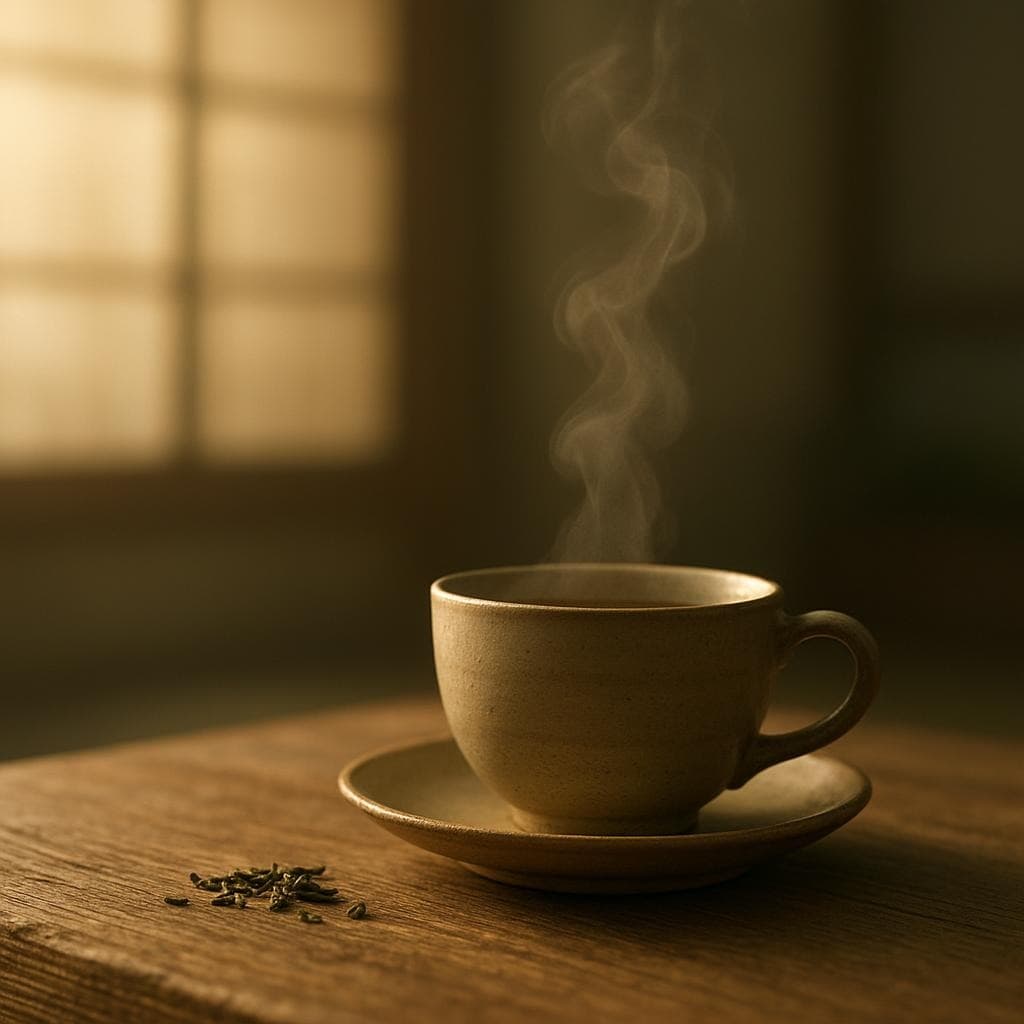
Drink your tea slowly and reverently, as if it is the axis on which the world turns. — Thich Nhat Hanh
—What lingers after this line?
A Cup Turned into a Center
Thich Nhat Hanh’s line asks us to treat an ordinary act as if it were sacred: drink tea “slowly and reverently,” as though the world pivots on it. The striking image of an “axis” suggests that meaning doesn’t always come from grand events; it can arise when attention becomes complete. In that sense, the tea is not important because of what it contains, but because it gathers our scattered mind into one place. From there, the quote gently challenges the default pace of modern life. If we can relate to a simple cup with care, then reverence stops being a rare emotion and becomes a trainable skill—one sip at a time.
Mindfulness in the Most Ordinary Moment
Building on that center, the instruction is essentially mindfulness made practical: feel warmth, notice aroma, experience the act of lifting the cup, and return to the present whenever thought runs away. Thich Nhat Hanh often taught everyday mindfulness in works like *The Miracle of Mindfulness* (1975), where washing dishes or walking can become vehicles for awakening. Tea, in this quote, is another doorway. Moreover, “slowly” is not merely about time; it is about intimacy with experience. Slowness makes space for perception, and perception makes space for gratitude—an antidote to living on autopilot.
Reverence Without Religion
Next, the word “reverently” broadens mindfulness into an attitude of respect. Reverence here doesn’t require a temple, a creed, or a special occasion; it’s the deliberate choice to meet life with care. Zen aesthetics and practice often emphasize this ordinary sacredness, and tea culture offers a vivid parallel: the Japanese tea ceremony, shaped by Sen no Rikyū (16th century), elevates simple gestures into a disciplined calm. In that light, reverence becomes a way of restoring dignity to small moments. When a cup of tea is treated as worthy of attention, the rest of the day quietly follows suit.
The Axis as a Metaphor for Stability
Then comes the metaphor that makes the sentence unforgettable: the tea as “the axis on which the world turns.” An axis is steady while everything else moves around it, and this suggests a method for staying grounded amid change. Rather than trying to control the world’s spin—deadlines, news cycles, worries—we locate a stable point: breathing, sipping, sensing. This is also a subtle reminder that stability is not found by escaping life, but by meeting it fully. The cup becomes a still point where the mind can stop chasing and start inhabiting.
A Gentle Practice Against Hurry and Fragmentation
Finally, the quote reads like medicine for hurry. Many people recognize the experience of drinking while scrolling, thinking ahead, or replaying conversations—consuming without being there. Thich Nhat Hanh’s instruction interrupts that fragmentation by giving a single, achievable task: drink as if it matters completely. With repetition, this kind of practice can spread. If tea can be held with reverence, then so can a meal, a conversation, or a moment of silence before speaking. The world may keep turning, but we learn to live from the axis rather than the whirl.
One-minute reflection
What does this quote ask you to notice today?
Related Quotes
6 selectedIn the quiet of your own mind, you hold the power to reclaim your attention from the chaos of the world. — Thich Nhat Hanh
Thich Nhat Hanh
Thich Nhat Hanh’s words begin with a gentle but radical claim: the mind contains a quiet space that cannot be fully colonized by the world’s noise. Rather than portraying attention as something stolen forever by distract...
Read full interpretation →To find peace, you must stop trying to solve every problem at once. Sometimes the most productive thing you can do is simply breathe and be present. — Thich Nhat Hanh
Thich Nhat Hanh
At first glance, Thich Nhat Hanh’s insight challenges a habit many people mistake for responsibility: the need to solve every problem immediately. When the mind races from one worry to the next, it often creates more str...
Read full interpretation →The goal is not to be good at everything, but to be present for the things that matter most. — Thich Nhat Hanh
Thich Nhat Hanh
Thich Nhat Hanh’s quote gently redirects ambition. Rather than chasing excellence in every possible area, he suggests that a meaningful life depends on discernment: knowing what deserves our energy and then meeting it wi...
Read full interpretation →We have to be careful not to spend our lives anticipating the next thing. — Thich Nhat Hanh
Thich Nhat Hanh
Thich Nhat Hanh’s warning points to a quiet but pervasive habit: living in the mental future. Anticipation can feel productive—planning, improving, preparing—but it can also become a way of postponing life itself.
Read full interpretation →We are so obsessed with doing that we have no time and no room left for being. — Thich Nhat Hanh
Thich Nhat Hanh
Thich Nhat Hanh’s remark points to a modern dilemma: busyness can become so normal that it feels virtuous, even when it quietly erodes our inner life. When our days are packed with tasks, notifications, and goals, “doing...
Read full interpretation →The feeling that any task is a nuisance will soon disappear if it is done in mindfulness. — Thich Nhat Hanh
Thich Nhat Hanh
Thich Nhat Hanh begins with an everyday truth: much of our irritation comes not from the task itself, but from the label we attach to it. When we decide something is a nuisance—washing dishes, replying to emails, standin...
Read full interpretation →More From Author
More from Thich Nhat Hanh →You must love in such a way that the person you love feels free. — Thich Nhat Hanh
At its core, Thich Nhat Hanh’s statement redefines love as an act of care that does not confine. To love someone so that they feel free means offering affection without turning it into control, guilt, or dependence.
Read full interpretation →We are not islands; we are threads in a tapestry. To pull away from the weave is to lose the very texture that makes life hold together. — Thich Nhat Hanh
At its core, Thich Nhat Hanh’s image of threads in a tapestry rejects the fantasy of total self-sufficiency. A single thread may exist on its own, yet it gains meaning, strength, and beauty only through its relation to o...
Read full interpretation →When you learn how to suffer, you suffer far less. Resilience is not about avoiding the fire; it is about becoming fireproof. — Thich Nhat Hanh
At first glance, Thich Nhat Hanh’s quote appears paradoxical: how could learning to suffer make suffering lighter? Yet his point is that pain intensifies when we resist it, fear it, or treat it as a personal failure.
Read full interpretation →Slow down, and you will find that the rhythm of your own heart becomes the master of your work. — Thich Nhat Hanh
At first glance, Thich Nhat Hanh’s words seem to offer simple advice about working more slowly, yet they point to something deeper: a different relationship with time itself. To slow down is not merely to reduce speed, b...
Read full interpretation →