
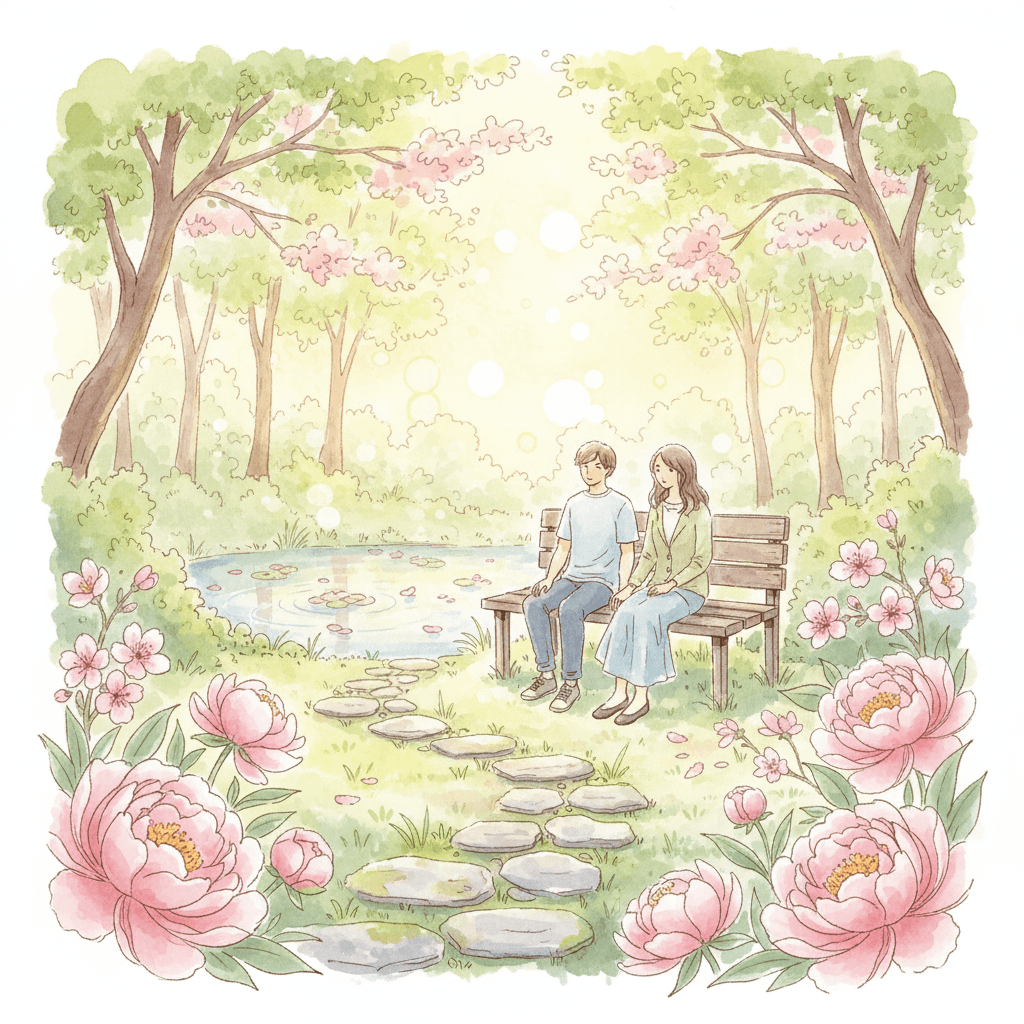
The most precious gift we can offer others is our presence. When mindfulness embraces those we love, they will bloom like flowers. — Thich Nhat Hanh
—What lingers after this line?
Presence as the Rarest Gift
Thich Nhat Hanh’s insight reorders our priorities: in a world crowded with tasks and technologies, undivided attention has become precious. When we truly show up—eyes, ears, and heart aligned—we signal to another person that their experience matters more than our impulses to fix, judge, or rush. This simple yet difficult offering transforms ordinary moments into sites of dignity and care. Moving from intention to practice, presence begins not with doing more but with being here. That shift is the doorway to mindfulness, the quality that turns attention into nourishment rather than scrutiny.
Mindfulness as Attuned Attention
Mindfulness is sustained, nonjudgmental awareness of the present moment. In Thich Nhat Hanh’s Plum Village tradition, it unfolds as "deep listening" and "loving speech," practices he describes in The Art of Communicating (2013). Rather than scanning for flaws, we notice breath, body, and the other person’s cues, softening our reactivity. As this attuned attention "embraces" someone, it conveys warmth and safety instead of pressure. The embrace is not literal; it is an atmosphere. From here, the promise of blooming becomes psychologically plausible rather than merely poetic.
Why Presence Heals and Enables Growth
Attachment research shows how attuned presence unlocks exploration. John Bowlby (1969) and Mary Ainsworth’s Strange Situation studies (1978) found that caregivers who respond consistently provide a "secure base" from which children venture and learn. Conversely, Edward Tronick’s Still Face Experiment (1975) demonstrates how withdrawal of responsive presence quickly distresses infants. Physiology adds another layer. Stephen Porges’s Polyvagal Theory (2011) suggests that facial expression, voice, and gaze signal safety, calming the nervous system and enabling social engagement; oxytocin and synchrony further support trust. Under such conditions, people risk honesty, creativity, and play—exactly the forms of human flowering Hanh evokes. Having traced the mechanism, we can now ask what presence looks like in daily relationships.
Practices That Convey "I Am Here"
Begin with small rituals: put the phone out of sight, take three breaths, and orient your body toward the other person. Reflect back what you heard before offering advice; match pace and tone to reduce defensiveness. John Gottman’s research on "turning toward" connection bids (1999) shows that brief, consistent acknowledgments build trust over time. Language helps too. Marshall Rosenberg’s Nonviolent Communication (2003) structures conversations around observations, feelings, needs, and requests, replacing blame with clarity. In Plum Village, a "bell of mindfulness" pauses activity so everyone returns to breathing and listening. These micro-practices make presence visible, and they travel well into parenting, caregiving, and teamwork.
Tender Spaces: Parenting and Care
Consider a child with a scraped knee. The fix-first impulse reaches for the bandage; mindful presence kneels, meets the eyes, and says, "I’m here." Often the crying eases before the bandage is applied because nervous systems co-regulate when they feel seen. Similarly, in clinics, a minute of silent breath and undivided attention can lower anxiety enough to clarify what truly hurts. Evidence supports this intuition. A physician program in mindful communication reduced burnout and improved empathy and mood (Krasner et al., JAMA, 2009). The effect mirrors Hanh’s promise: when patients and families feel held by attentive presence, they recover agency and begin to bloom.
Teams and Communities That Blossom
Beyond the home, presence scales into culture. Amy Edmondson’s work on psychological safety (1999) shows that teams learn and innovate when members feel safe to speak up. Google’s Project Aristotle (2015) echoed this: the best teams were not the smartest but the safest. Presence creates that safety by honoring voices before evaluating ideas. Practical norms follow: one conversation at a time, brief check-ins to hear what’s unsaid, and paraphrasing before debating. As listening deepens, participation widens; and as participation widens, collective competence grows—the organizational equivalent of a garden in bloom.
Safeguarding Attention in a Noisy World
Yet presence withers under constant interruption. Research on "attention residue" shows that switching tasks leaves a cognitive trace that degrades performance (Sophie Leroy, 2009). To protect attention, design friction: put devices in another room, book buffers between meetings, and take one breath before replying to any message. Small rules help: no phones at meals, the first and last five minutes of gatherings reserved for quiet arrival and gratitude, and the habit of asking one sincere question before offering an opinion. These boundaries are not ascetic; they are trellises. With them, mindfulness can hold our relationships long enough for them to bloom.
One-minute reflection
Why might this line matter today, not tomorrow?
Related Quotes
6 selectedThe most precious gift we can offer others is our presence. — Thich Nhat Hanh
Thich Nhat Hanh
Thich Nhat Hanh’s line reframes generosity: what people most need from us is not another item, favor, or clever solution, but the lived experience of being with them. Presence is “precious” because it cannot be mass-prod...
Read full interpretation →In the quiet of your own mind, you hold the power to reclaim your attention from the chaos of the world. — Thich Nhat Hanh
Thich Nhat Hanh
Thich Nhat Hanh’s words begin with a gentle but radical claim: the mind contains a quiet space that cannot be fully colonized by the world’s noise. Rather than portraying attention as something stolen forever by distract...
Read full interpretation →To find peace, you must stop trying to solve every problem at once. Sometimes the most productive thing you can do is simply breathe and be present. — Thich Nhat Hanh
Thich Nhat Hanh
At first glance, Thich Nhat Hanh’s insight challenges a habit many people mistake for responsibility: the need to solve every problem immediately. When the mind races from one worry to the next, it often creates more str...
Read full interpretation →The goal is not to be good at everything, but to be present for the things that matter most. — Thich Nhat Hanh
Thich Nhat Hanh
Thich Nhat Hanh’s quote gently redirects ambition. Rather than chasing excellence in every possible area, he suggests that a meaningful life depends on discernment: knowing what deserves our energy and then meeting it wi...
Read full interpretation →We have to be careful not to spend our lives anticipating the next thing. — Thich Nhat Hanh
Thich Nhat Hanh
Thich Nhat Hanh’s warning points to a quiet but pervasive habit: living in the mental future. Anticipation can feel productive—planning, improving, preparing—but it can also become a way of postponing life itself.
Read full interpretation →We are so obsessed with doing that we have no time and no room left for being. — Thich Nhat Hanh
Thich Nhat Hanh
Thich Nhat Hanh’s remark points to a modern dilemma: busyness can become so normal that it feels virtuous, even when it quietly erodes our inner life. When our days are packed with tasks, notifications, and goals, “doing...
Read full interpretation →More From Author
More from Thich Nhat Hanh →You must love in such a way that the person you love feels free. — Thich Nhat Hanh
At its core, Thich Nhat Hanh’s statement redefines love as an act of care that does not confine. To love someone so that they feel free means offering affection without turning it into control, guilt, or dependence.
Read full interpretation →We are not islands; we are threads in a tapestry. To pull away from the weave is to lose the very texture that makes life hold together. — Thich Nhat Hanh
At its core, Thich Nhat Hanh’s image of threads in a tapestry rejects the fantasy of total self-sufficiency. A single thread may exist on its own, yet it gains meaning, strength, and beauty only through its relation to o...
Read full interpretation →When you learn how to suffer, you suffer far less. Resilience is not about avoiding the fire; it is about becoming fireproof. — Thich Nhat Hanh
At first glance, Thich Nhat Hanh’s quote appears paradoxical: how could learning to suffer make suffering lighter? Yet his point is that pain intensifies when we resist it, fear it, or treat it as a personal failure.
Read full interpretation →Slow down, and you will find that the rhythm of your own heart becomes the master of your work. — Thich Nhat Hanh
At first glance, Thich Nhat Hanh’s words seem to offer simple advice about working more slowly, yet they point to something deeper: a different relationship with time itself. To slow down is not merely to reduce speed, b...
Read full interpretation →