
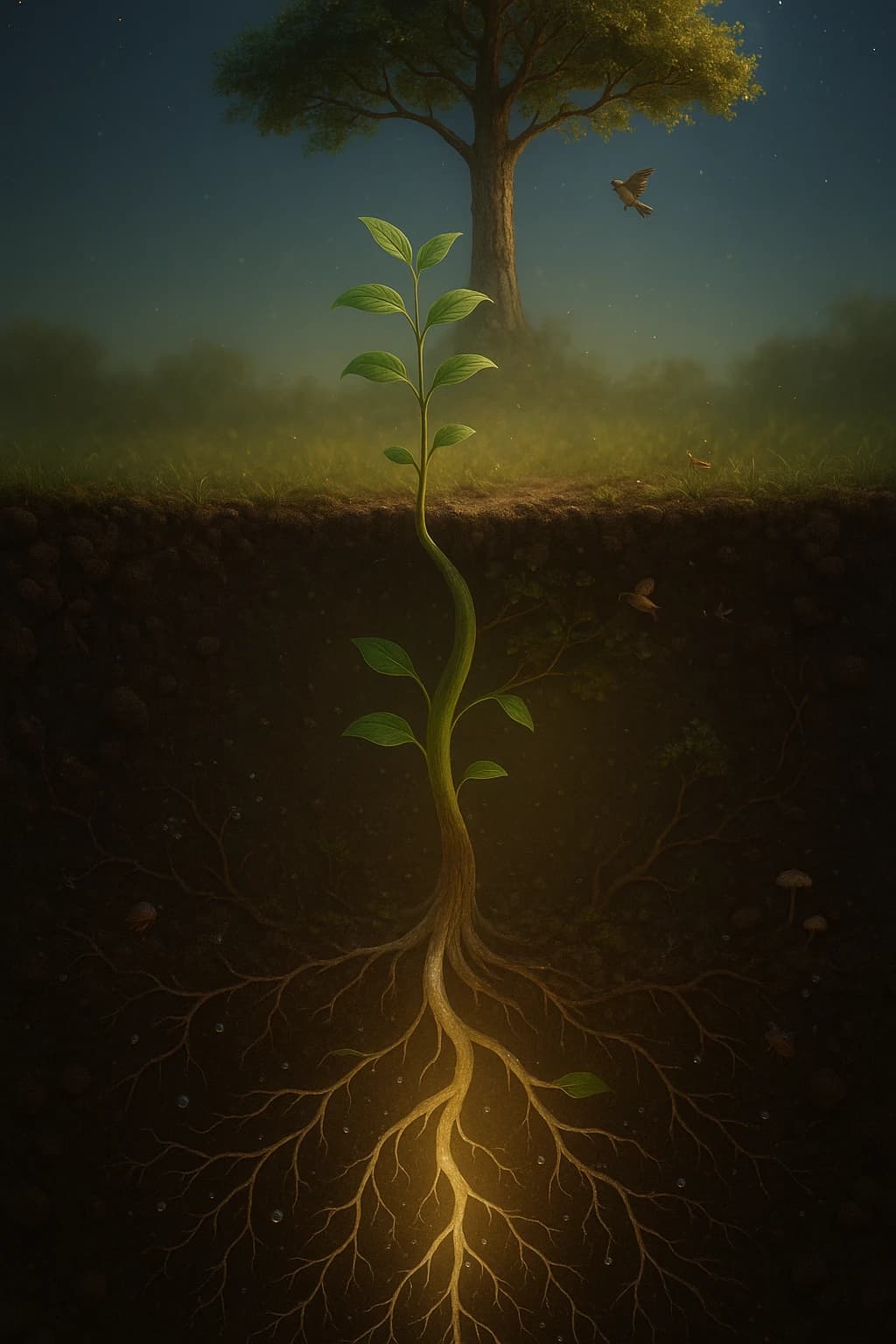
Turn intention into habit; habit into habit into destiny. — Thich Nhat Hanh
—What lingers after this line?
The Chain from Choice to Consequence
Thich Nhat Hanh’s line links a quiet inner impulse to the broad arc of a life: intention becomes habit, and habit steers destiny. Even the doubled phrase—“habit into habit”—reads like a deliberate drumbeat, underscoring that repetition is the bridge between a moment’s resolve and a lifetime’s direction. In Buddhist terms, this is the movement of habit energy (saṃskāra): the patterned tendencies that carry us when mindfulness lapses. Thus, the quote invites a practical reframing. Destiny is not an abstract fate; it is the accumulated weight of what we practice. With this shift, we can ask not only “What do I intend?” but “What am I rehearsing today that I will become tomorrow?”
Habit Energy in Mindful Living
In Plum Village, intention is made tangible through simple rituals. A bell sounds; everyone pauses to breathe. The act is small yet repeatable, converting mindful resolve into embodied routine. Thich Nhat Hanh calls this working skillfully with “habit energy,” guiding it rather than being swept along by it. A vivid example appears in The Miracle of Mindfulness (1975), where he counsels, “Wash the dishes to wash the dishes.” The point is not chores but training attention. By returning awareness to a single ordinary act, we seed a pattern that can spread across the day. Over time, such mindful micro-practices accumulate, revealing how intention, when anchored, matures into stable habit.
Why Repetition Rewrites the Brain
From a scientific angle, repetition literally reshapes pathways. Ann Graybiel’s work on the basal ganglia (MIT, 2000s) shows how actions transition from effortful sequences into “chunks,” the neural signature of habit. Similarly, the cue–routine–reward loop popularized in Duhigg’s The Power of Habit (2012) maps how context triggers automatic behavior. Philosophy anticipated this. Aristotle’s Nicomachean Ethics argues that we become just by doing just acts; character is the residue of repeated choices. In other words, repetition turns doing into being. Consequently, if habits encode both skills and identity, then a well-tended intention—practiced often enough—can set the trajectory we call destiny.
Tiny Bridges and Implementation Plans
Because big intentions often stall, the art is to shrink them. BJ Fogg’s Tiny Habits (2019) suggests anchoring a micro-behavior to an existing routine: after I pour tea, I take one conscious breath. Each repetition is a vote for the identity we seek. Meanwhile, Peter Gollwitzer’s implementation intentions (1999) show that if–then plans (“If it’s 9 p.m., then I journal one line”) greatly increase follow-through. By making the first step frictionless, we preserve the spirit of the intention while giving it a reliable body. Over days and weeks, these small bridges accumulate, turning aspiration into a lived cadence.
Crafting Supportive Environments and Sangha
Habits ride on context. Thich Nhat Hanh emphasized sangha—community—as a living environment that carries mindfulness when willpower thins. Peace Is Every Step (1991) describes shared practices like breathing with the sound of a bell, transforming space into a cue for calm attention. Designing our surroundings works the same way: place the meditation cushion by the kettle, keep a pen on the open notebook, silence the phone during meals. These gentle nudges reduce friction and amplify the signals that align action with intention. In this way, environment becomes an ally, steadily steering the course our habits are plotting.
Identity, Feedback, and Self-Compassion
As repetition accumulates, feedback loops take hold. James Clear’s “identity-based habits” (Atomic Habits, 2018) argues that each small win provides evidence of who we are becoming, which in turn fuels persistence. Yet when lapses occur—as they will—self-compassion matters. Kristin Neff’s research (2003) shows that kind responses to setbacks improve resilience compared with self-criticism. Mindfulness offers a practical script: notice, name, and begin again. This gentle reset protects the habit from the shame spiral and keeps destiny pliable—guided by learning rather than derailed by perfectionism.
Destinies That Remain Spacious
If habits shape destiny, there is a risk of rigidity. The remedy is periodic reflection: does this pattern still serve my values? In Plum Village, a weekly “Lazy Day” reopens spaciousness—no schedule, just presence—reminding practitioners that freedom, not compulsion, is the point. Thus the arc completes itself. Intention initiates, habits consolidate, and reflection keeps the path humane. Over time, we do not so much chase destiny as practice it, step by step, until what once required effort begins to carry us with quiet ease.
One-minute reflection
What does this quote ask you to notice today?
Related Quotes
6 selectedEverything that is created begins with a small, quiet intention. Do not fear the length of the road; just honor the focus you bring to the very next step. — Thich Nhat Hanh
Thich Nhat Hanh
At its heart, this quote suggests that meaningful creation rarely starts with spectacle; instead, it begins with an inward turning, a small and quiet intention. Thich Nhat Hanh’s broader teachings in Peace Is Every Step...
Read full interpretation →Keep one small flame of intent; it will outlast the fiercest winds. — Thich Nhat Hanh
Thich Nhat Hanh
At the outset, Thich Nhat Hanh’s image of a “small flame” names intention as a pilot light: modest in appearance yet capable of reigniting the whole stove of a life. He does not celebrate grand gestures; rather, he trust...
Read full interpretation →We make progress by turning intentions into habits and habits into change. — Chimamanda Ngozi Adichie
Chimamanda Ngozi Adichie
Adichie’s line traces a clear arc: resolve is not enough until it crystallizes into repeatable behavior. This advances a classic problem in psychology—the intention–behavior gap—where good aims stall without structure.
Read full interpretation →Turn intention into habit, and habit into art. — Louise Glück
Louise Glück
Louise Glück’s line sketches a three-step metamorphosis: desire becomes routine, and routine ripens into expression that feels inevitable. Intention is the spark—volatile and noble but fleeting.
Read full interpretation →Act with steady intent, for habit turns intention into reality — Confucius
Confucius
Confucius links inner resolve with outward practice, insisting that character is shaped not by flashes of will but by the rituals we repeat. In the Analects, he praises learning followed by constant practice, implying th...
Read full interpretation →It is not the speed of the work, but the intention behind it that grants it value. — Rabindranath Tagore
Rabindranath Tagore
At first glance, Tagore’s statement challenges a modern habit of equating worth with speed. In many settings, quick results are praised as signs of competence, yet he redirects attention to the inner motive that shapes t...
Read full interpretation →More From Author
More from Thich Nhat Hanh →If we are facing in the right direction, all we have to do is keep walking. — Thích Nhất Hạnh
Thích Nhất Hạnh’s words begin with a simple but profound premise: progress depends first on direction, not speed. If a person is turned toward compassion, clarity, healing, or truth, then each modest step becomes meaning...
Read full interpretation →You must love in such a way that the person you love feels free. — Thich Nhat Hanh
At its core, Thich Nhat Hanh’s statement redefines love as an act of care that does not confine. To love someone so that they feel free means offering affection without turning it into control, guilt, or dependence.
Read full interpretation →We are not islands; we are threads in a tapestry. To pull away from the weave is to lose the very texture that makes life hold together. — Thich Nhat Hanh
At its core, Thich Nhat Hanh’s image of threads in a tapestry rejects the fantasy of total self-sufficiency. A single thread may exist on its own, yet it gains meaning, strength, and beauty only through its relation to o...
Read full interpretation →When you learn how to suffer, you suffer far less. Resilience is not about avoiding the fire; it is about becoming fireproof. — Thich Nhat Hanh
At first glance, Thich Nhat Hanh’s quote appears paradoxical: how could learning to suffer make suffering lighter? Yet his point is that pain intensifies when we resist it, fear it, or treat it as a personal failure.
Read full interpretation →