
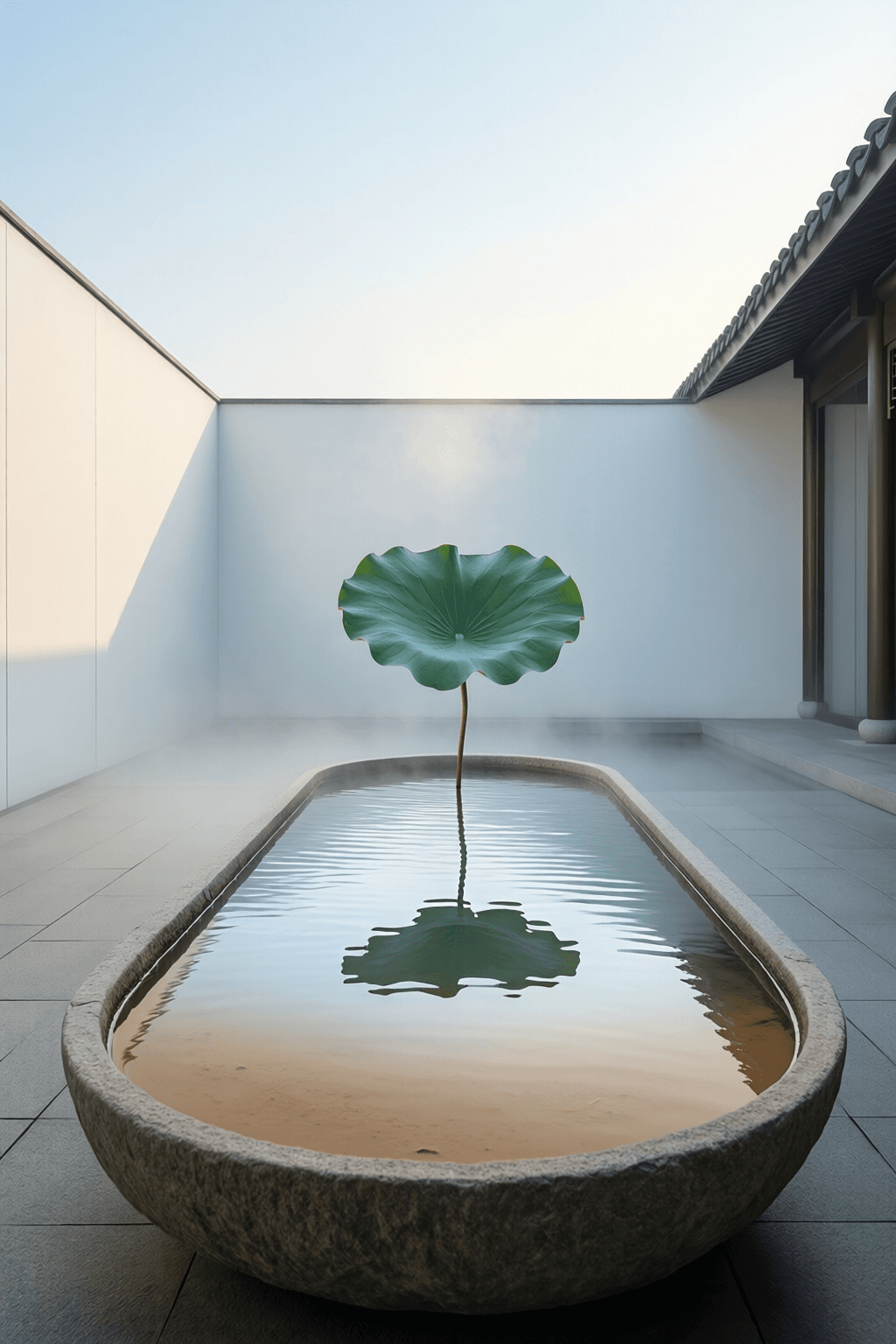
Do you have the patience to wait until your mud settles and the water is clear? — Lao Tzu
—What lingers after this line?
Stillness as a Form of Wisdom
Lao Tzu’s question frames patience not as passive delay but as an active kind of wisdom. The image of muddy water settling on its own suggests that confusion often clears not through force, but through restraint. Rather than stirring the mind with constant reaction, he invites us to trust the quiet processes that restore clarity. In this way, the saying shifts our understanding of control. Instead of mastering every problem by immediate action, we sometimes serve ourselves best by pausing long enough for what is clouded to become visible.
The Metaphor of Muddy Water
At the center of the quote is a simple natural metaphor: when water is disturbed, it becomes opaque, yet when left undisturbed, the sediment falls away. Likewise, a troubled mind cannot easily perceive truth. Anger, fear, and haste keep our inner waters agitated, making sound judgment difficult. Because Lao Tzu, traditionally associated with the Tao Te Ching (c. 4th century BC), often drew insight from nature, this image feels especially fitting. He suggests that clarity is less something we manufacture than something we allow, provided we stop interfering with it.
Patience Against Impulsive Action
From that image follows a practical lesson: not every problem improves under immediate pressure. In moments of conflict, people often speak too soon, decide too quickly, or act merely to escape uncertainty. Yet the quote implies that urgency can deepen confusion, just as stirring muddy water only prolongs its murkiness. For that reason, patience becomes a discipline of refusing premature action. Waiting is difficult precisely because it feels unproductive, but Lao Tzu reframes it as the necessary interval in which discernment returns and wiser choices become possible.
A Lesson in Emotional Self-Mastery
Moreover, the saying speaks directly to emotional life. When we are upset, we usually want instant relief, and that desire can lead us to lash out or cling to the first explanation that comforts us. Lao Tzu instead proposes a quieter strength: the ability to remain present without immediately trying to fix or discharge every feeling. This idea echoes later contemplative traditions as well. Buddhist meditation texts, for instance, often describe the mind as becoming clear through observation rather than suppression, reinforcing the insight that composure arises when agitation is allowed to settle naturally.
Clarity as an Emergent State
Seen more deeply, the quote implies that clarity cannot always be forced into existence. We often assume understanding comes from harder thinking, but some forms of insight arrive only after mental strain loosens. Much like sleep solving a problem that effort could not, patience creates the conditions in which perception reorganizes itself. Therefore, Lao Tzu’s teaching is less about inactivity than about timing. It reminds us that there is a moment to act, but there is also a moment to wait until the mind is no longer clouded by its own disturbance.
Applying the Teaching to Daily Life
Ultimately, the power of the quote lies in its everyday usefulness. Before replying to an inflammatory message, making a major decision, or interpreting another person’s motives, we can ask whether our inner water is still muddy. That brief pause may prevent errors born of agitation and reveal options we could not previously see. Thus the saying endures because it joins poetry with practice. By teaching patience through the humble image of settling water, Lao Tzu offers a durable method for meeting confusion: be still long enough, and what is true may gradually become clear.
Recommended Reading
As an Amazon Associate, we earn from qualifying purchases.
One-minute reflection
What feeling does this quote bring up for you?
Related Quotes
6 selectedMuddy water is best cleared by leaving it alone. — Lao Tzu
Lao Tzu
Lao Tzu’s image is disarmingly simple: when water is churned, it turns opaque, yet if you stop agitating it, gravity and time do their work and clarity returns. In this sense, the saying is less a metaphor than an observ...
Read full interpretation →Nature does not hurry, yet everything is accomplished. — Lao Tzu
Lao Tzu
Lao Tzu’s line reframes success as something compatible with calm. Instead of praising speed, it points to a different kind of effectiveness—one that unfolds without strain, panic, or constant forcing.
Read full interpretation →Nature does not hurry, yet everything is accomplished. — Lao Tzu
Lao Tzu
Lao Tzu’s line points to a simple but demanding truth: completion does not require haste. In nature, processes unfold at their own pace—seeds germinate when conditions are right, rivers carve canyons over ages, and seaso...
Read full interpretation →Nature does not hurry, yet everything is accomplished. — Lao Tzu
Lao Tzu
Lao Tzu’s line captures a paradox that feels true the moment you notice it: nature rarely appears rushed, yet outcomes reliably arrive. Seasons turn, seedlings become trees, rivers carve canyons—without the frantic urgen...
Read full interpretation →Nature does not hurry, yet everything is accomplished. — Lao Tzu
Lao Tzu
Lao Tzu’s line, often attributed to the Taoist tradition associated with the Tao Te Ching (c. 4th–3rd century BC), opens by questioning a familiar habit: treating speed as proof of seriousness.
Read full interpretation →Nature does not hurry, yet everything is accomplished. — Lao Tzu
Lao Tzu
Lao Tzu’s line points to a simple but counterintuitive observation: nature rarely looks busy, yet its outcomes are vast and reliable. Seasons turn, rivers carve valleys, and forests regenerate without frantic effort.
Read full interpretation →More From Author
More from Lao Tzu →Anything that is living must have a rest. If it does not rest, it will lose its strength. — Lao Tzu
Lao Tzu’s insight begins with a simple observation: all living things move in cycles, not in endless exertion. By saying that anything alive must rest, he frames rest not as laziness but as a biological and spiritual nec...
Read full interpretation →Yield and overcome, bend and be straight. — Lao Tzu
At first glance, Lao Tzu’s line seems contradictory: how can yielding lead to overcoming, or bending result in straightness? Yet this paradox lies at the heart of Taoist thought.
Read full interpretation →Confidence is silent. Insecurities are loud. — (Skipped due to author uncertainty) -> Let's use: A truly strong person does not need to dominate. — Lao Tzu
At its core, Lao Tzu’s saying reframes strength as something inward rather than theatrical. A truly strong person, in this view, does not need to overpower others to prove worth, because genuine power is already settled...
Read full interpretation →If you are depressed you are living in the past. If you are anxious you are living in the future. If you are at peace you are living in the present. — Lao Tzu
At first glance, this saying offers a simple emotional map: depression is linked to the past, anxiety to the future, and peace to the present. In that structure, Lao Tzu presents inner life as a matter of where conscious...
Read full interpretation →