
The most beautiful things are those that take time to grow, requiring a commitment to the process rather than a hunger for the end. — Alice Walker
—What lingers after this line?
A Different Measure of Beauty
Alice Walker’s reflection shifts beauty away from instant results and toward slow formation. At its heart, the quote suggests that what becomes truly beautiful does so through time, care, and endurance rather than speed or immediate reward. In other words, beauty is not merely something we find; it is often something we help cultivate through patient attention. From that starting point, the line also challenges a culture obsessed with outcomes. Instead of asking how quickly something can be finished, Walker invites us to ask whether we are willing to remain faithful to a process. That subtle change transforms beauty from a product into a relationship—one shaped by waiting, tending, and trust.
The Discipline of Growth
Building on this idea, the quote treats growth as a disciplined, even moral act. To commit to a process means accepting uncertainty, repetition, and gradual change. Gardens, crafts, friendships, and artistic work all share this rhythm: they resist haste and reward steadiness. As a result, beauty becomes inseparable from the labor that nourishes it. This view echoes older wisdom traditions. For example, in Aristotle’s Nicomachean Ethics (4th century BC), excellence is formed through habit rather than sudden inspiration. Walker’s phrasing carries a similar lesson: what matures slowly often possesses a depth that quick achievement cannot imitate.
Resisting the Hunger for Endings
Just as importantly, Walker warns against being consumed by the end. A hunger for outcomes can make us impatient, causing us to overlook the meaning embedded in the middle stages of becoming. When every effort is judged only by its finish line, frustration replaces wonder, and growth begins to feel like delay rather than transformation. Seen this way, the quote becomes almost corrective. It asks us to value the unfinished season of things—the draft before the book, the practice before the performance, the early years before mastery. In many lives, the richest lessons emerge there, not at the triumphant conclusion but in the long apprenticeship that made it possible.
Nature as the Quiet Model
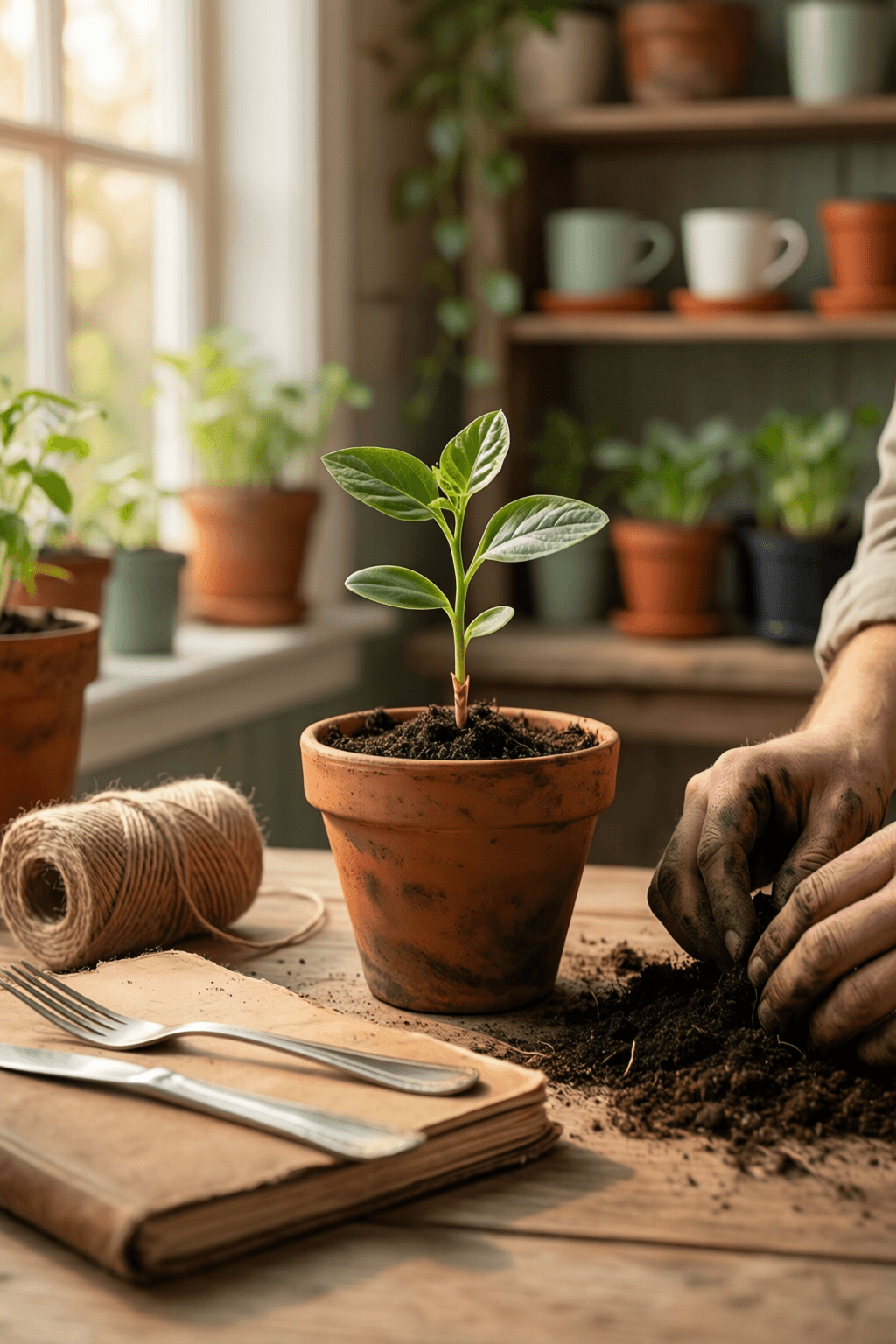
Walker’s imagery naturally recalls the living world, where beauty rarely appears on demand. A tree requires years to thicken, a flower depends on seasons, and fertile soil forms through layered decay and renewal. Because nature does not rush its elegance, it offers a quiet argument for patience. What lasts is usually what has been allowed to develop in its own time. This natural rhythm appears throughout literature as well. Henry David Thoreau’s Walden (1854) repeatedly presents nature as a teacher of deliberate living, reminding readers that meaningful growth cannot be forced. In that sense, Walker’s insight feels both poetic and ecological: beauty is the child of duration.
Art, Craft, and Human Becoming
From nature, it is easy to move to human creation. A novel, a piece of music, or a handmade object becomes beautiful not only because of talent but because of revision, failure, and return. Many artists describe their work as a process of listening and reshaping rather than conquering. The final form carries traces of all the hidden hours that made it possible. The same is true of character. A generous person, a wise leader, or a resilient community does not emerge overnight. As James Baldwin often suggested in his essays, maturity is forged through struggle and self-examination rather than instant revelation. Walker’s quote therefore speaks not only about making beautiful things, but about becoming one.
A Philosophy for Daily Life
Ultimately, the quote offers more than aesthetic advice; it proposes a way to live. If beautiful things require commitment to process, then daily faithfulness matters more than dramatic breakthroughs. Small acts repeated over time—reading, practicing, apologizing, planting, rebuilding—become the real architecture of a meaningful life. Therefore, Walker’s words encourage a gentler ambition. They do not reject goals, but they place greater value on attentiveness, perseverance, and care. In a world that often celebrates speed, this is a quietly radical reminder: the most beautiful parts of life are often still growing, and our task is not to rush them, but to remain devoted while they do.
Recommended Reading
As an Amazon Associate, we earn from qualifying purchases.
One-minute reflection
Why might this line matter today, not tomorrow?
Related Quotes
6 selectedThere is no royal road to anything. One thing at a time, all things in succession. That which grows fast, withers as rapidly. That which grows slowly, endures. — J. G. Holland
J. G. Holland
J. G.
Read full interpretation →Do not mistake patience for passivity. True growth requires the discipline to walk away from what is stagnant so you can run toward what is vital. — Epictetus
Epictetus
At first glance, the quote draws a sharp line between patience and passivity, two qualities often confused in daily life. Patience, in this sense, is not silent resignation but a disciplined steadiness that allows a pers...
Read full interpretation →We were planting seeds of change, the fruit of which we might never see. We had to be patient. — Michelle Obama
Michelle Obama
Michelle Obama’s quote frames social progress through the language of cultivation: people plant seeds now, even when the harvest may come much later. In that image, change is not sudden or theatrical but gradual, organic...
Read full interpretation →Growth often looks more like subtraction than addition. — Brené Brown
Brené Brown
At first glance, growth seems like an act of accumulation: more skills, more confidence, more achievements. Yet Brené Brown’s line reverses that expectation by suggesting that development often begins with removal.
Read full interpretation →One doesn't get to be a master of one's own life by rushing. You have to learn the patience of a gardener who knows the harvest cannot be hurried. — Paulo Coelho
Paulo Coelho
At its core, Paulo Coelho’s reflection challenges a modern obsession with speed. He argues that mastery over one’s life does not come from frantic action or constant acceleration, but from learning when to wait, observe,...
Read full interpretation →A garden is a grand teacher. It teaches patience and careful watchfulness; it teaches industry and thrift; above all it teaches entire trust. — Gertrude Jekyll
Gertrude Jekyll
Gertrude Jekyll presents the garden not merely as a decorative space but as a living instructor. From the opening phrase, she elevates cultivation into education, suggesting that soil, weather, and seasons quietly shape...
Read full interpretation →More From Author
More from Alice Walker →Hard times require furious dancing. Each of us is the proof. — Alice Walker
Alice Walker’s line treats “hard times” not as a cue for silence, but as a summons to movement. The phrase “furious dancing” reads like an intentional contradiction—how can joy or art survive suffering?
Read full interpretation →The most common way people give up their power is by thinking they don't have any. — Alice Walker
Alice Walker’s line points to a paradox: people often lose power not through force, but through a belief that power was never theirs to begin with. That assumption quietly reshapes behavior—choices narrow, risks feel poi...
Read full interpretation →In an age of speed, I began to think nothing is as precious as slowness. — Alice Walker
Alice Walker’s line begins with a modern assumption—life is accelerating—and then performs a quiet reversal: the rarer something becomes, the more it is worth. In an age that prizes quick replies, rapid production, and c...
Read full interpretation →The most common way people give up their power is by thinking they don’t have any. — Alice Walker
Alice Walker’s line points to a subtle but widespread form of surrender: not the dramatic loss of rights, money, or status, but the quiet decision to see oneself as incapable of influence. When people believe they have n...
Read full interpretation →