
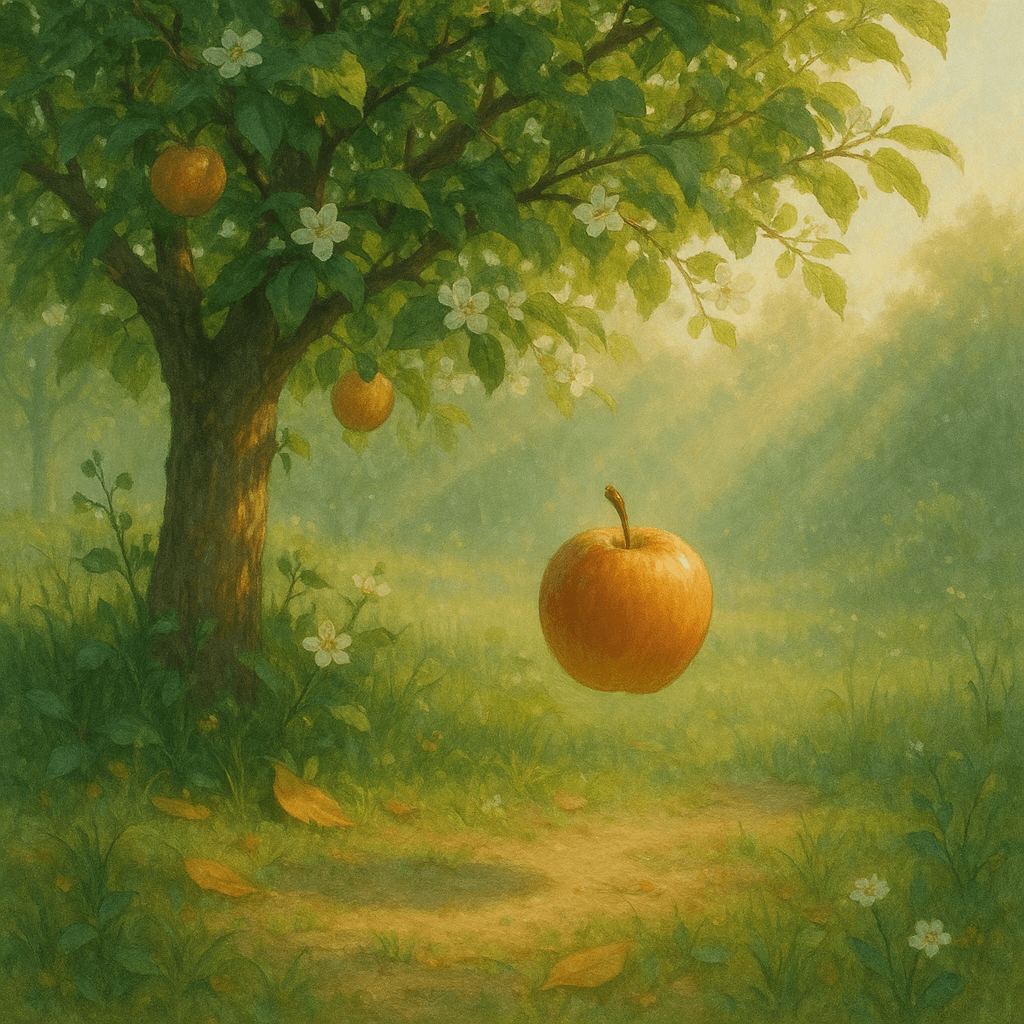
The ripest fruit falls by itself. — Tibetan Proverb
—What lingers after this line?
Natural Progression and Readiness
The Tibetan proverb, 'The ripest fruit falls by itself,' underscores the importance of natural progression and readiness in all aspects of life. Just as fruit needs time to mature before it detaches from the tree, people and circumstances also require patience before coming to fruition. The metaphor suggests that attempting to force outcomes before their time may lead to disappointment or underdeveloped results.
Wisdom in Waiting
Building on that idea, this proverb reminds us of the virtue of patience. Many traditions, from Buddhist teachings to Aesop’s fable of 'The Farmer and His Sons,' emphasize waiting for the right moment. Haste can undermine success, whereas calm perseverance leads to more satisfying outcomes. Thus, the proverb advises us not to rush growth, be it in relationships, careers, or personal goals.
Recognizing True Opportunity
Furthermore, the image of fruit falling at its ripest symbolizes recognizing genuine opportunities. When we allow growth to occur naturally, we are better able to discern when the moment is right to act. For example, entrepreneurs often wait for market readiness before launching new products, understanding that timing can be as crucial as innovation itself, as seen in Apple’s careful product rollouts.
Letting Go at the Appropriate Time
Transitioning from readiness to release, the proverb also encourages us to let go when the proper time arrives. Whether it’s parents allowing children independence or leaders handing over responsibilities, holding on too tightly can stifle development. Ancient philosophies, such as Laozi’s Tao Te Ching, teach that wise individuals recognize when it’s time to step back and let nature take its course.
Trusting Life’s Cycles
Ultimately, the proverb advocates for trusting the cycles and rhythms inherent in life. By observing the natural world, we learn that everything has its season. This wisdom cultivates resilience, helping us accept delays and setbacks as part of a broader process. In the end, the ripest fruit—metaphorically and literally—rewards those who trust in time’s unfolding.
One-minute reflection
What does this quote ask you to notice today?
Related Quotes
6 selectedTo make mistakes is human; to stumble is commonplace; to be able to laugh at yourself is maturity. — William Arthur Ward
William Arthur Ward
Ward acknowledges that making mistakes is a natural part of being human. Errors and stumbles are common experiences shared by all individuals, making them an inevitable aspect of life.
Read full interpretation →Success is sweet and sweeter as season'd with an aged wine. — Francis Bacon
Francis Bacon
Francis Bacon compares success to aged wine, suggesting that success, like wine, becomes more enjoyable and fulfilling with time and maturity.
Read full interpretation →A person grows up when they become more interested in the world than in themselves. — Albert Einstein
Albert Einstein
While age is often used to mark adulthood, Einstein’s words urge us to rethink maturity as a shift in focus—from self-centered introspection to an active engagement with the broader world. This perspective suggests that...
Read full interpretation →One bottle of milk is better than a barrel of gold. — Tibetan Proverb
Tibetan Proverb
This proverb highlights the importance of life’s essentials, such as nourishment and sustenance, over material wealth. Milk, as a symbol of sustenance, is portrayed as more valuable than non-essential riches like gold.
Read full interpretation →To move forward, you must first leave the shore. — Tibetan Proverb
Tibetan Proverb
The Tibetan proverb, 'To move forward, you must first leave the shore,' evokes a powerful image of setting sail into uncharted waters. At its core, this saying emphasizes that progress and personal growth require us to s...
Read full interpretation →Act as a guide to those who seek the path, not as a judge of those who stray. — Tibetan Proverb
Tibetan Proverb
The Tibetan proverb urges us to orient our behavior away from condemnation and toward empathy. Instead of sitting in judgment of those who lose their way, we are invited to step into the role of a gentle guide.
Read full interpretation →More From Author
More from Tibetan Proverb →One bottle of milk is better than a barrel of gold. — Tibetan Proverb
This proverb highlights the importance of life’s essentials, such as nourishment and sustenance, over material wealth. Milk, as a symbol of sustenance, is portrayed as more valuable than non-essential riches like gold.
Read full interpretation →To move forward, you must first leave the shore. — Tibetan Proverb
The Tibetan proverb, 'To move forward, you must first leave the shore,' evokes a powerful image of setting sail into uncharted waters. At its core, this saying emphasizes that progress and personal growth require us to s...
Read full interpretation →Act as a guide to those who seek the path, not as a judge of those who stray. — Tibetan Proverb
The Tibetan proverb urges us to orient our behavior away from condemnation and toward empathy. Instead of sitting in judgment of those who lose their way, we are invited to step into the role of a gentle guide.
Read full interpretation →The flute that is broken can still make music. — Tibetan Proverb
The Tibetan proverb, 'The flute that is broken can still make music,' offers a vivid image: even when something is no longer whole, it retains potential and purpose. At face value, this speaks to the enduring capacity wi...
Read full interpretation →