
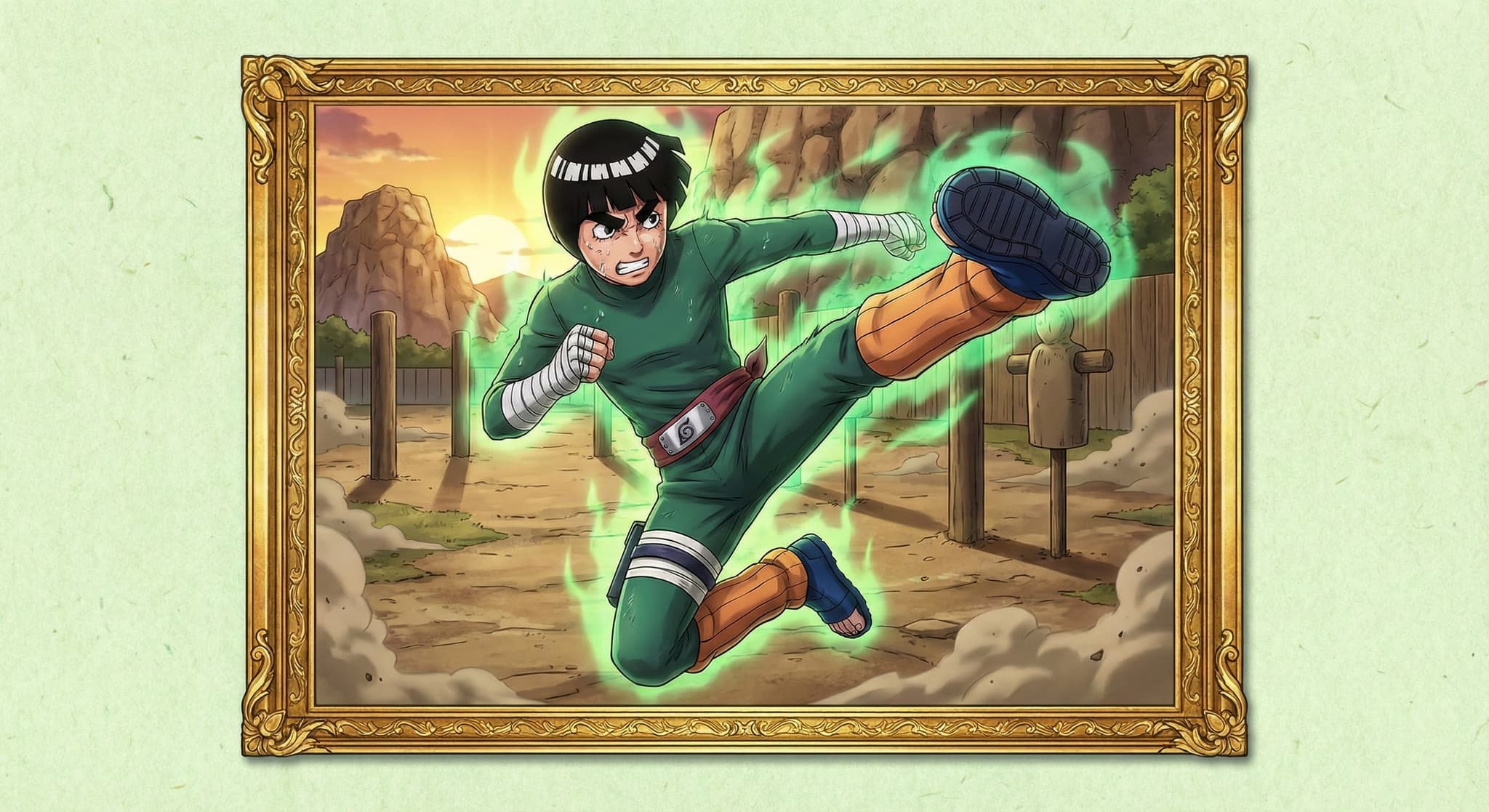
A dropout will beat a genius through hard work. — Rock Lee, Naruto Series
—What lingers after this line?
Rock Lee’s Creed of Effort
Rock Lee’s declaration, “A dropout will beat a genius through hard work,” distills his entire character arc into a single credo. In the Naruto series, Lee is born without the innate talent for ninjutsu or genjutsu that defines most elite ninja. Instead of accepting this as a permanent limitation, he resolves to rely entirely on taijutsu and sheer effort. Thus, his quote is not empty bravado; it is a lived philosophy forged in the gap between what he lacks and what he chooses to become.
From Fixed Talent to Growth Mindset
This philosophy marks a clear break from a fixed mindset view of ability, where “genius” is a static gift distributed at birth. Lee’s words instead mirror what psychologist Carol Dweck later called a growth mindset, the belief that intelligence and skill can be developed through practice and perseverance. By contrasting “dropout” and “genius,” the series challenges viewers to reconsider who is truly limited: the one without talent, or the one who depends on talent alone.
Training as a Form of Defiance
Lee’s brutal training regimens—running laps on his hands, doing push-ups with weights, and refusing to quit despite injury—serve as his quiet protest against a world that discards the untalented. Each exercise becomes an act of defiance against fate, much like athletes and artists who outwork their more gifted peers. In this way, his hard work is not merely about physical improvement; it is a daily statement that effort can rewrite the story others have already written for you.
Narrative Proof: Beating the ‘Genius’ Neji
The anime offers concrete narrative proof of Lee’s belief during his fight against Neji Hyuga, a prodigy hailed as a “genius of the Hyuga clan.” Although Neji initially appears untouchable, Lee’s relentless practice with Gai-sensei allows him to close the gap dramatically, even mastering techniques considered impossible for someone of his background. While circumstances often prevent Lee from achieving a clean, decisive victory, these near-miracles show that the distance between dropout and genius can be narrowed by perseverance more than by birthright.
Implications Beyond the Naruto World
Stepping beyond fiction, Lee’s statement resonates with real-world stories of individuals who compensate for late starts or modest abilities with sustained effort. Historical figures from Thomas Edison to Serena Williams demonstrate how disciplined practice can eclipse early disadvantages. Yet Naruto also cautions that hard work is not a guarantee of effortless success; Lee still faces losses and injuries. The deeper message, then, is not that effort makes everyone equal, but that effort is the most reliable path to surpassing your own supposed limits.
Redefining What It Means to ‘Win’
Ultimately, Lee’s creed invites a redefinition of victory itself. While beating a genius in combat is the literal claim, the series gradually suggests that the true triumph is becoming someone your past self would not recognize. By committing to outwork his perceived destiny, Lee “beats” the genius not only in battle but in character. Thus, the quote evolves from a competitive boast into an ethic: regardless of where you start, hard work grants you the power to change your ending.
Recommended Reading
As an Amazon Associate, we earn from qualifying purchases.
One-minute reflection
What's one small action this suggests?
Related Quotes
6 selectedA smile can be the strongest punch of all. — Rock Lee, Naruto Series
Rock Lee, Naruto Series
Rock Lee’s line, “A smile can be the strongest punch of all,” reframes strength in a series famous for physical combat. While Naruto’s world overflows with jutsu, taijutsu, and spectacular battles, Lee points to somethin...
Read full interpretation →Whatever the job you are asked to do at whatever level, do a good job because your reputation is your resume. — Madeleine Albright
Madeleine Albright
Madeleine Albright’s remark turns attention away from titles and toward conduct. Her point is simple but demanding: no matter how small the assignment or how modest the position, the quality of your effort becomes a publ...
Read full interpretation →Consistency is not a grand, dramatic act; it is the small, boring choice to show up again even when your internal weather is stormy. — Atomic Habits (James Clear)
Atomic Habits (James Clear
James Clear’s line from Atomic Habits reframes consistency as something far less glamorous than popular culture often suggests. Rather than a heroic burst of motivation, it is the ordinary decision to return to the task,...
Read full interpretation →Anything worth having is worth waiting for, and everything worth doing is worth doing with patience. — Confucius
Confucius
At its core, this saying ties value to delay. Confucius suggests that truly meaningful things do not arrive instantly; instead, they ask us to endure uncertainty, effort, and time.
Read full interpretation →Hard work never killed anybody, but why take a chance? — Edward Bergen
Edward Bergen
At first glance, Edward Bergen’s line sounds like a lazy person’s excuse, yet its charm lies in the deadpan reversal. He begins with a familiar moral lesson—hard work is harmless and virtuous—then instantly undercuts it...
Read full interpretation →Whatever you do, you have to master your craft. If it's flipping hamburgers at McDonald's, be the best hamburger flipper in the world. — Snoop Dogg
Snoop Dogg
Snoop Dogg’s quote begins with a democratic idea: the value of work does not depend on prestige, but on the care brought to it. Whether the task is glamorous or routine, he argues that mastery transforms it into somethin...
Read full interpretation →More From Author
More from Rock Lee, Naruto Series →