
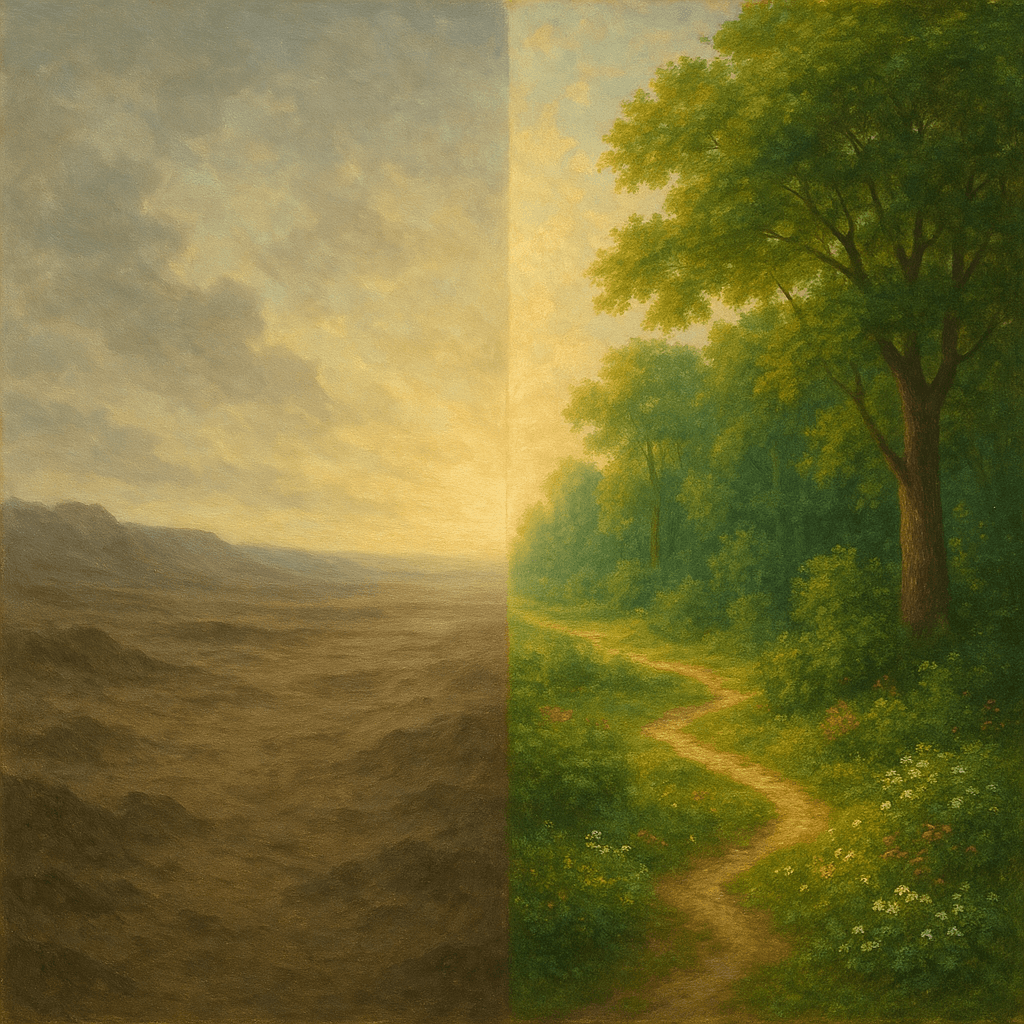
Existence precedes essence. — Jean-Paul Sartre
—What lingers after this line?
Origins of Sartre’s Existential Claim
Jean-Paul Sartre’s famous dictum, “Existence precedes essence,” emerged in the wake of World War II, crystallizing the core of existentialist thought. Presented in his 1946 lecture “Existentialism Is a Humanism,” Sartre challenged centuries of philosophical tradition that posited a fixed human nature. By arguing that people exist first—without predetermined purpose or definition—before shaping their own identities, Sartre offered a radical response to both religious and rationalist philosophies.
Philosophical Reversal of Tradition
Prior to existentialism, thinkers like Aristotle and Thomas Aquinas believed that an object’s essence—its defining purpose—was established before its existence. For example, a craftsman designs a paper cutter with a specific function in mind, and only then is the cutter made to fulfill that purpose. Sartre flipped this model for human beings, insisting that we come into the world as blank slates, writing our own scripts through choices and actions.
Freedom and Responsibility in Self-Creation
Transitioning from this reversal, Sartre connected the absence of predetermined essence with radical freedom. Since humans have no given blueprint, we are thrust into the responsibility of inventing ourselves. This freedom is exhilarating yet daunting: as Sartre notes, we are ‘condemned to be free.’ Every decision—from career to relationships—reflects our continuous act of self-definition, for better or worse.
Consequences for Morality and Authenticity
With this freedom comes the weight of authenticity. Sartre’s philosophy discards the idea that morality is dictated by universal principles, instead asserting that values are self-chosen and must be lived out genuinely. This echoes Dostoevsky’s earlier musings in ‘The Brothers Karamazov’ (1880), where, absent God, everything is permitted—yet for Sartre, this does not mean nihilism but an imperative to act sincerely, fully owning the consequences of our choices.
Legacy in Contemporary Thought and Culture
Finally, Sartre’s insight continues to inspire debates about identity and purpose. Modern psychology’s emphasis on self-actualization and movements for personal autonomy reflect existentialist undercurrents. Writers, artists, and activists alike echo Sartre’s conclusion: existence, uncertain and provisional, compels each of us to define our unique essence through authentic living. Thus, his existential proposition remains a living challenge in today’s search for meaning.
One-minute reflection
What feeling does this quote bring up for you?
Related Quotes
6 selectedIf you are lonely when you're alone, you are in bad company. — Jean-Paul Sartre
Paul Sartre
Sartre’s remark reframes loneliness as more than a simple lack of people; it becomes a verdict on one’s inner life. If solitude feels unbearable, he implies, the discomfort may come from what you encounter when external...
Read full interpretation →The only way to do is to be. — Jean-Paul Sartre
Paul Sartre
As a foundational figure in existentialism, Sartre emphasized existence preceding essence. This quote reflects his belief that action stems from authenticity — one must embody a certain way of being in order to truly act...
Read full interpretation →Freedom is what you do with what's been done to you. — Jean-Paul Sartre
Paul Sartre
Sartre’s line begins by refusing a comforting fantasy: none of us chooses the raw materials of our lives. Families, cultures, accidents, and losses arrive first, shaping what has “been done” to us.
Read full interpretation →Give up defining yourself—to yourself or to others. You won't die. You will come to life. — Eckhart Tolle
Eckhart Tolle
At its core, Eckhart Tolle’s statement urges us to loosen our grip on the identities we constantly construct. We define ourselves through profession, status, history, beliefs, and even wounds, imagining that these descri...
Read full interpretation →The best day of your life is the one on which you decide your life is your own. No apologies or excuses. — Elaine Maxwell
Elaine Maxwell
Elaine Maxwell’s quote frames transformation not as something that happens to us, but as a decision we make. The ‘best day’ is not defined by luck, wealth, or praise; instead, it begins when a person accepts full ownersh...
Read full interpretation →Discipline is not about being harsh with yourself; it is about aligning your actions with your purpose. It is a quiet form of freedom. — Ryan Holiday
Ryan Holiday
At first glance, discipline is often mistaken for punishment, deprivation, or relentless self-criticism. Ryan Holiday’s quote overturns that assumption by presenting discipline as a gentler, more intentional force: the p...
Read full interpretation →More From Author
More from Paul Sartre →Freedom is what you do with what's been done to you. — Jean-Paul Sartre
Sartre’s line begins by refusing a comforting fantasy: none of us chooses the raw materials of our lives. Families, cultures, accidents, and losses arrive first, shaping what has “been done” to us.
Read full interpretation →If you are lonely when you're alone, you are in bad company. — Jean-Paul Sartre
Sartre’s remark reframes loneliness as more than a simple lack of people; it becomes a verdict on one’s inner life. If solitude feels unbearable, he implies, the discomfort may come from what you encounter when external...
Read full interpretation →One's own self is one's own power. — Jean-Paul Sartre
This quote emphasizes the idea that true power comes from within. Sartre highlights the capability of individuals to shape their own lives through choices and actions.
Read full interpretation →Act not according to your fears, but according to your hopes and dreams. — Jean-Paul Sartre
This quote encourages us to rise above our fears and not let them dictate our actions. Sartre underscores the idea that fear often limits personal growth and prevents us from realizing our fullest potential.
Read full interpretation →