
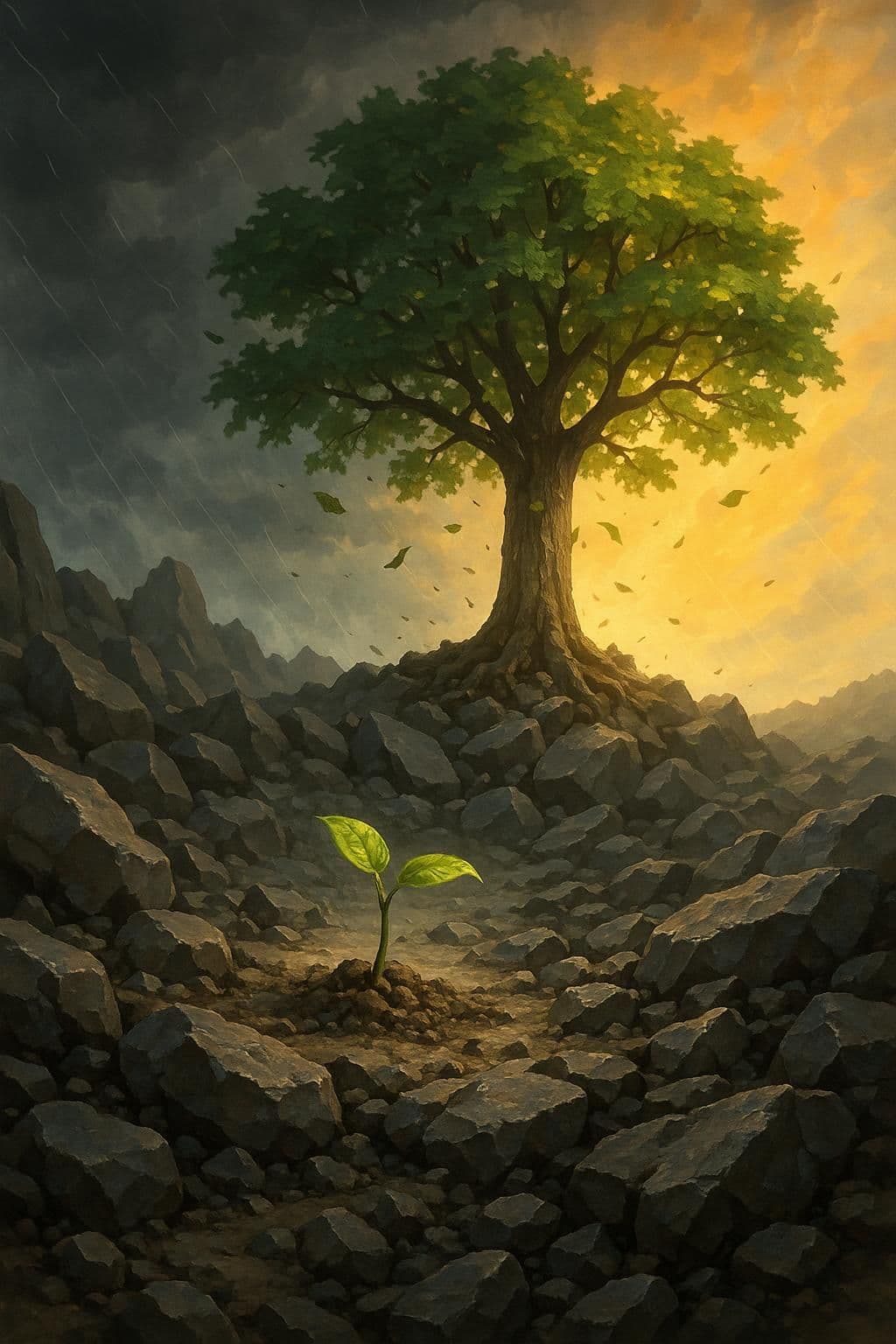
A person grows most when they are forced to overcome adversity. — Unknown, often attributed to Maya Angelou
—What lingers after this line?
Understanding Growth Through Challenge
The assertion that people grow most when overcoming adversity highlights a fundamental aspect of human development. Adversity—be it personal, professional, or emotional—presents obstacles that require us to adapt and change. Without such trials, comfort may stifle ambition and limit self-discovery. This idea is echoed in Maya Angelou’s various writings, which often emphasize resilience as the foundation of character.
Historical Perspectives on Struggle
Throughout history, great figures have flourished in the face of adversity. For example, Nelson Mandela’s long imprisonment became a crucible for his transformation into a global leader, teaching him patience and empathy. Similarly, literature reflects this motif: in Alexandre Dumas’s *The Count of Monte Cristo* (1844), Edmond Dantès emerges stronger and wiser after enduring wrongful incarceration, embodying the narrative that struggle can produce extraordinary growth.
Psychological Insights Into Resilience
Transitioning to the field of psychology, researchers describe this transformative process as ‘post-traumatic growth.’ According to Tedeschi and Calhoun (1996), individuals who confront significant adversity often develop new perspectives, stronger relationships, and a deeper appreciation for life. Thus, adversity acts not merely as a test, but as a powerful engine for psychological development.
Societal Benefits of Overcoming Hardship
On a broader scale, communities and societies, too, grow by navigating challenges. After natural disasters or periods of crisis, collaboration often strengthens, and innovative solutions emerge. For instance, the rapid advancement of medical technologies during wartime settings demonstrates how collective adversity can spur ingenuity and social cohesion, ultimately benefitting generations to come.
Embracing Adversity for Lasting Change
In summary, adversity compels individuals and societies alike to adapt, learn, and evolve. As we reflect on the countless stories of triumph against the odds—from literary heroes to everyday people—we find the universal truth underlying the quote: growth is rarely born of ease, but rather through the determination to overcome. Embracing life’s challenges with courage provides the richest soil for personal and collective transformation.
Recommended Reading
As an Amazon Associate, we earn from qualifying purchases.
One-minute reflection
Why might this line matter today, not tomorrow?
Related Quotes
6 selectedI am not defined by my relapses but by my decision to remain in recovery despite them. — Shane Niemeyer
Shane Niemeyer
At its core, Shane Niemeyer’s quote separates a person’s identity from their worst moments. A relapse may be painful and discouraging, yet it does not erase the deeper truth of someone still choosing recovery.
Read full interpretation →Resilience is not about how much you can endure. It's about how clearly you can see. — David Gelles
David Gelles
At first glance, resilience is often mistaken for sheer toughness—the ability to absorb pain, keep going, and never break. Yet David Gelles shifts the idea in a more insightful direction: resilience is less about endurin...
Read full interpretation →Let go of comparison and instead focus on becoming the best version of yourself. — Sarah Ban Breathnach
Sarah Ban Breathnach
Sarah Ban Breathnach’s quote begins with a quiet but radical instruction: stop using other people as the ruler for your worth. Comparison seems harmless at first, yet it easily turns life into a contest where someone els...
Read full interpretation →Resilience is not pretending that pain doesn't exist. It's learning to dance with it. — Amir (Success Chasers)
Amir (Success Chasers
At first glance, Amir’s quote rejects a common misunderstanding: that resilient people are somehow untouched by suffering. Instead, it reframes strength as honest engagement with pain rather than denial of it.
Read full interpretation →You are not broken. You are becoming. — Clarissa Pinkola Estés
Clarissa Pinkola Estés
At its core, Clarissa Pinkola Estés’s line transforms the way we interpret hardship. Instead of treating pain, confusion, or loss as proof of damage, she invites us to see them as signs of movement.
Read full interpretation →The most important work you will ever do will be within the walls of your own home. — Harold B. Lee
Harold B. Lee
Harold B. Lee’s statement redirects attention away from public achievement and toward the often-unnoticed labor of home.
Read full interpretation →More From Author
More from Unknown, often attributed to Maya Angelou →