
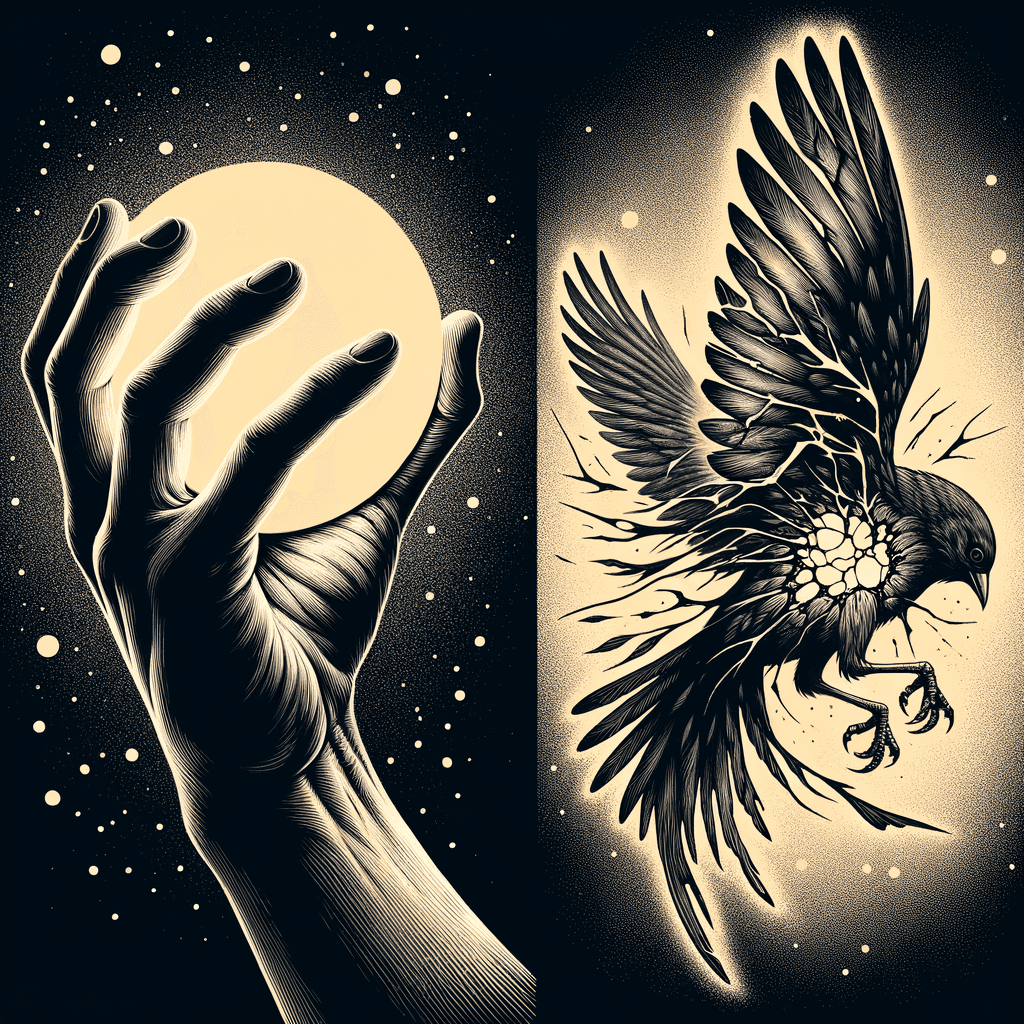
Hold fast to dreams, for if dreams die, life is a broken-winged bird that cannot fly. — Langston Hughes
—What lingers after this line?
Value of Dreams
This quote emphasizes the importance of holding onto one's dreams. Dreams give life purpose and direction; without them, one may feel lost or unfulfilled.
Metaphor of a Bird
Langston Hughes uses the metaphor of a 'broken-winged bird' to illustrate how life can become limited and constrained without dreams. Just as a bird without wings cannot fly, a life without dreams cannot soar to its full potential.
Consequences of Losing Dreams
The quote warns of the consequences of allowing dreams to 'die.' When people give up on their dreams, they might experience a lack of motivation, causing their lives to feel incomplete or stunted.
Inspirational Message
Hughes's words serve as an inspiration to persevere. By encouraging people to 'hold fast to dreams,' he is advocating for resilience and determination in the pursuit of one's goals.
Cultural and Historical Context
Langston Hughes was a central figure in the Harlem Renaissance, a cultural movement in the early 20th century that celebrated African American cultural expression. His work often focused on the struggles and aspirations of Black Americans, making this quote particularly resonant in its call for hope and perseverance.
One-minute reflection
What does this quote ask you to notice today?
Related Quotes
6 selectedHold on to your laughter; it is a compass in stormy weather. — Langston Hughes
Langston Hughes
Langston Hughes frames laughter as something sturdier than a fleeting distraction: a compass that still points somewhere reliable when circumstances turn chaotic. In stormy weather, a compass doesn’t remove the wind or c...
Read full interpretation →Don't fight the challenges. Just find a new way to stand. — Germany Kent
Germany Kent
Germany Kent’s words begin with a quiet reversal of instinct: instead of treating every challenge as an enemy to defeat, she invites us to reconsider our posture toward difficulty. The emphasis is not on surrender, but o...
Read full interpretation →Optimist: someone who figures that taking a step backward after taking a step forward is not a disaster, it's more like a cha-cha. — Robert Brault
Robert Brault
Robert Brault’s line begins with a witty redefinition: an optimist is not someone who denies backward motion, but someone who interprets it differently. Instead of treating a setback as proof of failure, the optimist see...
Read full interpretation →A mind grows by staying with difficulty long enough for the experience to change it. — Mary Catherine Bateson
Mary Catherine Bateson
Mary Catherine Bateson’s observation begins with a quiet but demanding truth: the mind does not grow merely by encountering difficulty, but by remaining with it. Challenge becomes transformative only when we resist the u...
Read full interpretation →When you are friends with your storm, you dance, instead of getting blown away. — Michael Bassey Johnson
Michael Bassey Johnson
Michael Bassey Johnson’s line begins with a striking reversal: the storm is not merely an enemy to survive, but a force one can learn to understand. In this sense, the storm may represent grief, fear, conflict, uncertain...
Read full interpretation →Just because your light flickers does not mean it is about to go out. — Yohancé Salimu
Yohancé Salimu
At first glance, Yohancé Salimu’s line separates appearance from reality. A flicker suggests instability, fatigue, or interruption, yet it does not automatically signal extinction.
Read full interpretation →More From Author
More from Langston Hughes →Use your words to clear space for others to stand taller beside you. — Langston Hughes
Langston Hughes frames language as something more than self-expression: it is a tool that can rearrange a room. To “clear space” suggests removing clutter—assumptions, interruptions, ego, or the urge to dominate—so other...
Read full interpretation →Work with courage, laugh with defiance, and leave the world kinder than you found it. — Langston Hughes
Langston Hughes compresses an entire moral philosophy into three linked imperatives: work bravely, laugh defiantly, and improve the world. The structure matters, because it moves from inner posture (courage) to public st...
Read full interpretation →Write your courage into the ordinary hours; the page will remember and reward you. — Langston Hughes
Hughes frames courage not as a single grand gesture but as something we “write” into the most unremarkable parts of life—the ordinary hours that tend to blur together. In that phrasing, bravery becomes a habit of attenti...
Read full interpretation →Plant the seeds of your intentions today and tend them with steady hands — Langston Hughes
Langston Hughes frames intention not as a passing wish but as something alive—small at first, yet capable of becoming substantial. A seed holds potential, but it also requires placement in the right ground; likewise, an...
Read full interpretation →