
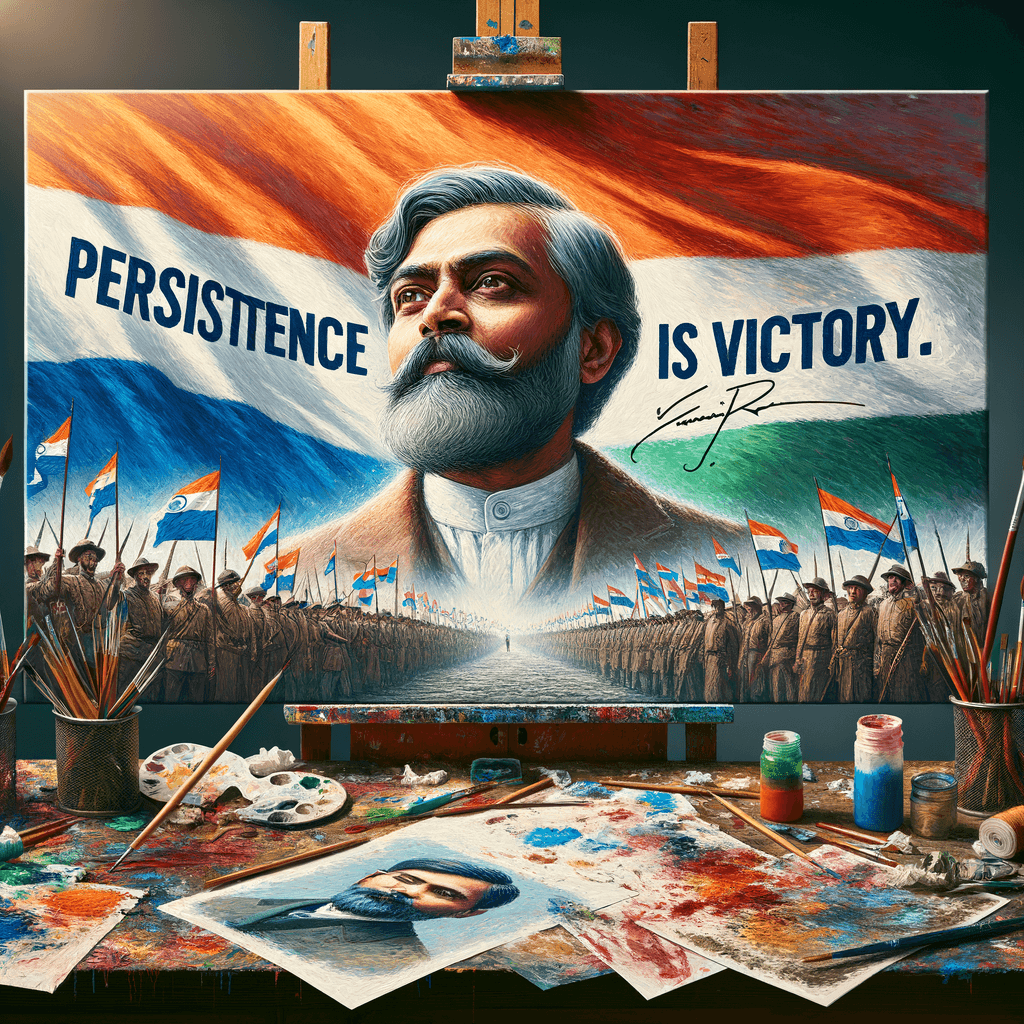
Perseverance means victory. — Mao Zedong
—What lingers after this line?
Definition of Perseverance
This quote implies that the consistent effort and determination to continue despite difficulties or delays leads to success. It highlights the importance of not giving up.
Endurance and Resilience
It underscores the value of endurance and staying resilient in the face of challenges. Victory is portrayed as a reward for those who persist through tough times.
Goal Achievement
For goals to be achieved, one must maintain their efforts towards their objective. Perseverance is presented as a crucial factor in turning aspirations into reality.
Historical Context
Mao Zedong, a key figure in Chinese history, led the Communist Party of China during its struggle to gain control. His experiences with prolonged conflict and ultimate success inform his belief in the power of perseverance.
Encouragement During Hardships
The quote serves as a motivational reminder that hardship and setbacks are part of the journey, but with relentless effort, victory is attainable.
One-minute reflection
What's one small action this suggests?
Related Quotes
6 selectedDo the best one can. Do it over again. Then still improve, even if ever so slightly, those retouches. — Marguerite Yourcenar
Marguerite Yourcenar
Yourcenar’s words begin with a simple demand: do the best one can. Yet she immediately refuses to let effort become an excuse for stopping.
Read full interpretation →A good-enough novel violently written now is better than a perfect novel meticulously written never. — Elizabeth Gilbert
Elizabeth Gilbert
Elizabeth Gilbert’s line immediately shifts the argument from artistic purity to artistic existence. A “good-enough” novel, even one “violently written,” has entered the world and can move, provoke, or comfort someone; b...
Read full interpretation →There is no road too long to the man who advances deliberately and without undue haste; there are no honors too distant to the man who prepares himself for them with patience. — Jean de La Bruyère
Jean de La Bruyère
At its core, La Bruyère’s line praises steady movement over restless speed. A long road feels intimidating only when seen all at once; once it is broken into deliberate steps, distance loses much of its power.
Read full interpretation →There are no soft grounds in life. Just places to water and plough. — Athésia
Athésia
At first glance, Athésia’s line dismisses the hope that life might eventually deliver a permanently gentle terrain. There are, in this view, no naturally soft grounds waiting for us—no stage where effort disappears and g...
Read full interpretation →The greatest victory is the battle fought against your own desire to quit when things get quiet. — Epictetus
Epictetus
At first glance, this saying shifts the meaning of victory away from public triumph and toward an inward contest. The hardest battle, it suggests, is not fought in dramatic moments but in silence—when excitement fades, r...
Read full interpretation →If you're going through hell, keep going. Why would you stop in hell? — Winston Churchill
Winston Churchill
At its core, Churchill’s line reframes suffering as a place of passage rather than a permanent home. If life feels like hell, the worst response is paralysis, because stopping only prolongs exposure to what is already un...
Read full interpretation →More From Author
More from Mao Zedong →