
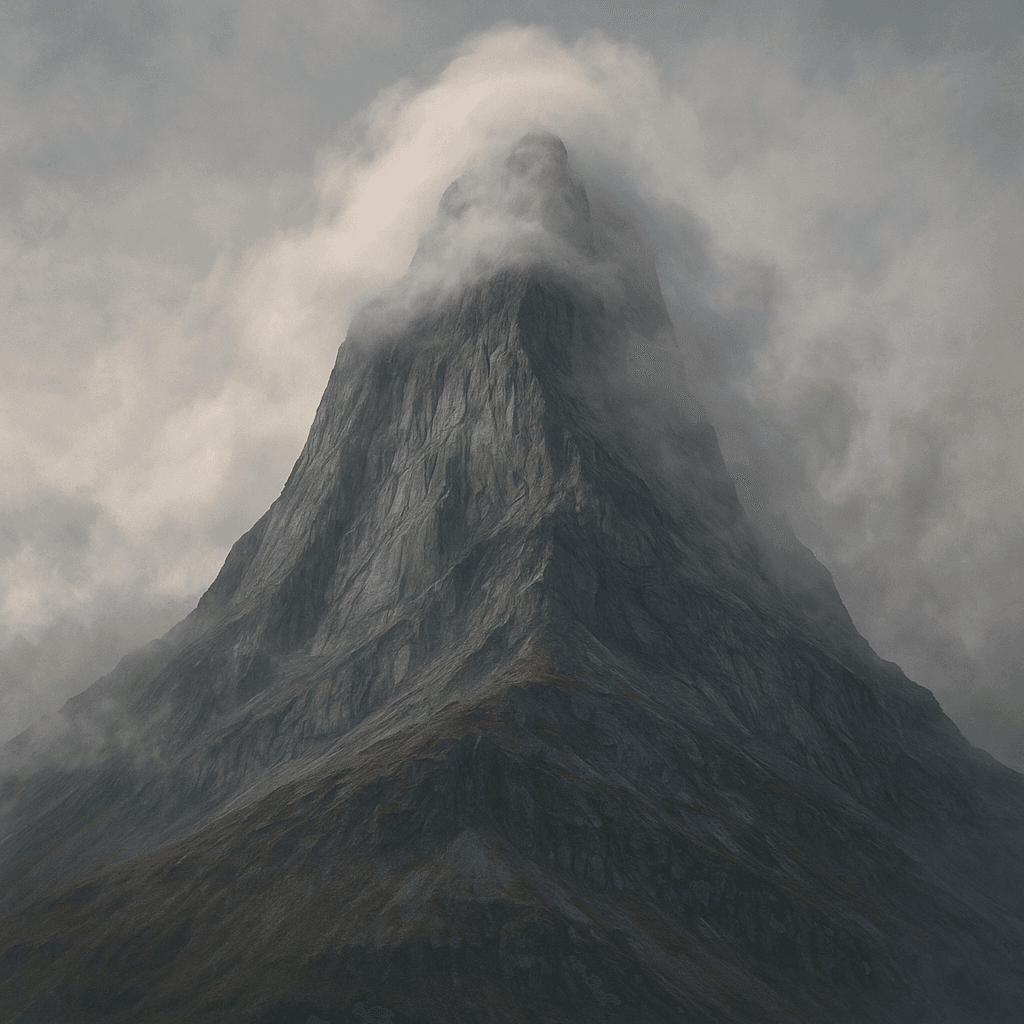
The mountain remains unmoved at seeming defeat by the mist. — Rabindranath Tagore
—What lingers after this line?
Tagore’s Metaphor for Perseverance
Rabindranath Tagore’s evocative image of the mountain refusing to be unsettled by the passing mist serves as a powerful metaphor for resilience. He suggests that steadfastness is not shaken by temporary obscurity or challenges. Just as the mountain stands firm, undaunted by the ephemeral mist, so too can individuals persist through moments of doubt or adversity.
Impermanence of Obstacles
Building on this metaphor, the mist symbolizes the fleeting nature of obstacles or setbacks in life. Historical philosophy often echoes this idea: for instance, in Marcus Aurelius’s 'Meditations,' the Roman emperor reminds us that most difficulties fade with time. By recognizing that challenges are often transient, we are better equipped to face them with patience and composure.
Inner Strength and Steadfast Identity
Furthermore, Tagore highlights the importance of inner strength—an unchanging core that resists external pressures. The mountain’s enduring presence reflects an internal confidence and sense of self that does not waver when circumstances change. This theme is also present in Viktor Frankl’s 'Man’s Search for Meaning' (1946), where enduring purpose enables individuals to withstand even life’s darkest clouds.
The Role of Perception in Struggle
Transitioning to the psychological dimension, our perception often magnifies obstacles, much as mist can make a mountain seem to disappear. However, the reality—the enduring mountain—remains unchanged. Mindfulness traditions emphasize recognizing this difference between perception and reality, encouraging us not to let transitory challenges obscure our true potential.
Embracing Calm in the Face of Change
In conclusion, Tagore’s aphorism encourages us to cultivate calm in turbulent times. Like the mountain awaiting the sun to dissolve the mist, we are reminded to trust in the return of clarity. Thus, the quote inspires confidence in withstanding adversity, assuring us that momentary defeats seldom define us—they merely pass, leaving our strength intact.
Recommended Reading
As an Amazon Associate, we earn from qualifying purchases.
One-minute reflection
Why might this line matter today, not tomorrow?
Related Quotes
6 selectedTo hold the world in a single hand and never let it slip — that is strength. — Rabindranath Tagore
Rabindranath Tagore
Rabindranath Tagore’s evocative metaphor of ‘holding the world in a single hand’ urges us to redefine strength, not merely as brute force, but as unwavering responsibility. His words suggest that true might lies in the c...
Read full interpretation →The most important thing in your life is not the noise of the world, but the quiet strength of the people you choose to call home. — Princess Diana
Princess Diana
Princess Diana’s line pivots our attention away from public commotion and toward a more intimate measure of meaning. Instead of treating status, trends, or constant stimulation as the center of life, she suggests that wh...
Read full interpretation →Be like the cliff against which the waves continually break; it stands firm and tames the fury of the water around it. — Marcus Aurelius
Marcus Aurelius
Marcus Aurelius frames resilience with a coastal image: waves crash with relentless force, yet the cliff remains steady. The point is not that the sea becomes gentle, but that the cliff’s firmness changes what the sea ca...
Read full interpretation →Courage plants its feet in the present and builds tomorrow with steady hands. — Marcus Aurelius
Marcus Aurelius
The quote frames courage not as a dramatic leap, but as a deliberate stance: it “plants its feet in the present.” That image implies stability under pressure—choosing to remain anchored in what is real rather than drifti...
Read full interpretation →Bravery often looks like ordinary work continued with a steady heart. — bell hooks
bell hooks
bell hooks shifts the image of bravery away from cinematic heroics and toward persistence. In her framing, courage isn’t reserved for emergencies or grand speeches; it appears in the daily choice to keep going, even when...
Read full interpretation →Speak truth softly and act with the steady strength of rivers. — Chinua Achebe
Chinua Achebe
Achebe’s counsel to “speak truth softly” invites us to reconsider how we deliver honesty. Instead of wounding with bluntness or retreating into silence, he suggests a middle path where truth is neither diluted nor shoute...
Read full interpretation →More From Author
More from Rabindranath Tagore →Opinions are nothing; better is the self-contained calm of true realization. — Rabindranath Tagore
Tagore’s line draws a sharp contrast between what people say and what a person is. “Opinions” are portrayed as weightless—changeable, socially contagious, and often untethered from lived truth—while “true realization” im...
Read full interpretation →The butterfly counts not months but moments, and has time enough. — Rabindranath Tagore
Tagore’s line immediately reframes time as something felt rather than counted. The butterfly does not live by calendars or long-term schedules; it lives by what is available right now.
Read full interpretation →Rest belongs to the work as the eyelids to the eyes. — Rabindranath Tagore
Tagore’s image is deceptively simple: eyelids are not an extra feature of the eye but part of how seeing works. In the same way, rest is not an optional reward after labor; it is built into the very functioning of meanin...
Read full interpretation →Sing with your hands and teach the world by doing. — Rabindranath Tagore
Tagore’s line begins with a paradox that clarifies his intent: to “sing with your hands” suggests a song made not of sound but of visible, tangible motion. In other words, expression is not limited to words; it can be ca...
Read full interpretation →