
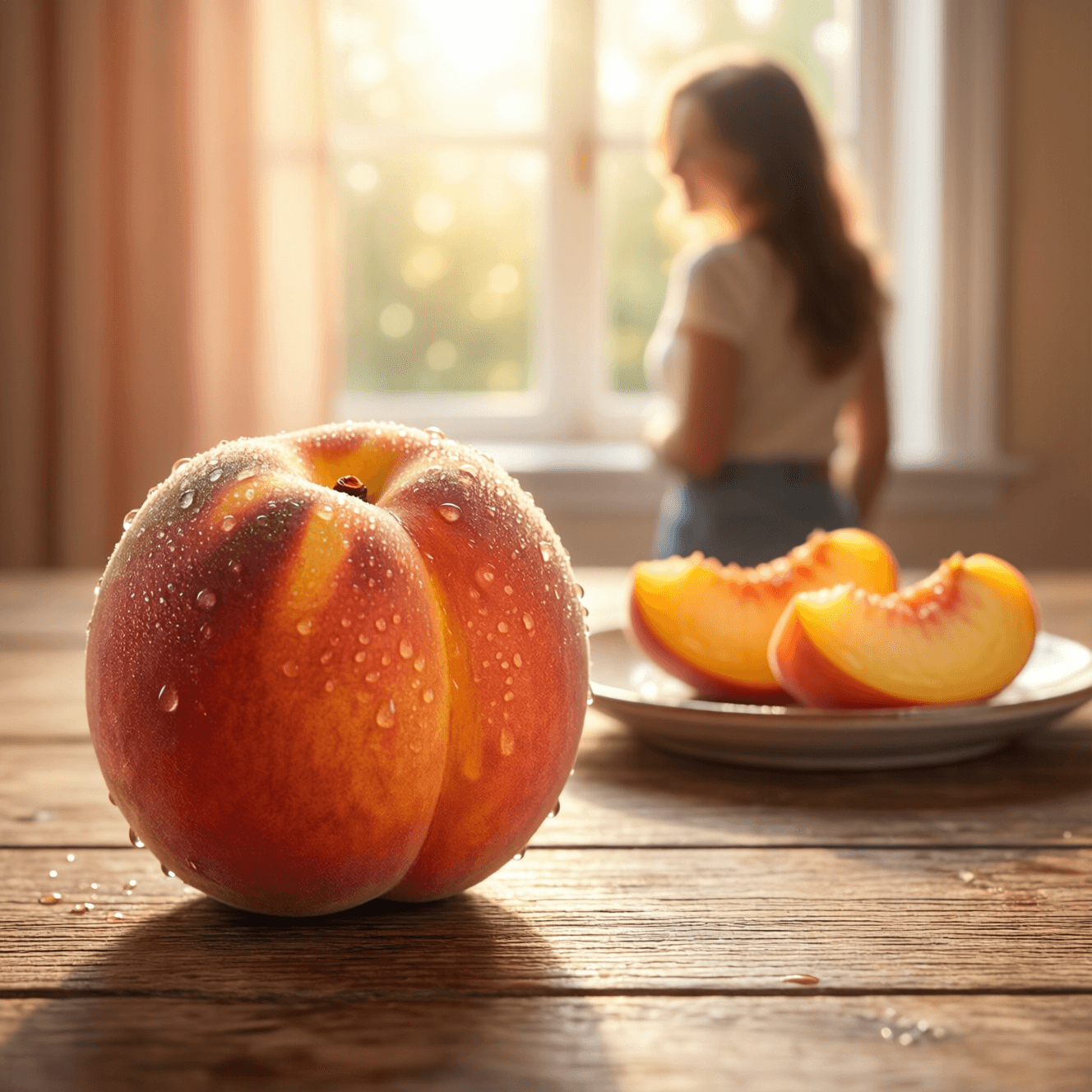
You can be the ripest, juiciest peach in the world, and there's still going to be somebody who hates peaches. — Dita Von Teese
—What lingers after this line?
The Metaphor of the Peach
Dita Von Teese’s peach metaphor compresses a familiar social truth into something vivid and concrete: even if you embody an obvious, widely recognized kind of excellence—“the ripest, juiciest peach”—someone will still dislike you. The point isn’t that effort is pointless, but that universal approval is impossible. From there, the image quietly shifts the focus away from your perceived flaws and toward the simple reality of preference. Just as taste varies, so do people’s reactions, and no amount of polishing can convert every palate.
Preference Is Not a Verdict
Building on the idea of taste, the quote separates “I don’t like this” from “this is bad.” Many social wounds come from treating rejection as an objective judgment, when it is often just mismatch. Someone who hates peaches isn’t claiming fruit itself is defective; they are revealing something about their own inclinations, experiences, or needs. In everyday life, this reframing matters because it loosens the grip of other people’s opinions. What looks like condemnation may simply be incompatibility—a difference in values, aesthetics, humor, or timing.
The Trap of Universal Approval
Once you accept that dislike is inevitable, a second insight follows: chasing universal approval can quietly distort who you become. If every critic must be won over, you start editing yourself into a bland compromise, prioritizing safety over authenticity. The quote implies that perfection, even when achieved, doesn’t solve the approval problem—so the strategy itself is flawed. Consequently, energy is better spent clarifying what you stand for rather than trying to be “liked” by all. In that way, the peach becomes a permission slip to stop performing for an imaginary unanimous audience.
Resilience Through Realistic Expectations
With that shift, the quote also offers a practical form of emotional resilience: expect some resistance, and it will sting less when it arrives. If you assume you can win everyone, each negative reaction feels like a crisis; if you assume a portion of people simply won’t be your people, criticism becomes information rather than catastrophe. This realism can be especially helpful in public-facing work—art, leadership, advocacy, or even ordinary workplace visibility—where attention naturally multiplies both admiration and disdain.
Finding Your Own Audience
After letting go of the impossible, the next step is more constructive: focus on those who actually like peaches. In other words, seek alignment rather than conquest. The quote nudges you toward environments, collaborators, and relationships where your strengths are welcomed instead of tolerated. Over time, this approach produces a calmer kind of confidence. You don’t need to be universally consumed; you need to be genuinely valued by the people whose tastes, goals, and ethics fit with what you offer.
Self-Worth Beyond Others’ Tastes
Finally, Von Teese’s line anchors self-worth in something sturdier than public reception. If dislike can exist even in the presence of “ripeness” and “juiciness,” then worth cannot depend on consensus. The goal becomes self-respect: to cultivate your character and craft, not as a bribe for acceptance, but as an expression of who you are. Seen this way, the quote isn’t cynical at all—it’s liberating. It suggests that you can be excellent and still be disliked, which means being disliked does not prove you are failing.
One-minute reflection
What does this quote ask you to notice today?
Related Quotes
6 selectedYou can be the most beautiful rose in the world and there's still going to be someone who doesn't like roses. — Dita Von Teese
Dita Von Teese
Dita Von Teese’s line opens with a striking image: even the “most beautiful rose in the world” won’t be universally adored. The point isn’t that the rose has failed, but that preference is inherently subjective.
Read full interpretation →Quiet confidence is not about being loud; it is about knowing who you are and being comfortable in your own skin. — Julie Andrews
Julie Andrews
Julie Andrews’ observation begins by separating confidence from volume. In a culture that often rewards assertive display, she reminds us that genuine self-assurance does not need constant announcement.
Read full interpretation →Healing may not be so much about getting better, as about letting go of everything that isn't you. — Rachel Naomi Remen
Rachel Naomi Remen
Rachel Naomi Remen’s insight gently shifts healing away from the usual language of repair. Instead of imagining ourselves as broken machines that must be made efficient again, she suggests that healing may involve removi...
Read full interpretation →To do anything remotely interesting you need to train yourself to be effective at dealing with, responding to, even enjoying criticism. — Tim Ferriss
Tim Ferriss
Tim Ferriss begins with a blunt premise: if you want to do anything “remotely interesting,” criticism is not an accident but a condition of the work itself. Novel ideas, unconventional choices, and visible ambition natur...
Read full interpretation →It's okay to be a little bit of a mess. Even the moon has phases, and it's still the most beautiful thing in the night sky. — Sanober Khan
Sanober Khan
At its heart, Sanober Khan’s line offers relief from the exhausting pressure to appear composed at all times. By saying it is acceptable to be ‘a little bit of a mess,’ the quote reframes disorder not as failure but as p...
Read full interpretation →The art of living is not about being a finished masterpiece; it is about being a work in progress that still knows how to laugh at its own paint spills. — Anne Lamott
Anne Lamott
At its heart, Anne Lamott’s remark reframes life from a quest for perfection into an ongoing act of creation. Instead of imagining ourselves as polished masterpieces, she invites us to see our days as brushstrokes still...
Read full interpretation →More From Author
More from Dita Von Teese →