
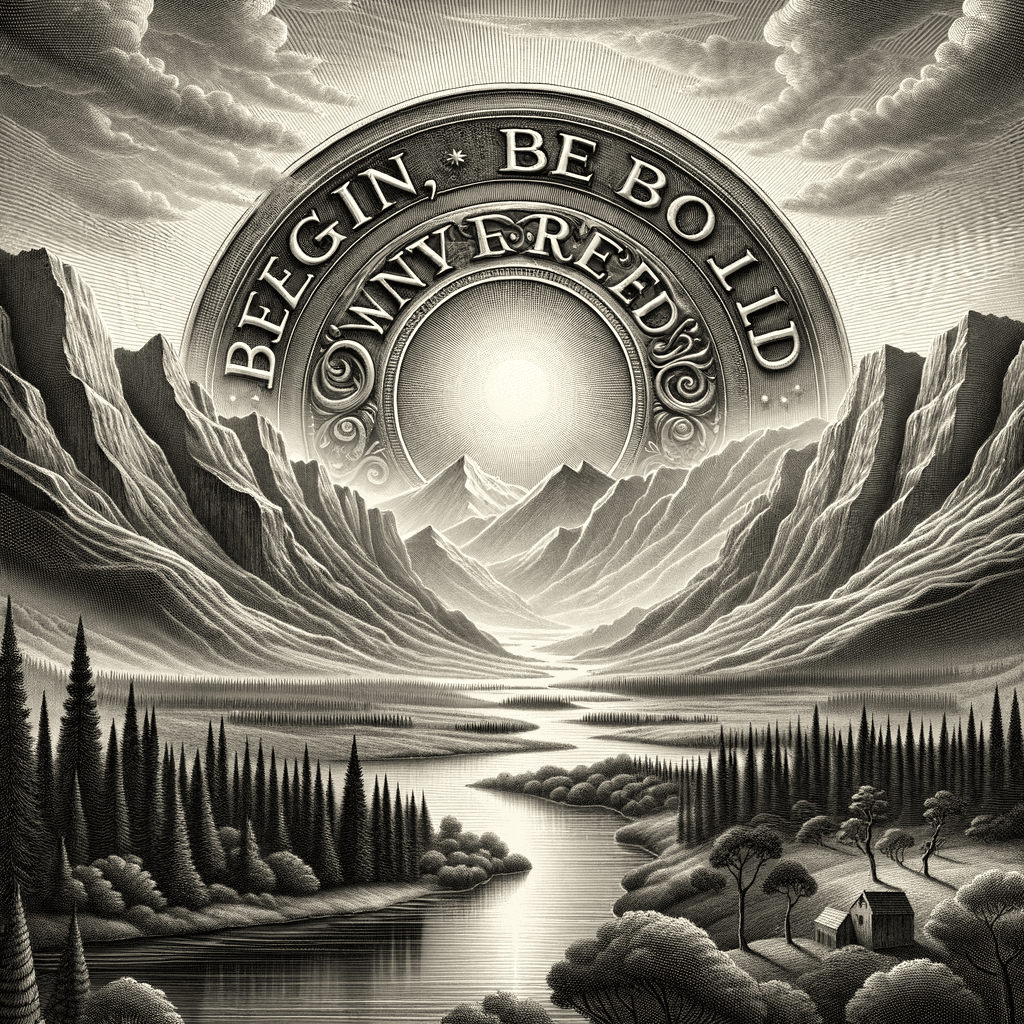
Begin, be bold, and venture to be wise. — Horace
—What lingers after this line?
Taking Initiative
This quote encourages individuals to take the first step towards their goals. It suggests that the hardest part of any journey is often just beginning, and taking that initial step requires courage.
Boldness and Courage
Horace emphasizes the importance of boldness and courage in achieving success. Being bold means having the bravery to pursue your dreams, despite the risks and challenges.
Wisdom Through Experience
The quote highlights that wisdom comes from experience. By daring to step into the unknown and face new challenges, one can gain valuable knowledge and insights.
Personal Growth
Venturing to be wise implies a journey of personal growth and self-improvement. It encourages individuals to continuously seek knowledge, learn from their experiences, and strive to become wiser.
Historical Context
Horace was a Roman lyric poet during the 1st century BC. His works often focused on themes of philosophy, morality, and the human condition. This quote reflects his belief in the importance of action, courage, and the pursuit of wisdom.
One-minute reflection
Where does this idea show up in your life right now?
Related Quotes
6 selectedDo not wait to be inspired. Begin, and inspiration will find you. — H. Jackson Brown Jr.
H. Jackson Brown Jr.
This quote encourages taking a proactive approach to tasks and projects. Instead of waiting for inspiration to strike, start working, and the act of doing will eventually ignite creativity.
Read full interpretation →Knowing yourself is the beginning of all wisdom. — Aristotle, Ancient Greece.
Aristotle, Ancient Greece.
This quote highlights the importance of self-awareness as the foundation for acquiring wisdom. Understanding one's own strengths, weaknesses, values, and motivations is crucial for personal growth.
Read full interpretation →Take risks: if you win, you will be happy; if you lose, you will be wise. — Anonymous, Global.
Anonymous, Global.
This quote highlights the importance of taking risks in life. It encourages people to step out of their comfort zones, suggesting that the act of taking risks is a valuable part of personal growth.
Read full interpretation →Wisdom is knowing when to have rest, when to have activity, and how much of each to have. — Etty Hillesum
Etty Hillesum
Etty Hillesum’s insight begins with a simple but demanding idea: wisdom is not merely knowing what is good, but knowing when it is good. Rest and activity are both necessary, yet either can become harmful when taken at t...
Read full interpretation →Wisdom comes only to the silent mind. — Krishnamurti
Krishnamurti
Krishnamurti’s statement begins with a simple but demanding insight: wisdom is not merely accumulated information, nor is it the reward for constant thinking. Instead, it arises when the mind becomes quiet enough to perc...
Read full interpretation →Never call yourself a philosopher; show it. — Epictetus
Epictetus
Epictetus compresses an entire ethical program into a sharp command: do not claim the title, demonstrate the life. In other words, wisdom is not a badge one pins on oneself but a pattern others can recognize in conduct.
Read full interpretation →More From Author
More from Horace →Rule your mind or it will rule you; most burnout is just a failure to set boundaries between your peace and your output. — Horace
At its core, the quotation argues that self-governance is not a luxury but a necessity. To ‘rule your mind’ means refusing to let impulses, anxieties, and external demands dictate the shape of one’s life.
Read full interpretation →Rule your mind or it will rule you. Mastery begins when you stop reacting and start choosing your focus. — Horace
Horace’s line frames the mind as a powerful instrument that can either serve or dominate its owner. The warning is not that thoughts and emotions exist, but that—left unattended—they can steer behavior through impulse, h...
Read full interpretation →Rule your mind or it will rule you. — Horace
Horace’s line distills a political truth into a personal mandate: either you govern your inner life, or it becomes the regime that governs you. By framing the mind as something that can “rule,” he implies it has momentum...
Read full interpretation →Seize the day, put very little trust in tomorrow. — Horace
This quote embodies the 'carpe diem' philosophy, encouraging people to live in the present moment and make the most of the opportunities available today.
Read full interpretation →