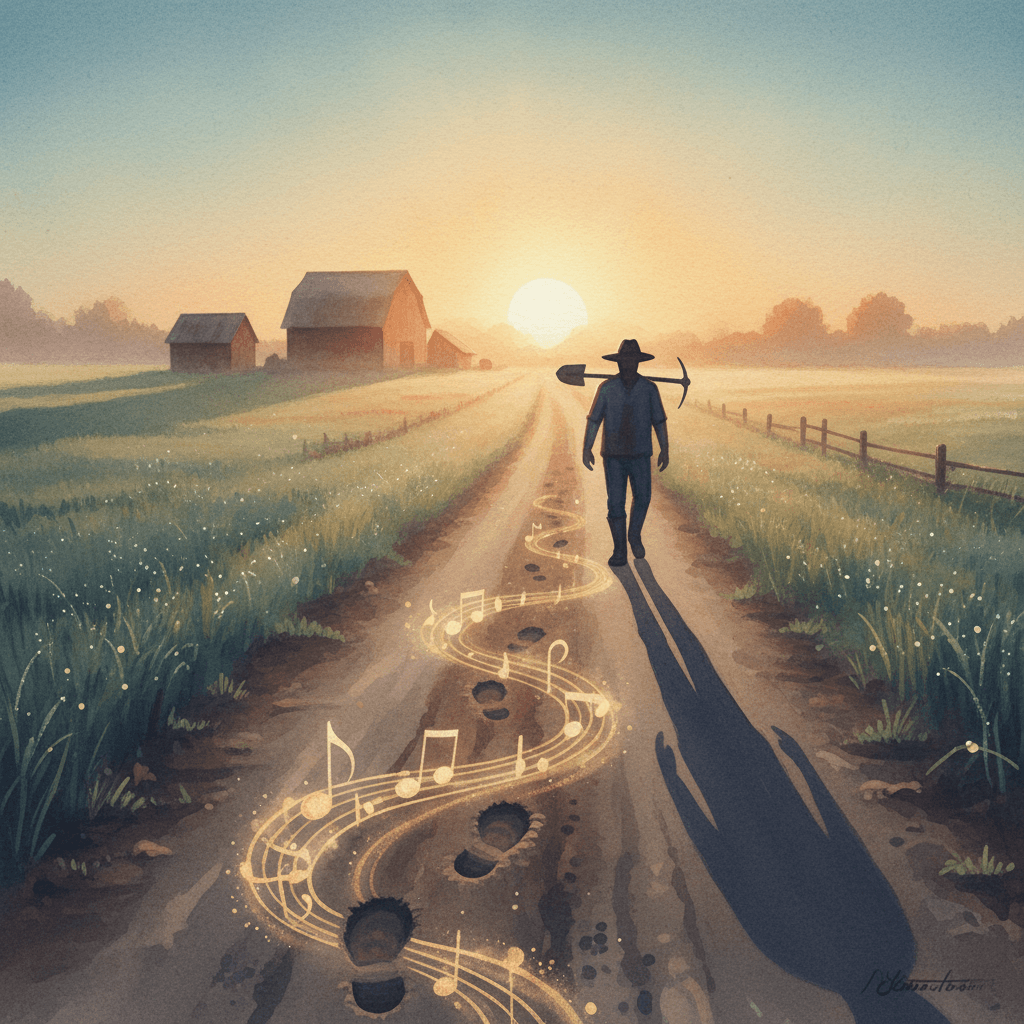
To ground this idea, consider Hughes’s own art: he braided the cadence of labor and the sound of music. The Weary Blues (1925) stages a piano man whose hard-won song drifts out of a workworn life, while Montage of a Dream Deferred (1951) splices city shifts and after-hours riffs into a jazz montage. Even his manifesto, The Negro Artist and the Racial Mountain (1926), urges writers to labor honestly in their own voices rather than climb toward borrowed respectability. Again and again, Hughes centers the dignity of the worker—porters, cooks, and cleaners—letting their footsteps set the tempo of American poetry. In this light, the quote is not a romantic platitude but a craft rule from a poet who listened for beat in broom strokes and train wheels. [...]