
Tags
#Code Readability
Quotes: 3
Quotes tagged #Code Readability
Readable Code Is the Fastest Code
At first glance, Robert C. Martin’s quote sounds paradoxical: if you want to move quickly, slow down enough to make your code easy to read.
Created on: 4/15/2026
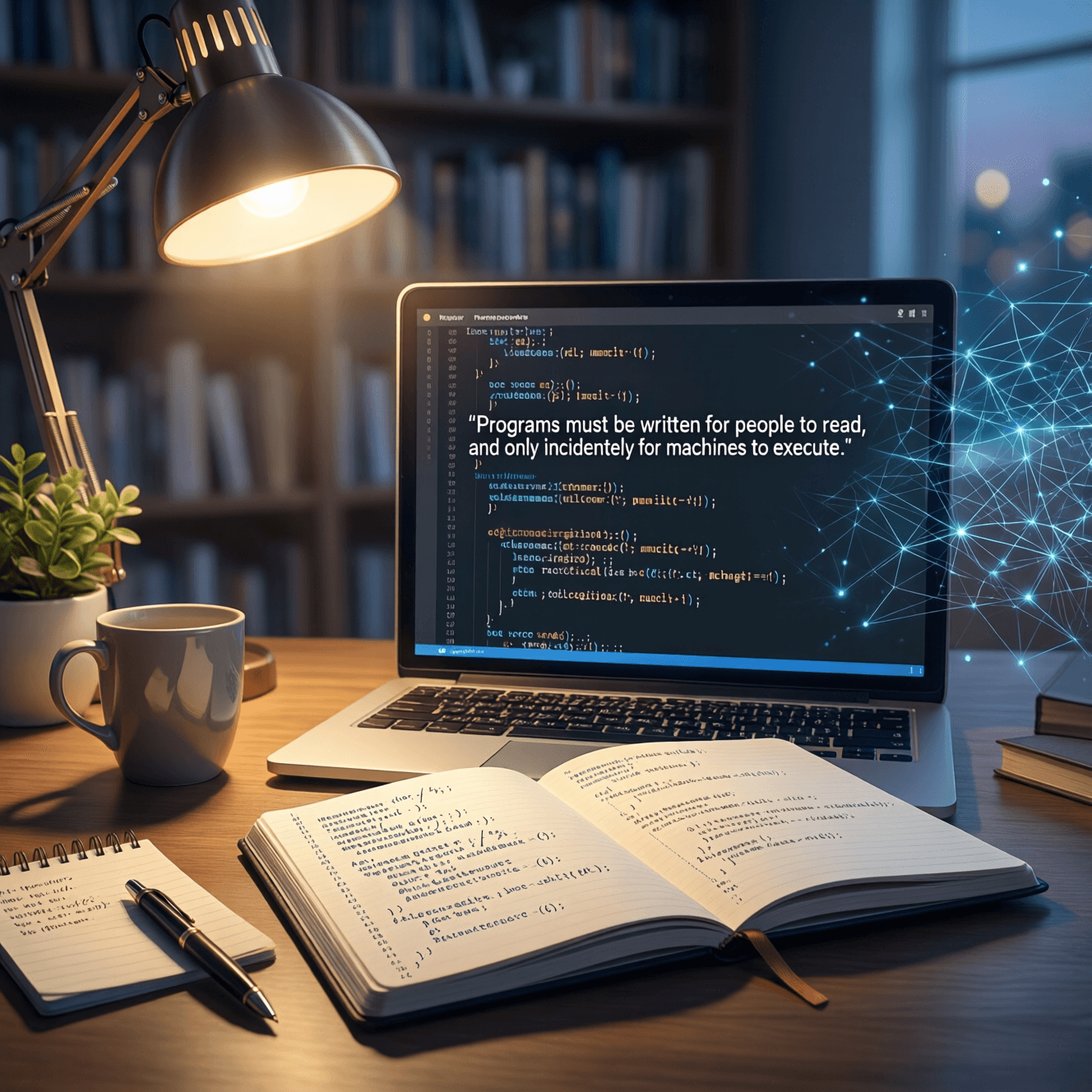
Code Is Primarily Written for Human Readers
Harold Abelson’s line flips a common beginner assumption: that programming is chiefly about instructing machines. Instead, it frames software as a human communication medium where the true audience is other developers (a...
Created on: 3/13/2026
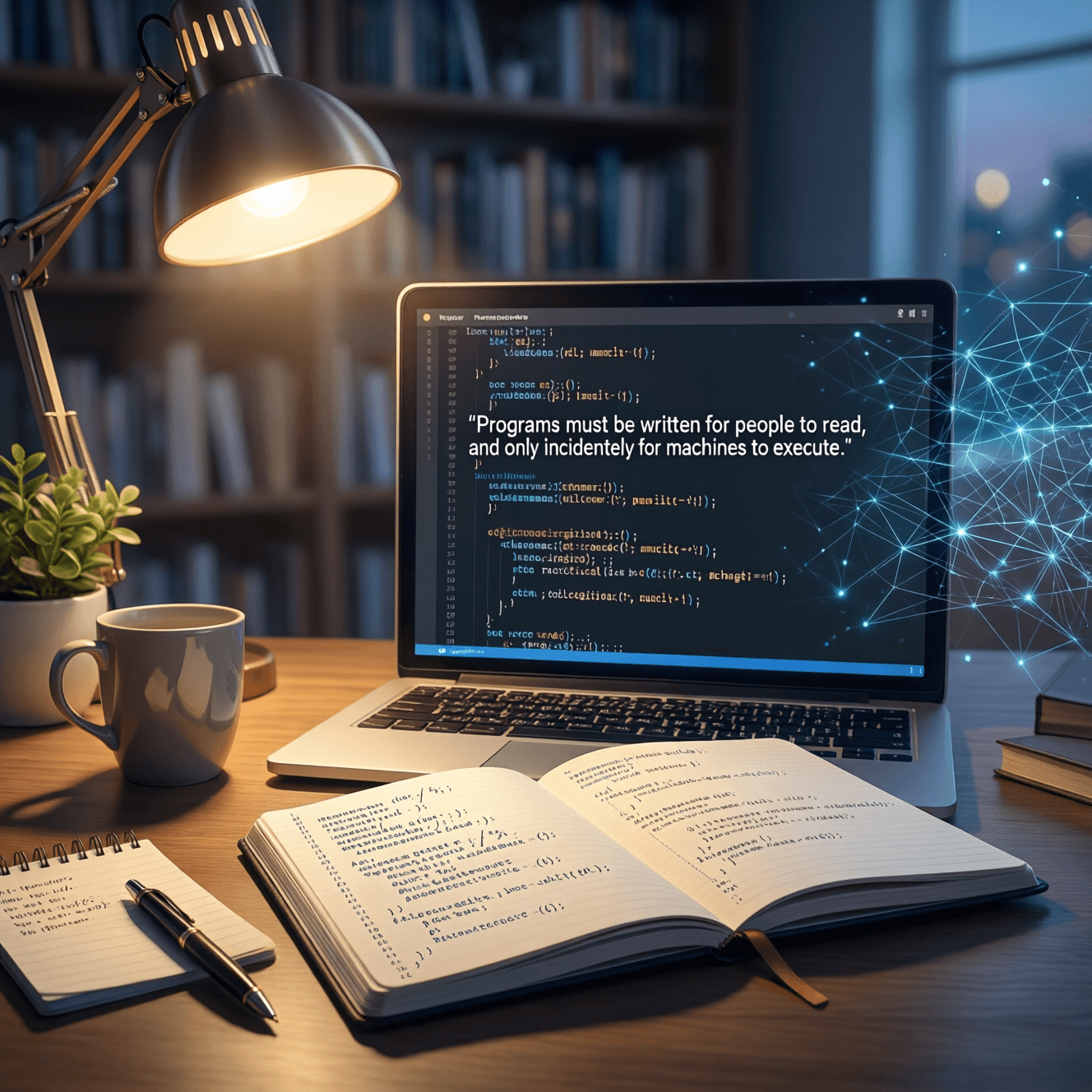
Code Is Communication Before It Is Execution
Harold Abelson’s line reframes programming from a primarily mechanical act into a human one: code is a message passed between people, with the computer serving as the strict but secondary interpreter. In this view, corre...
Created on: 3/13/2026