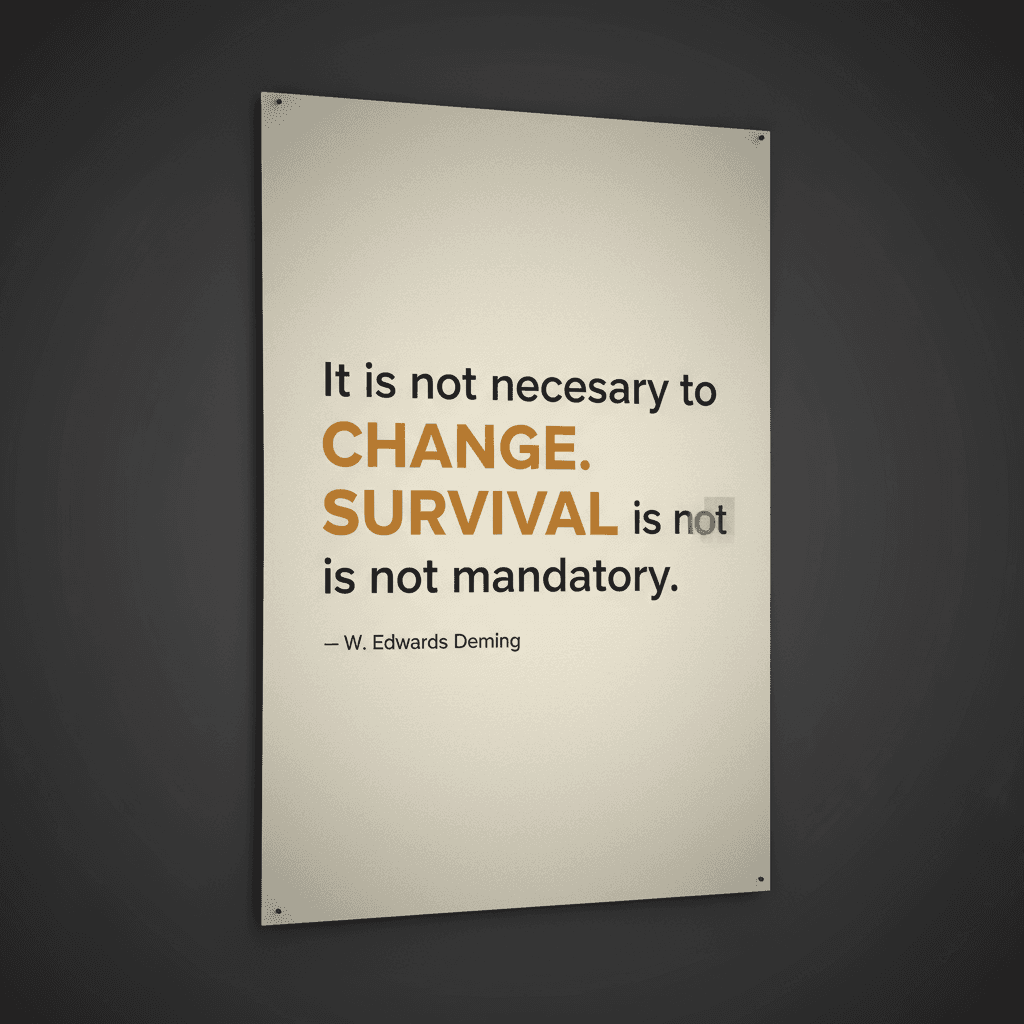
From this premise, the logic widens to markets and ecology. While often paraphrased as Darwin, the core idea is sound: survival favors responsiveness to shifting environments. Joseph Schumpeter’s creative destruction (Capitalism, Socialism and Democracy, 1942) explains how new combinations displace the old, regardless of past dominance. In this frame, stability is not safety; it is exposure. When environments destabilize—through technology, regulation, or consumer taste—the capacity to learn faster than conditions change becomes the decisive advantage. [...]