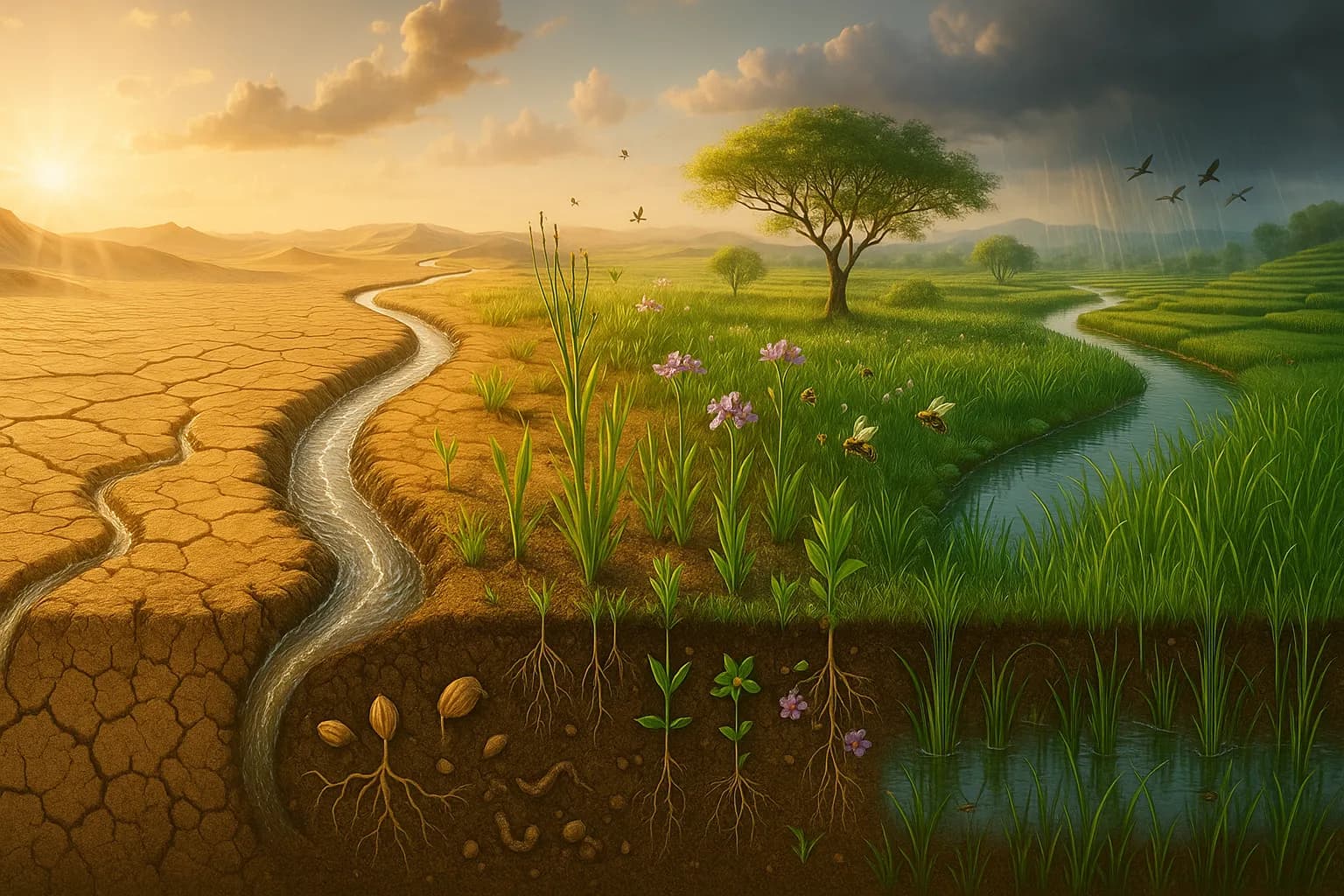
Historically, this irrigative stance aligns with progressive and liberatory thought. John Dewey’s Democracy and Education (1916) argued that learning grows from experience, not mere transmission. Maria Montessori’s prepared environments invite self-directed exploration, treating the classroom as a landscape carefully arranged for discovery. Likewise, Paulo Freire’s Pedagogy of the Oppressed (1970) rejects the ‘banking model’ in favor of dialogic co-creation. Across these strands, the educator is less a machete-wielder than a steward of conditions. [...]