Tags
#Time Management
Quotes: 47
Quotes tagged #Time Management

Self-Discipline Turns Intentions Into Timely Action
Because of this inner conflict, self-discipline is best understood not as a heroic trait but as a repeated habit. People rarely transform through one grand act of will; instead, they build trust in themselves by meeting small obligations consistently. Waking on time, finishing unpleasant tasks first, and keeping promises to oneself gradually create a disciplined identity. Aristotle’s Nicomachean Ethics (4th century BC) echoes this logic by arguing that excellence is formed through repeated action rather than occasional intention. Tracy’s quote fits neatly within that older insight: discipline grows when behavior becomes reliably aligned with duty. [...]
Created on: 3/19/2026

Stop Apologizing for Time, Own Priorities
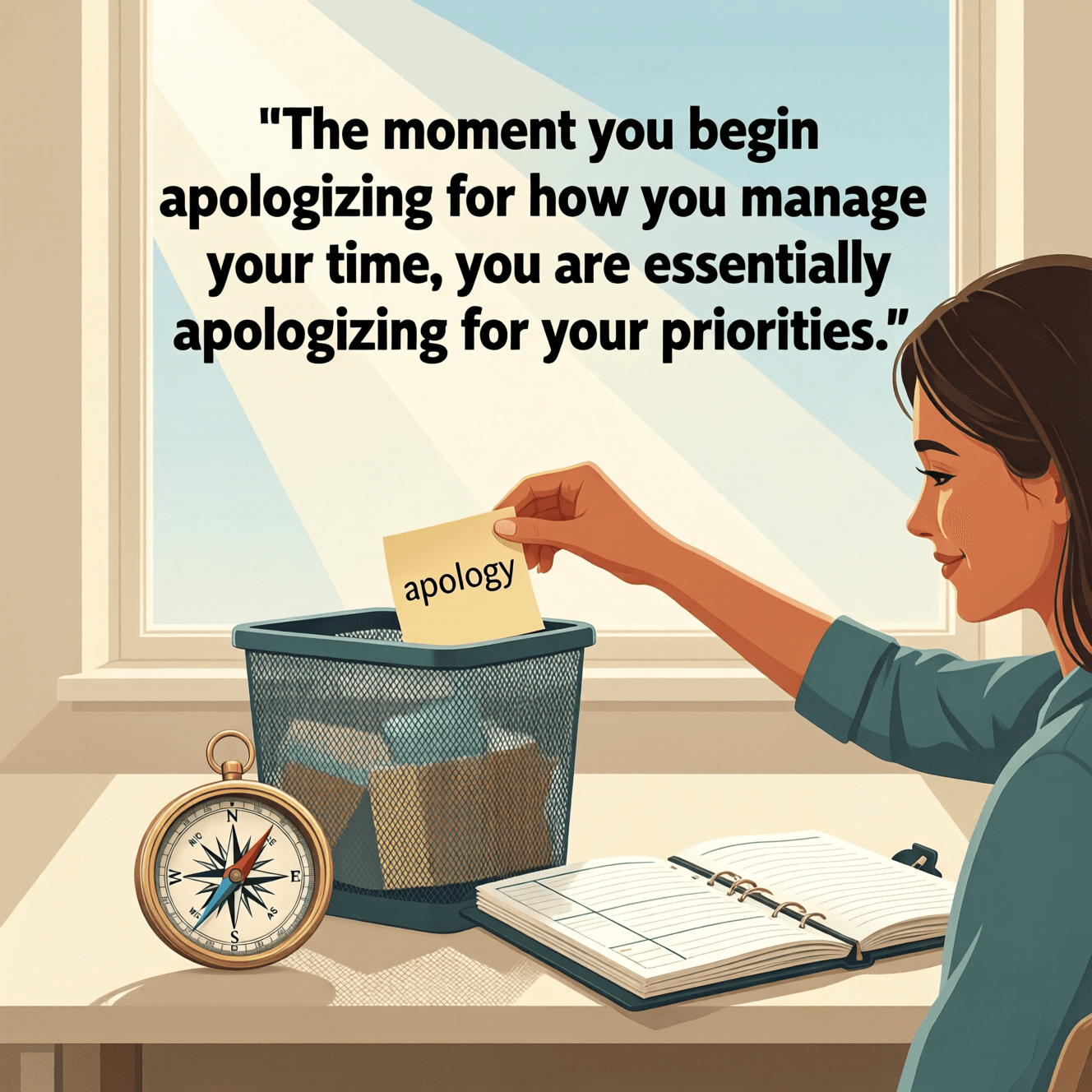
Next, the quote highlights a blunt truth: priorities are easier to claim than to prove, and time is the proof. Anyone can say family matters most, deep work matters most, health matters most—yet calendars, inboxes, and habits reveal what actually wins. This is why time management feels personal; it’s a public record of private values. Seen this way, apologizing for time can become a subtle form of self-erasure, as if your chosen obligations were less legitimate than someone else’s expectations. Newport’s provocation is not to become inconsiderate, but to align your actions with your stated commitments—and accept the trade-offs openly. [...]
Created on: 3/13/2026

Direction, Not Time, Determines Our Progress
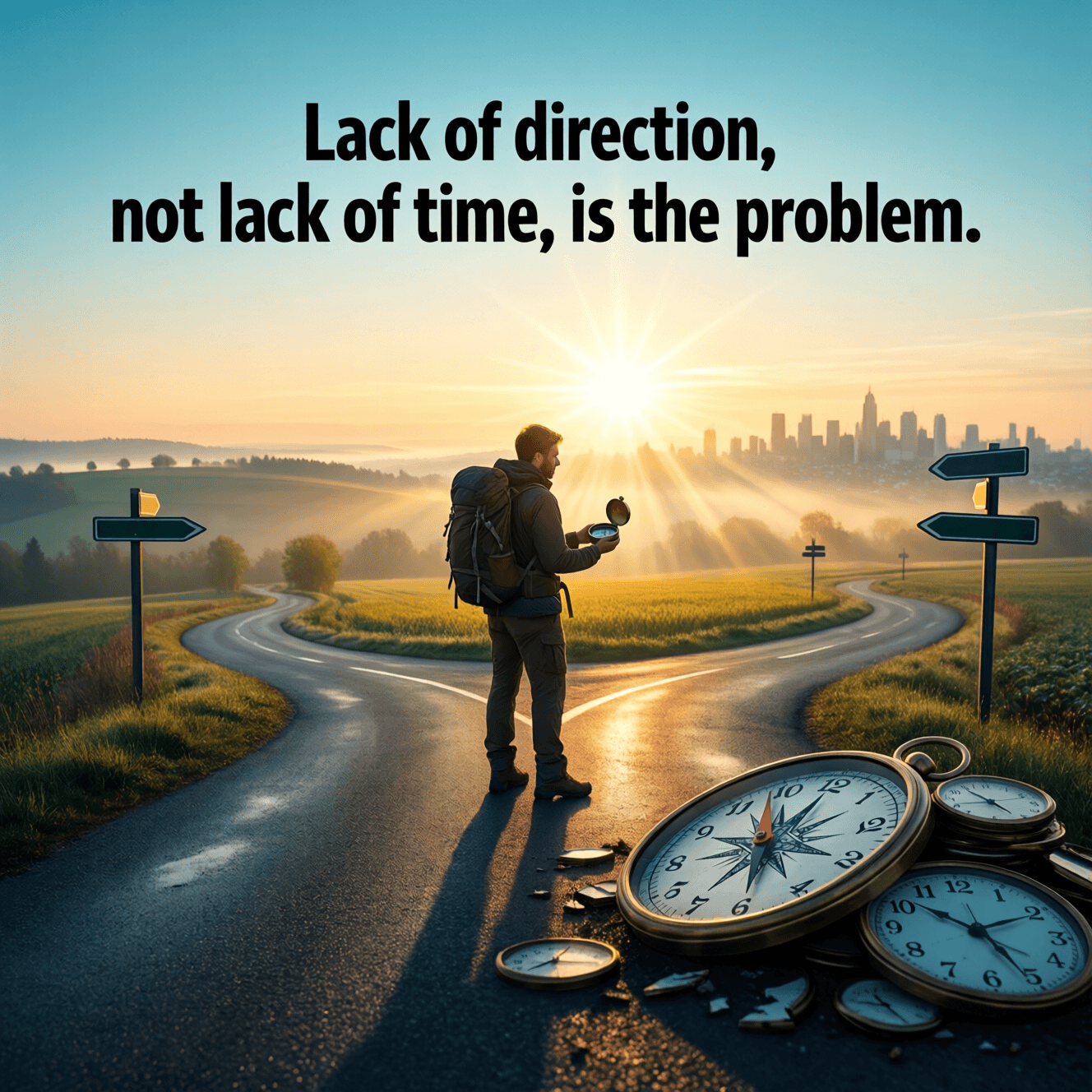
Lack of direction isn’t merely inefficient; it can quietly erode confidence. When days feel unshaped, people conclude they are undisciplined or incapable, even if the real issue is that they never chose a clear objective. This misdiagnosis creates a loop: discouragement leads to avoidance, which deepens the sense of wasted time. By contrast, direction generates evidence of competence. Even small wins—two workouts a week, one page read nightly—restore agency, making motivation less of a prerequisite and more of a byproduct. [...]
Created on: 3/5/2026

Saving Work for Tomorrow: A Witty Wisdom
Ultimately, Herold’s quip invites balance rather than pure idleness. If work really matters, then treating it like something to portion out makes a certain commonsense kind of humor: do enough today to keep momentum, but not so much that you burn out. The line gestures toward the idea that sustainable effort beats dramatic spurts of productivity. In that light, the wisest response is neither worshiping work nor endlessly deferring it, but adopting a rhythm—doing a manageable share now and leaving a reasonable remainder for tomorrow, not as an excuse, but as a plan. [...]
Created on: 2/27/2026

Rethinking Success: Time Spent Versus Time Used
The quote also points to a paradox: adding hours can degrade performance. Fatigue narrows attention, weakens self-control, and makes work more error-prone; as mistakes accumulate, even more time is needed to repair them. This is why long stretches of overwork can feel productive while quietly reducing the quality of judgment. Historically, this concern isn’t new. John Pencavel’s analysis of munitions output during World War I found that productivity per hour fell sharply beyond long weekly schedules, with 70-hour weeks yielding little more output than 55-hour weeks (Pencavel, 2014). The lesson fits Huffington’s claim: time is not a linear input to success. [...]
Created on: 2/15/2026

Why Valuing Your Time Raises Others’ Respect
Kim Garst’s quote rests on a simple social truth: people take cues from how you treat your own resources. When you regularly accept last-minute favors, unpaid “quick questions,” or vague commitments, you unintentionally communicate that your time is abundant—or worse, inconsequential. In response, others often mirror that attitude, assuming they can access you without planning or reciprocity. From there, the issue becomes less about any single request and more about the pattern it creates. Over time, “free” starts to feel like the default price, and the respect you want for your work gets quietly replaced by expectations you never agreed to. [...]
Created on: 2/12/2026

High Output Starts With Low Schedule Volume
The pattern appears across domains. Writers often describe their best pages coming from mornings protected from calls and messages, while programmers frequently report that a single uninterrupted afternoon can resolve what days of fragmented effort cannot. Although the work differs, the shared ingredient is a schedule that makes room for sustained concentration. Seen this way, Newport’s statement is not a narrow critique of meetings but a broader claim about craftsmanship. Any practice that requires building and holding a complex mental model—an argument, a design, a proof, a product—benefits from fewer calendar intrusions. [...]
Created on: 2/10/2026