
Tags
#Writing Practice
Quotes: 6
Quotes tagged #Writing Practice

Daily Writing as the Path to Mastery
Stephen King’s statement strips writing down to its most practical truth: mastery begins with repetition, not occasional brilliance. In this view, the aspiring writer cannot wait for inspiration to arrive like a rare gue...
Created on: 7/6/2026

Courage Written Daily, Remembered by the Page
Hughes frames courage not as a single grand gesture but as something we “write” into the most unremarkable parts of life—the ordinary hours that tend to blur together. In that phrasing, bravery becomes a habit of attenti...
Created on: 1/10/2026
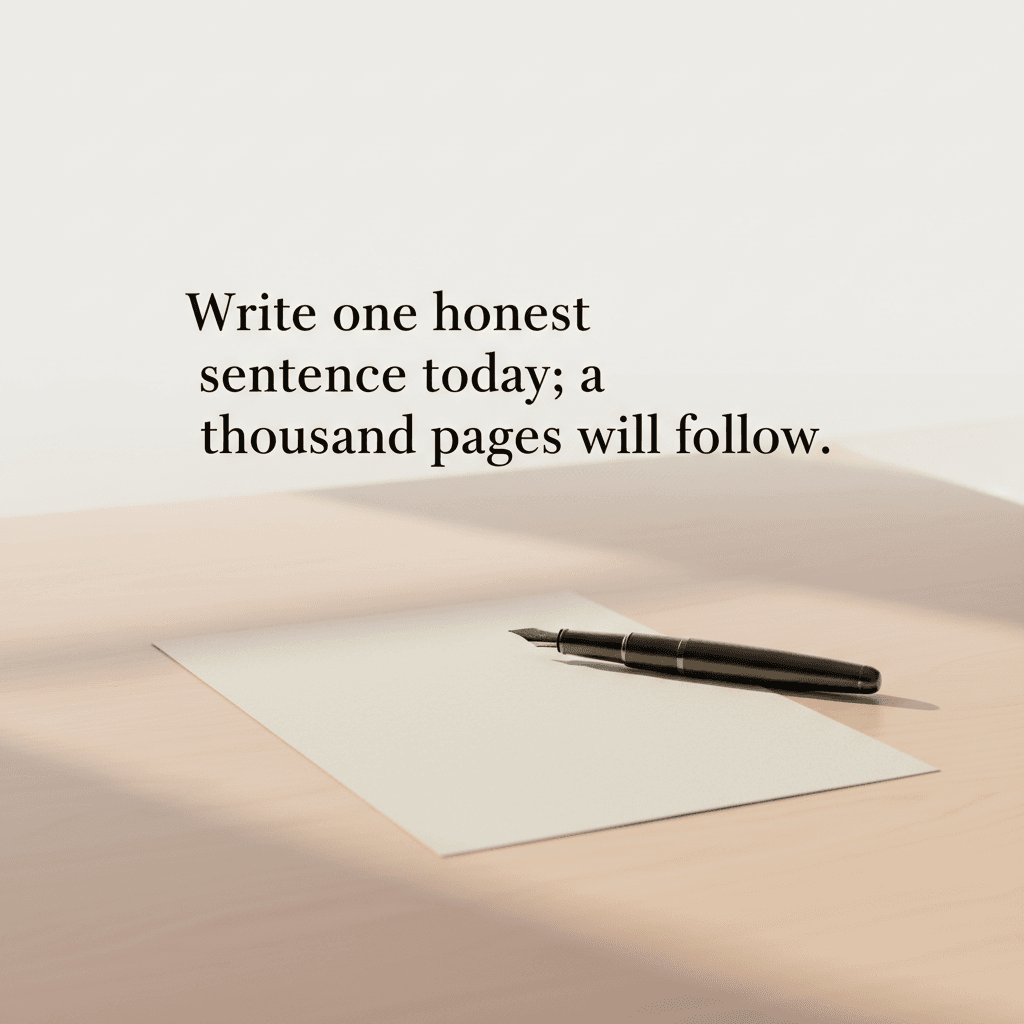
From One Honest Sentence to a Thousand Pages
Nayyirah Waheed’s quote centers on a deceptively simple act: writing one honest sentence. Rather than demanding brilliance, length, or perfection, it asks only for truth.
Created on: 12/1/2025

Write Dreams Clearly, Then Do the Pages
Brooks’s imperative begins with naming: say what you want, plainly and publicly. “Clear ink” suggests specificity over haze, a vow that can be seen—by you tomorrow and by others if you dare.
Created on: 10/4/2025

Turn the Tap: Action Unlocks Creative Flow
Louis L’Amour’s image is disarmingly simple: water does not flow until the faucet is turned. Likewise, words rarely arrive before we begin to write.
Created on: 8/29/2025

If You Wish to Be a Writer, Write — Epictetus
This quote emphasizes that wanting to be a writer is not enough. To achieve the goal of becoming a writer, one must take action and actually engage in writing.
Created on: 12/2/2024