
Authors
Gabor Maté
Gabor Maté is a Hungarian-Canadian physician and bestselling author known for his work on addiction, trauma, and child development. His writing and talks emphasize the role of compassion, social determinants, and purpose in healing, aligning with themes of acting with a purpose greater than oneself.
Quotes: 7
Quotes by Gabor Maté

Healing Hurts, but Avoidance Hurts More
At first glance, Gabor Maté’s statement sounds severe, yet its logic is deeply humane: pain is not optional, only its form is. Healing asks us to face grief, trauma, or buried fear directly, which can be uncomfortable in...
Created on: 5/15/2026

You Are the Witness, Not the Pattern
Gabor Maté’s line draws a clean boundary between who you are and what you repeatedly do. “Patterns” can mean coping habits, emotional reactions, addictive loops, or familiar roles we fall into under stress; they may be f...
Created on: 3/5/2026

Why Awareness Alone Doesn’t Create Lasting Change
Gabor Maté’s line draws a sharp line between insight and change: noticing a pattern is not the same as living differently. Awareness can be intellectual—“I see why I do this”—while transformation is embodied—“I no longer...
Created on: 3/2/2026

Healing as Becoming, Not Returning Back
Gabor Maté reframes healing as forward movement rather than restoration. Instead of treating recovery as a rewind to a pre-injury, pre-trauma, or pre-illness “original,” he suggests that healing creates someone new—someo...
Created on: 2/21/2026

Escaping Pain Often Deepens the Suffering
Gabor Maté’s line points to a painful paradox: the very strategies we use to outrun discomfort often become the engine of ongoing distress. At first, avoidance looks like relief—turning away from grief, numbing anxiety,...
Created on: 2/19/2026
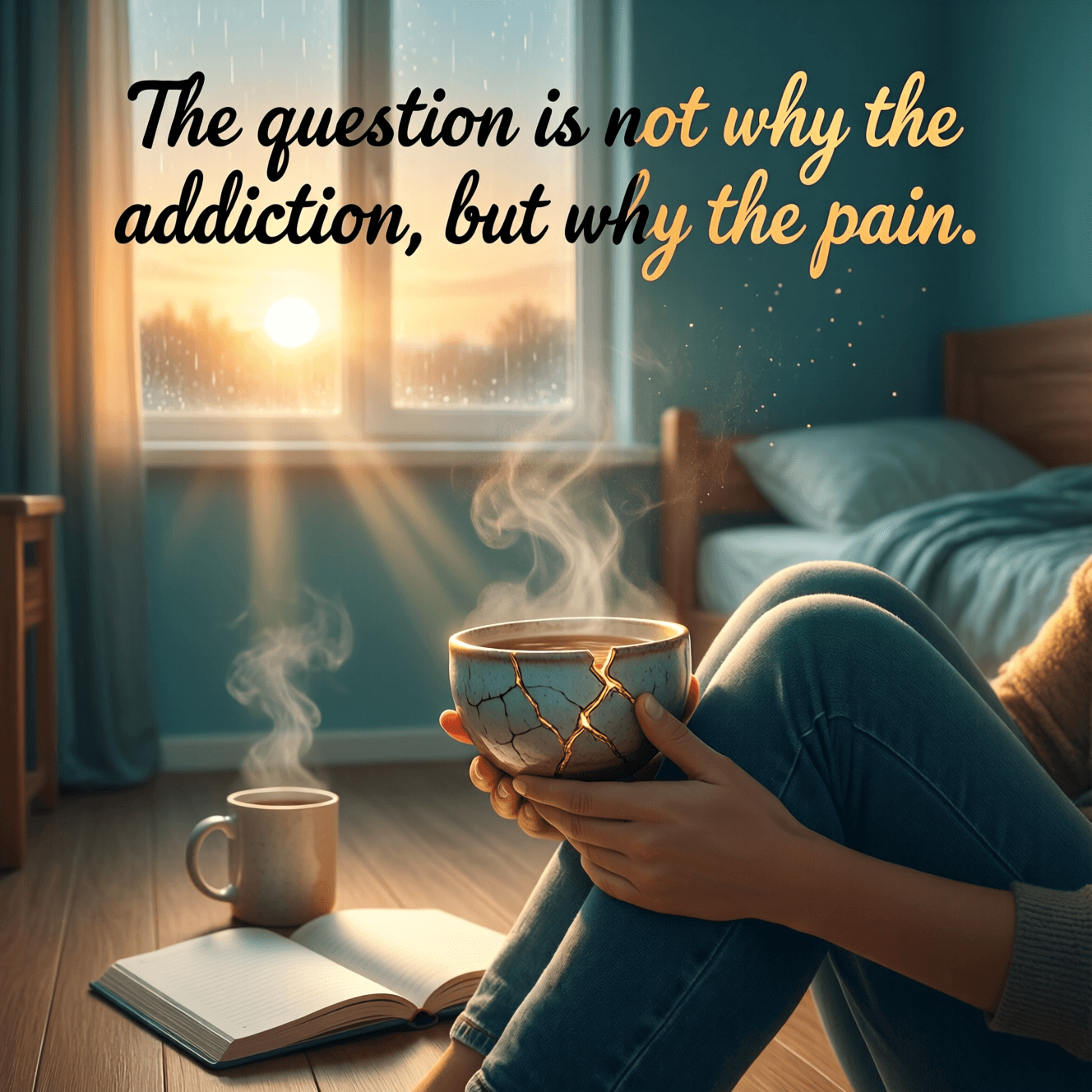
Looking Beneath Addiction to Find the Pain
Gabor Maté’s line pivots attention away from the surface behavior and toward the hidden wound that behavior may be attempting to soothe. Instead of treating addiction as a baffling moral failure or a purely chemical trap...
Created on: 2/12/2026

Act with a Purpose Greater Than Yourself — Gabor Maté
This quote encourages individuals to go beyond self-interest and align their actions with a higher cause, aiming to benefit others or contribute to something meaningful beyond their personal gain.
Created on: 4/10/2025