
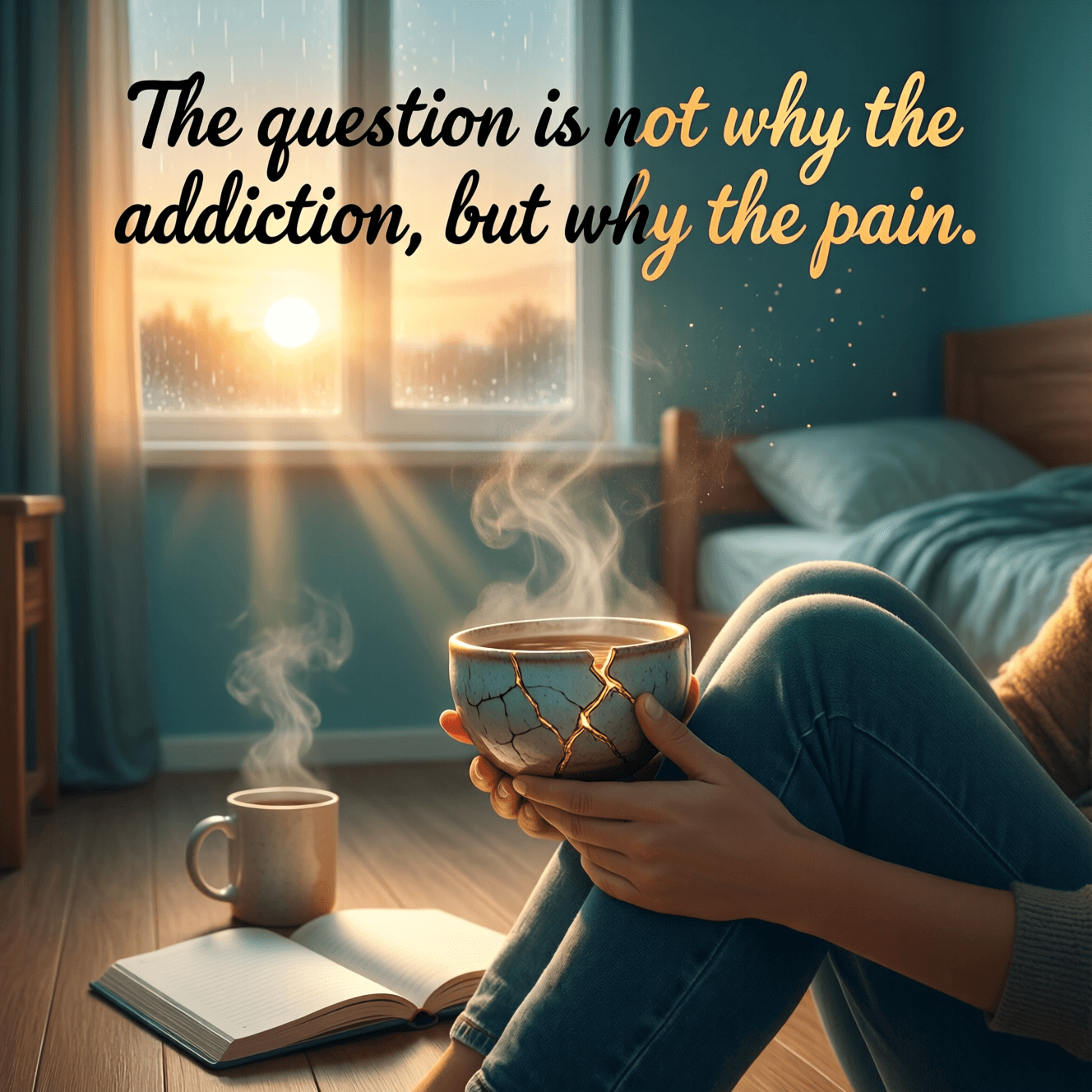
The question is not why the addiction, but why the pain. — Gabor Maté
—What lingers after this line?
Reframing the Central Mystery
Gabor Maté’s line pivots attention away from the surface behavior and toward the hidden wound that behavior may be attempting to soothe. Instead of treating addiction as a baffling moral failure or a purely chemical trap, he asks a more human question: what hurt is being medicated by the habit? In that shift, the “problem” becomes less about the substance or compulsion itself and more about the suffering that predates it. This reframing matters because it changes the emotional tone of inquiry. Curiosity replaces blame, and the goal becomes understanding rather than condemnation. From there, the search naturally turns inward—to history, relationships, and the moments when pain became too heavy to carry unaided.
Addiction as an Attempt at Relief
Once we ask why the pain exists, addiction can be seen as a form of self-administered anesthesia, however costly. People often describe their first encounters with a drug, a behavior, or a ritualized escape as a moment of calm, belonging, confidence, or quiet—feelings they struggled to access otherwise. In this sense, the compulsion is not random; it is a strategy that worked, at least initially. From this viewpoint, the repeated behavior becomes less mysterious: it reliably changes an unbearable internal state. Yet the relief is temporary, and the rebound—shame, withdrawal, consequences—can deepen the original suffering, creating a cycle where pain fuels addiction and addiction generates more pain.
The Roots of Pain: Trauma and Disconnection
Maté’s question naturally leads to the sources of pain, which often include trauma, chronic stress, neglect, and emotional isolation. Trauma is not only what happened, but also what didn’t happen—comfort, protection, attunement, and safe connection. When those needs go unmet, a person may carry forward a nervous system tuned for threat and a heart trained to expect disappointment. As this disconnection accumulates, substances and compulsive behaviors can become stand-ins for regulation and reassurance. In other words, the “why” of addiction may be answered by “because it helps me cope,” but the deeper “why” points to experiences that made coping necessary in the first place.
Why Punishment Misses the Point
If the true riddle is pain, then approaches centered on punishment or humiliation risk reinforcing the very conditions that maintain addiction. Shame can intensify secrecy, self-loathing, and social withdrawal—states that often trigger cravings and relapse. Even well-intentioned admonitions can land as further proof that a person is defective rather than wounded. By contrast, a pain-centered lens invites compassionate accountability: behavior still has consequences, but the person is not reduced to their worst coping strategy. This transition from “What’s wrong with you?” to “What happened to you?” can open a doorway to honesty, engagement, and sustained change.
Healing Through Safety, Support, and Meaning
Following Maté’s logic, recovery becomes a process of addressing pain directly—through therapy, community, medical care, and relationships that rebuild trust and self-worth. Treatments that incorporate trauma-informed principles aim to create safety and stability first, because a dysregulated nervous system rarely responds well to mere willpower. As stability grows, people can begin to grieve, process, and reinterpret the experiences that once felt unnameable. Over time, new sources of meaning and connection can replace the old anesthetics. The goal is not simply abstinence, but the restoration of a life in which escape is no longer the main route to relief, because relief has become possible in healthier ways.
A More Precise Compassion
Maté’s quote ultimately argues for compassion that is not vague kindness but accurate understanding. When we locate addiction in the landscape of pain, we can respond with interventions that match reality: emotional support, social belonging, practical stability, and treatment that respects how coping strategies form. This also helps families and communities move from helpless frustration to more constructive engagement. In the end, asking “why the pain?” is not an excuse for harm; it is a map toward healing. By tending to the wound beneath the symptom, we give recovery a foundation strong enough to outlast the temporary relief that addiction once promised.
One-minute reflection
What's one small action this suggests?
Related Quotes
6 selectedI tried to drown my sorrows, but the bastards learned how to swim. — Frida Kahlo
Frida Kahlo
Frida Kahlo’s line opens with the familiar promise of escape—“I tried to drown my sorrows”—and then snaps into a punchline that refuses sentimentality. The sudden insult, “the bastards,” is more than comic shock; it’s a...
Read full interpretation →The three most harmful addictions are heroin, carbohydrates, and a monthly salary. — Nassim Nicholas Taleb
Nassim Nicholas Taleb
Nassim Nicholas Taleb’s line is built like a punch: heroin, carbohydrates, and a monthly salary. By placing an illegal opioid beside everyday food and ordinary employment, he forces the reader to pause and ask what “addi...
Read full interpretation →Behind every smile, there is a soul that has experienced pain.
Unknown
This quote highlights that people often hide their pain behind a smile. Many individuals who appear happy and cheerful have gone through significant struggles and hardships.
Read full interpretation →Your pain is the breaking of the shell that encloses your understanding. — Khalil Gibran
Kahlil Gibran
The quote suggests that experiencing pain is necessary for personal growth and deeper understanding.
Read full interpretation →Healing involves discomfort. But so is refusing to heal. And over time, refusing to heal is always more painful. — Gabor Maté
Gabor Maté
At first glance, Gabor Maté’s statement sounds severe, yet its logic is deeply humane: pain is not optional, only its form is. Healing asks us to face grief, trauma, or buried fear directly, which can be uncomfortable in...
Read full interpretation →You are not your patterns; you are the one who is witnessing them. — Gabor Maté
Gabor Maté
Gabor Maté’s line draws a clean boundary between who you are and what you repeatedly do. “Patterns” can mean coping habits, emotional reactions, addictive loops, or familiar roles we fall into under stress; they may be f...
Read full interpretation →More From Author
More from Gabor Maté →Healing involves discomfort. But so is refusing to heal. And over time, refusing to heal is always more painful. — Gabor Maté
At first glance, Gabor Maté’s statement sounds severe, yet its logic is deeply humane: pain is not optional, only its form is. Healing asks us to face grief, trauma, or buried fear directly, which can be uncomfortable in...
Read full interpretation →You are not your patterns; you are the one who is witnessing them. — Gabor Maté
Gabor Maté’s line draws a clean boundary between who you are and what you repeatedly do. “Patterns” can mean coping habits, emotional reactions, addictive loops, or familiar roles we fall into under stress; they may be f...
Read full interpretation →Awareness is not the same as transformation. — Gabor Maté
Gabor Maté’s line draws a sharp line between insight and change: noticing a pattern is not the same as living differently. Awareness can be intellectual—“I see why I do this”—while transformation is embodied—“I no longer...
Read full interpretation →Healing is not a return to who you were before, but a becoming of who you are now. — Gabor Maté
Gabor Maté reframes healing as forward movement rather than restoration. Instead of treating recovery as a rewind to a pre-injury, pre-trauma, or pre-illness “original,” he suggests that healing creates someone new—someo...
Read full interpretation →