
Authors
Gore Vidal
Gore Vidal (1925–2012) was an American novelist, essayist, playwright and public intellectual known for sharp political commentary and cultural criticism. His writing combined wit, directness and a crafted prose voice—qualities echoed in the quoted line about knowing oneself and refusing pretense.
Quotes: 2
Quotes by Gore Vidal

An Unnourished Mind Turns Against Itself
Gore Vidal’s line condenses a profound psychological truth into a single image: the mind, if left unfed, does not remain still. Instead, it begins to consume its own reserves, circling through anxiety, boredom, and steri...
Created on: 5/10/2026
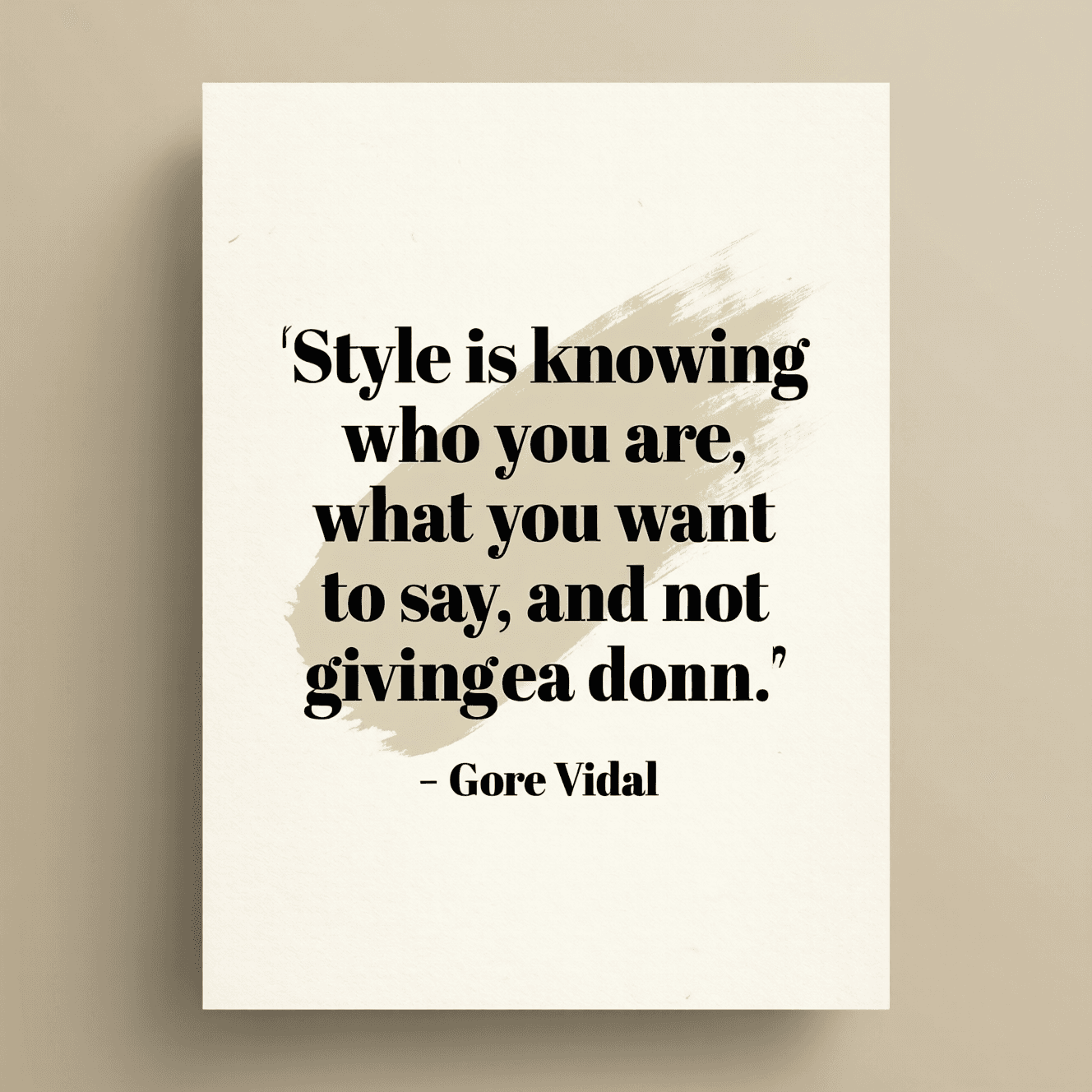
Style as Self-Knowledge, Intent, and Defiance
Gore Vidal’s line reframes “style” as something far deeper than fashion, manners, or a polished turn of phrase. Instead of treating style as decoration, he treats it as an outward sign of an inner stance: a person with s...
Created on: 3/6/2026